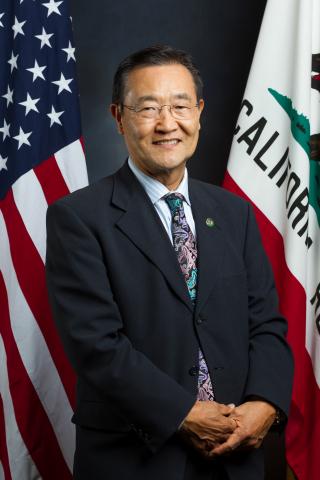
This bill designates February 26, 2026, as "Introduce a Girl to Engineering Day" to highlight the importance of encouraging young women to pursue careers in engineering. The measure serves as a commemorative resolution rather than creating new laws or funding requirements. It does not alter existing policies or directly affect government operations, but instead establishes a specific date for awareness and celebration.
Existing law generally regulates artificial intelligence, including companion chatbots, as defined. Existing law requires an operator, as defined, to prevent a companion chatbot on its companion chatbot platform from engaging with users unless the operator maintains a protocol for preventing the production of suicidal ideation, suicide, or self-harm content to the user. Existing law requires an operator, for a user the operator knows is a minor, to, among other things, notify the user that the user is interacting with artificial intelligence and to disclose that companion chatbots may not be suitable for some minors, as specified. The Digital Age Assurance Act requires a person who owns, maintains, or controls a software application, as defined, to request age bracket data sent by a real-time secure application programming interface or operating system with respect to a particular user from an operating system provider or a covered application store when the application is downloaded and launched. This bill would require an operator, as defined, of a companion chatbot to, on or before July 1, 2027, do various things with respect to child safety and companion chatbots, including annually perform and document a comprehensive risk assessment to identify any child safety risk, as defined, posed by the design, configuration, and operation of the companion chatbot that assesses, among other things, the likelihood of a covered harm, as defined, occurring to child users. The bill would require an operator to submit to an independent audit of its compliance with those provisions, as specified, and would require, within 90 days of completing an independent audit, the auditor to submit an AI child safety audit report to the Attorney General for any audited companion chatbot. The bill would, except as specified, require those audit reports to be kept confidential. This bill would, beginning January 1, 2028, require the Attorney General to issue an annual public report on the audits submitted pursuant to the above-described provision, as specified. The bill would authorize a public prosecutor to bring a certain civil action to enforce the bill's provisions and would authorize a child who suffers actual harm as a result of a violation of this chapter, or a parent or guardian acting on behalf of that child, to bring a civil action against the operator to obtain, among other relief, punitive damages. Existing constitutional provisions require that a statute that limits the right of access to the meetings of public bodies or the writings of public officials and agencies be adopted with findings demonstrating the interest protected by the limitation and the need for protecting that interest. This bill would make legislative findings to that effect.
Existing law vests the Public Utilities Commission with regulatory authority over public utilities, including telephone corporations. Existing law requires the commission to develop, implement, and administer a program to advance universal service by providing discounted rates to qualifying schools maintaining kindergarten or any of grades 1 to 12, inclusive, community colleges, libraries, hospitals, health clinics, and community organizations. This bill would require that the discounted rates also be provided to qualifying schools, school districts, and county offices of education serving preschools, transitional kindergarten, kindergarten, or any of grades 1 to 12, inclusive, public libraries and public library systems, rather than libraries, and noninstructional facilities operated or contracted by qualifying schools, school districts, county offices of education, community colleges, community college districts, public libraries, and public library systems, including their associated data centers or administrative offices, as provided. Existing law authorizes all customers eligible to receive discounts for telecommunications services under the federal Universal Service E-rate program to also apply for discounts on telecommunications services provided through the California Teleconnect Fund Administrative Committee Fund program. Existing law requires the commission to first apply an E-rate discount if the customer, in the determination of the commission, meets the requirements for an E-rate discount, as provided. This bill would instead require the service provider to first apply an E-rate discount, as determined by the commission, if the customer, in the determination of the commission, meets the requirements for an E-rate discount, except as provided. Under existing law, a violation of the Public Utilities Act or any order, decision, rule, direction, demand, or requirement of the commission is a crime. Because the provisions of this bill would be part of the act and a violation of a commission action implementing the bill's requirements would be a crime, the bill would impose a state-mandated local program. The California Constitution requires the state to reimburse local agencies and school districts for certain costs mandated by the state. Statutory provisions establish procedures for making that reimbursement. This bill would provide that no reimbursement is required by this act for a specified reason.
(1) Existing law authorizes the operation of an autonomous vehicle on public roads for testing purposes by a driver who possesses the proper class of license for the type of vehicle operated if specified requirements are satisfied. Existing law prohibits the operation of an autonomous vehicle on public roads until the manufacturer submits an application to the Department of Motor Vehicles (department) , as specified, and that application is approved. Existing law requires the department to adopt regulations setting forth requirements for the submission and approval of an application, including, among other things, any testing, equipment, and performance standards the department concludes are necessary to ensure the safe operation of autonomous vehicles on public roads, as specified. Existing law requires manufacturers of autonomous vehicles that operate without a human operator physically present in the vehicle, except as provided, to comply with certain requirements, including, among other things, to maintain a dedicated emergency response telephone line that is available for emergency response officials and to equip each autonomous vehicle with a 2-way voice communication device that enables emergency response officials who are near the vehicle to communicate effectively with a remote human operator, as specified. Under existing law, an "emergency response official" includes, but is not limited to, emergency dispatchers, peace officers, as specified, and first responders. This bill would require manufacturers of autonomous vehicles to maintain communications capacity sufficient to support the maximum number of concurrent remote assistance or teleoperations sessions, as specified. The bill would require remote drivers to be located within the United States and hold a driver's license that is valid for operation in California, is of the appropriate class, and includes any required endorsements. The bill would require an autonomous vehicle manufacturer to ensure, through its staffing and assignments, that local incident technicians are immediately dispatched upon notification, electronically or otherwise, of a crash or other incident or upon receiving a request from an emergency response official or 911 dispatch center. The bill would, in the event of a fleetwide emergency or system failure that may create a traffic hazard or impeded emergency response, require an autonomous vehicle manufacturer to immediately notify affected local jurisdictions, including emergency dispatch, of the location and status of their fleet and deploy local incident technicians, where appropriate, whenever affected vehicles cannot be remotely recovered. The bill would require the department, on or before July 1, 2028, to adopt guidelines establishing reasonable response times for local incident technicians to be present at the scene upon the request of an emergency response official or 911 dispatch center. The bill would expand the definition of "emergency response official" for these purposes to also include traffic control, traffic enforcement, and parking enforcement personnel from a public agency in an applicable jurisdiction. The bill would require autonomous vehicle manufacturers, for an autonomous vehicle that operates as a commercial vehicle and that is not equipped with manual controls for completing the dynamic driving task, to ensure that remote assistants or remote drivers have the ability to place the autonomous vehicle in neutral to allow an emergency response official to move the vehicle, cause the autonomous vehicle to move as directed by an emergency response official, or turn off the vehicle and have it remain stationary until otherwise directed by an emergency response official. The bill would require autonomous vehicle manufacturers to maintain data on response times of local incident technicians and responses to fleetwide emergencies or system failures, emergency events, immobilizations, obstructions, crashes, and requests from emergency response officials. The bill would require autonomous vehicle manufacturers to provide this data to the department quarterly and would require the department to publish summary statistics on its internet website, as specified. The bill would authorize the department to share records with the Public Utilities Commission to support regulatory oversight of autonomous vehicle passenger service operations. The bill would specify that a violation of the above provisions is not a crime. The bill would authorize a city attorney or county counsel to bring a civil action on behalf of a city, county, or city and county to enforce specified violations of the above provisions. The bill would authorize a court to impose specified civil penalties payable to the jurisdiction bringing the action, as specified. (2) Existing law establishes the Commission on Peace Officer Standards and Training (POST) within the Department of Justice and requires the commission to develop guidelines and implement courses of instruction regarding specified topics, including, among others, racial profiling, handling domestic violence, and human trafficking. This bill would require POST to develop uniform guidelines and requirements for, and to provide approval of, the training and written guidance required to be provided by autonomous vehicle manufacturers. The bill would authorize POST to impose fees sufficient to cover the reasonable regulatory costs associated with administering these provisions. The bill would require POST to implement a course or courses of instruction for voluntary training of law enforcement officers, as defined, on autonomous vehicles that operate as commercial vehicles as it relates to public safety and to develop related uniform minimum guidelines for voluntary use by California law enforcement agencies, as specified. The bill would require the course or courses, learning and performance objectives, training standards, and guidelines to be developed in consultation with appropriate groups and individuals that have an interest and expertise in the field of the operation of autonomous vehicles, as specified. (3) The bill would make its provisions operative July 1, 2028.
Existing unfair competition laws make various unfair competition practices unlawful, including any unlawful, unfair, or fraudulent business act or practice and unfair, deceptive, untrue, or misleading advertising. Existing law makes it unlawful for any person doing business in California and advertising to consumers in California to make any false or misleading advertising claim. Existing law makes a person who violates specified false advertising provisions liable for a civil penalty, as specified, and provides that a person who violates those false advertising provisions is guilty of a misdemeanor. Existing law makes it unlawful for healing arts licensees, as specified, to disseminate or cause to be disseminated any form of public communication containing a false, fraudulent, misleading, or deceptive statement, claim, or image in order to induce the provision of services or products in connection with their licensed professional practice or business. Existing law makes a violation of these provisions punishable as a misdemeanor and, in the case of a licensed person, provides that a violation constitutes unprofessional conduct and grounds for suspension or revocation of a license by the relevant board. This bill would require a person who creates or causes to be created an advertisement that includes a digital replica or synthetic performer depicted as a health care provider to promote the sale of a health-related consumer product or service to include a clear and conspicuous disclosure that the health care provider depicted in the advertisement was generated or substantially altered by artificial intelligence or that no human health care provider is depicted. The bill would also define terms for its purposes. This bill would provide that a violation of its provisions constitutes a violation of specified unfair competition and false advertising laws. By expanding the scope of a crime, this bill would impose a state-mandated local program. The bill would also authorize a natural person whose digital replica is used in an advertisement to bring a civil action to enforce these provisions. The bill would specify that a violation of the bill does not constitute a misdemeanor under provisions regulating healing arts licensees. The California Constitution requires the state to reimburse local agencies and school districts for certain costs mandated by the state. Statutory provisions establish procedures for making that reimbursement. This bill would provide that no reimbursement is required by this act for a specified reason.
Existing law vests the Public Utilities Commission (PUC) with regulatory authority over public utilities, including electrical corporations. Existing law authorizes the PUC to fix the rates and charges for every public utility and requires that those rates and charges be just and reasonable. This bill would require the PUC to establish a special rate structure for data centers, as defined, taking transmission level electrical service with an estimated peak demand of at least 75 megawatts of electricity to, among other things, protect other customers of electrical corporations, prohibit cost shifts to those other customers, and require data centers to pay for the electrical corporations' upfront costs of transmission or distribution infrastructure upgrades necessary for the provision of electrical service to the data centers. The bill would require the construction of data centers subject to the special rate structure to comply with certain labor requirements. Existing law establishes the policy of the state that eligible renewable energy resources and zero-carbon resources supply 90% of all retail sales of electricity to California end-use customers by December 31, 2035, 95% by December 31, 2040, and 100% by December 31, 2045. Existing law requires the PUC, the State Energy Resources Conservation and Development Commission, and the State Air Resources Board, in consultation with all California balancing authorities, to annually issue a joint report related to meeting that state policy. This bill would require that the joint report also includes the impacts of data centers subject to the special rate structure on the state's ability to achieve the above-described state policy. Under existing law, a violation of the Public Utilities Act or an order, decision, rule, direction, demand, or requirement of the PUC is a crime. Because the provisions of the bill would be part of the act and a violation of a PUC action implementing the bill's requirements would be a crime, this bill would impose a state-mandated local program. The California Constitution requires the state to reimburse local agencies and school districts for certain costs mandated by the state. Statutory provisions establish procedures for making that reimbursement. This bill would provide that no reimbursement is required by this act for a specified reason.
Existing law, the California Consumer Privacy Act of 2018 (CCPA) , grants to a consumer various rights with respect to personal information that is collected by a business. Existing law, the California Privacy Rights Act of 2020 (CPRA) , an initiative measure approved by the voters as Proposition 24 at the November 3, 2020, statewide general election, amended, added to, and reenacted the CCPA and establishes the California Privacy Protection Agency (agency) and vests the agency with full administrative power, authority, and jurisdiction to enforce the CCPA. Existing law requires a data broker to register with the agency, and defines "data broker" to mean a business that knowingly collects and sells to third parties the personal information of a consumer with whom the business does not have a direct relationship, subject to specified exceptions. This bill would define a "direct relationship" as, among other things, when a consumer has intentionally interacted with a business for the purpose of obtaining information about, accessing, purchasing, using, or requesting the business's products or services. The bill would specify circumstances when a data broker does not have a "direct relationship," including if it sells personal information outside of a "first-party" interaction with the consumer. The bill would define a "first party" as a consumer-facing business with which the consumer intends and expects to interact. Existing law requires a data broker, in registering with the agency, to provide specified information, including, among other things, whether the data broker collects the personal information of minors or a consumer's reproductive health care data. Existing law requires the agency to establish an accessible deletion mechanism that, among other things, allows a consumer to request that a specified data broker delete any personal information related to that consumer held by the data broker or associated service provider or contractor. This bill would require a data broker to provide additional information to the agency regarding whether the data broker sells inferences about the attributes of the consumer based on their analysis of specified data, including the personal information of minors and a consumer's reproductive health care data. Existing law establishes the Office of Data and Innovation (office) within the Government Operations Agency with a mission to deliver better government services to the people of California through technology and service innovation, data, and design. This bill would require the office to establish a privacy preference tool to enable a consumer to define and store a privacy preference profile regarding data broker data collection and use practices, among other things. The bill would require the tool to, among other things, evaluate relevant privacy, data management, and practice and policies against the consumer's preference profile. The bill would require the office to make the online tool available to other state agencies, including the agency. This bill would declare that its provisions further the purposes and intent of the California Privacy Rights Act of 2020.
Existing law authorizes the California College Guidance Initiative to provide its services to all California school districts, including services that provide pupils and their families with direct access to online tools and resources for college and career planning. Existing law requires a school district, county office of education, or charter school to annually notify the parents or guardians of pupils admitted to, or advancing to, grades 7 to 12, inclusive, of any dual enrollment or International Baccalaureate courses offered by the local educational agency, as provided. This bill would require that notice to also include the benefits of the California College Guidance Initiative and encouragement to create parent accounts. By imposing additional duties on local educational agencies, the bill would impose a state-mandated local program. The California Constitution requires the state to reimburse local agencies and school districts for certain costs mandated by the state. Statutory provisions establish procedures for making that reimbursement. This bill would provide that, if the Commission on State Mandates determines that the bill contains costs mandated by the state, reimbursement for those costs shall be made pursuant to the statutory provisions noted above.
Existing law establishes the Division of Labor Standards Enforcement within the Department of Industrial Relations to administer and enforce various laws relating to employment and working conditions. This bill would require an employer to provide a written notice to a worker that a workplace AI tool, as defined, was used to assist the employer in making employment-related decisions or to surveil workers in the workplace. The bill would require the notice to be given to a worker within a specified time and would require the notice to contain specified information, including the specific employment-related decisions likely to be affected by the use of the workplace AI tool. The bill would require an employer to maintain an updated list of all workplace AI tools currently in use and their impact on jobs, as specified, and to provide the list to workers annually. The bill would provide for enforcement by the Labor Commissioner or a public prosecutor, and alternatively would authorize any worker who has suffered damages, or their exclusive representative, to file a civil action for damages caused by the adverse action. The bill would establish remedies and penalties for violations, including a penalty of up to $500 for each violation. The bill would include findings that changes proposed by this bill address a matter of statewide concern rather than a municipal affair and, therefore, apply to all cities, including charter cities.
Existing law requires the Public Utilities Commission to establish the Rural and Urban Regional Broadband Consortia Grant Account in the California Advanced Services Fund and makes the moneys in the account available for grants to eligible consortia to facilitate the deployment of broadband services by assisting infrastructure applicants in the project development or grant application process. Existing law requires each consortium to conduct an annual audit of its expenditures for programs funded pursuant to those provisions and to submit to the commission an annual report that includes specified information. This bill would instead require moneys in the Rural and Urban Regional Broadband Consortia Account to be available for grants to eligible consortia primarily to facilitate the deployment of broadband services by assisting infrastructure applicants in the project development or grant application process. In facilitating the deployment of broadband services, the bill would authorize the consortia to undertake activities that promote broadband adoption within specified areas, including all infrastructure project areas that received California Advanced Services Fund grants on or after January 1, 2020, as specified, neighborhoods and communities identified by jurisdictions receiving local agency technical assistance grants, or areas where construction of infrastructure deployment and upgrade investments are made pursuant to public benefit agreements by parties to corporate consolidations approved by the commission. The bill would require the commission to allocate sufficient funds to the account to provide multi-year grants to eligible consortia to engage and regularly convene specified representatives and to implement an approved regional work plan consistent with a standardized scope of work determined by the commission, which would be required to include specified strategies and infrastructure-related activities, as provided. The bill would require the annual base funding grant per consortium to be no less than $200,000, plus an increased amount based on the number of unserved and underserved locations, unconnected households, and the number of low-income households in the region, as provided. The bill would delete the requirement for each consortium to conduct an annual audit and would revise the information required to be included in the annual report to the commission, as specified. The bill would authorize the commission to engage experienced nonprofit organizations through an open, competitive process to assist the commission and support the consortia, as provided. Under existing law, a violation of the Public Utilities Act or any order, decision, rule, direction, demand, or requirement of the commission is a crime. Because the above provisions would be part of the act and a violation of a commission action implementing this bill's requirements would be a crime, the bill would impose a state-mandated local program. The California Constitution requires the state to reimburse local agencies and school districts for certain costs mandated by the state. Statutory provisions establish procedures for making that reimbursement. This bill would provide that no reimbursement is required by this act for a specified reason.