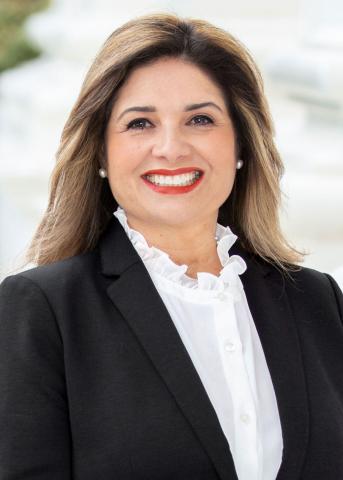
This bill designates March 21, 2026, as California Women in STEM Day to recognize the contributions of women in science, technology, engineering, and mathematics fields. The measure requires state officials to issue a proclamation announcing this specific date and the purpose of the observance. As a commemorative resolution, it does not alter laws, allocate funding, or create new programs, but rather establishes an official day for public acknowledgment.
Existing law requires the Office of Emergency Services to, as appropriate, perform a risk analysis of potential threats posed by the use of generative artificial intelligence to California's critical infrastructure, including those that could lead to mass casualty events. Existing law requires that risk analysis to be provided to the Governor, and, if appropriate, include recommendations reflecting changes to artificial intelligence technology, its applications, and risk management, including further private actions, administrative actions, and collaboration with the Legislature to guard against potential threats and vulnerabilities. This bill would require that recommendations in the risk analysis reflecting changes to artificial intelligence technology include agentic artificial intelligence, as defined. Existing law requires the Department of Technology to annually submit to certain legislative committees a report regarding a specified required comprehensive inventory of all high-risk automated decision systems that have been, or are being, used, developed, or procured by a state agency. Existing law defines "high-risk automated decision system" to mean an automated decision system that is used to assist or replace human discretionary decisions that have a legal or similarly significant effect, including decisions that materially impact access to, or approval for, housing or accommodations, education, employment, credit, health care, and criminal justice. This bill would further require the comprehensive inventory in the report to include agentic artificial intelligence that has been, or is being, used, developed, or procured by a state agency.
Existing law requires the State Department of Education, on or before January 1, 2024, to develop a plan to expand mental health instruction in California public schools. This bill would require the department, on or before January 1, 2028, to develop a plan to expand digital wellness instruction in California public schools, as provided.
Existing law establishes the Low-Income Oversight Board and requires the Low-Income Oversight Board to advise the Public Utilities Commission on low-income electricity, gas, and water customer issues, and to, among other things, monitor and evaluate implementation of all programs provided to low-income electricity, gas, and water customers. This bill would establish the Low-Income Telecommunications Advisory Board with specified membership. The bill would require the Low-Income Telecommunications Advisory Board to, among other things, advise the commission on low-income telecommunications customer issues, serve as a liaison for the commission to low-income customers and stakeholders, provide certain reports to the Legislature, and monitor and evaluate implementation of all programs provided to low-income telecommunications customers, as provided. The bill would require the commission, in conjunction with the Low-Income Telecommunications Advisory Board, to increase participation in programs for low-income telecommunications customers and ensure that the cost burden of low-income telecommunications customers is reduced, as specified. Existing law vests the commission with regulatory authority over public utilities, including telephone corporations. Existing law, the Moore Universal Telephone Service Act, establishes the Universal Lifeline Telephone Service program to provide low-income households with access to affordable basic residential telephone service. This bill would require the commission to administer the lifeline program in a technologically inclusive manner and would prohibit the commission from discriminating against lifeline providers by adopting rules that favor or disfavor certain providers. Under existing law, a violation of the Public Utilities Act or of an order, decision, rule, direction, demand, or requirement of the commission is a crime. Because the provisions of this bill would be part of the act, and a violation of a commission action implementing its provisions would be a crime, the bill would impose a state-mandated local program. The California Constitution requires the state to reimburse local agencies and school districts for certain costs mandated by the state. Statutory provisions establish procedures for making that reimbursement. This bill would provide that no reimbursement is required by this act for a specified reason.
Existing law generally regulates artificial intelligence, including companion chatbots, as defined. Existing law requires an operator, as defined, to prevent a companion chatbot on its companion chatbot platform from engaging with users unless the operator maintains a protocol for preventing the production of suicidal ideation, suicide, or self-harm content to the user. Existing law requires an operator, for a user the operator knows is a minor, to take certain prescribed action, including disclosing to the user that the user is interacting with artificial intelligence. This bill would delete those provisions imposing requirements on an operator if the operator knows the user is a minor. The Digital Age Assurance Act requires a person who owns, maintains, or controls a software application, as defined, to request age bracket data sent by a real-time secure application programming interface or operating system with respect to a particular user from an operating system provider or a covered application store when the application is downloaded and launched. This bill would require an operator, as defined, of a companion chatbot to, beginning July 1, 2027, before making a new or substantially modified companion chatbot available to users in the state, do various things with respect to child safety, including perform and document a comprehensive risk assessment related to the design, configuration, and operation of the companion chatbot with respect to minor users that contains, among other things, a summary of the results of any evaluation of each covered harm, as defined, pertaining to the companion chatbot. The bill would require an operator to submit to independent child safety audits of its compliance with the bill, as specified. The bill would require an auditor to produce a report that describes whether the operator has established and adhered to policies and practices to comply with the bill that includes, among other things, the signature of the lead auditor certifying the results of the audit under penalty of perjury. By expanding the scope of the crime of perjury, this bill would impose a state-mandated local program. The bill would authorize the Attorney General to, for cause, request and obtain a copy of an AI child safety audit report from the operator and would make a child safety audit report submitted to the Attorney General confidential. This bill would authorize certain public prosecutors to bring a civil action to enforce the bill's provisions, as specified, and would authorize a child who suffers an actual harm as a result of a violation of this chapter, or a parent or guardian acting on behalf of that child, to bring a civil action against the operator, as specified. Existing constitutional provisions require that a statute that limits the right of access to the meetings of public bodies or the writings of public officials and agencies be adopted with findings demonstrating the interest protected by the limitation and the need for protecting that interest. This bill would make legislative findings to that effect. The California Constitution requires the state to reimburse local agencies and school districts for certain costs mandated by the state. Statutory provisions establish procedures for making that reimbursement. This bill would provide that no reimbursement is required by this act for a specified reason.
Existing law, the California Age-Appropriate Design Code Act, requires a business that provides an online service, product, or feature likely to be accessed by children to comply with certain requirements, including, among other things, prohibiting the business from collecting, selling, sharing, or retaining any personal information that is not necessary to provide the online service, product, or feature, except as specified. Existing law imposes specified civil penalties upon a business that violates these provisions. This bill would repeal the above-described act and would instead impose similar provisions without the above-referenced exceptions and would impose civil penalties for a violation of these provisions. The bill would require a business that provides an online product or service likely to be accessed by children to take reasonable steps to prevent specified risks of harm to children. The bill would authorize a child to void any provision of a contract that was entered into by the child or their parent or guardian as a result of a design feature of the online product or service. The bill would authorize the Attorney General or a public prosecutor to bring a civil action for a violation of these provisions, as specified.
Existing law generally prohibits a person, entity conducting business, candidate, or political committee in this state from transmitting, or causing to be transmitted, a text message advertisement to specified devices. Existing law excepts from this prohibition specific text message advertisements, including a text message advertisement transmitted by a business, candidate, or political committee that has an existing relationship with the subscriber if the subscriber is offered an option not to receive text messages from that business, candidate, or political committee. Existing law defines terms for these purposes, including "text message advertisement." Existing law enforces these prohibitions pursuant to the provisions related to unfair competition and makes a violation of these provisions a misdemeanor. This bill would prohibit an allowed text message advertisement from being transmitted to a recipient between 9:00 p.m. and 9:00 a.m., regardless of whether the recipient consented to receiving a text message advertisement. The bill would require a sender to adjust message timing to Pacific standard time. The bill would authorize the recipient of a text message advertisement in violation of this timing prohibition to bring a civil action against a transmitter who knew, or should have known, the text message advertisement violated this prohibition. The bill would also authorize a public prosecutor or the Attorney General to bring an action to enforce these provisions for specified remedies. The bill would, notwithstanding any other law, exclude a violation of this prohibition from being a crime.
Existing law, the Transparency in Frontier Artificial Intelligence Act, among other things related to ensuring the safety of certain artificial intelligence models, requires a large frontier developer to write, implement, and clearly and conspicuously publish on its internet website a frontier AI framework that applies to the large frontier developer's frontier models and describes how the large frontier developer approaches, among other things, incorporating national standards, international standards, and industry-consensus best practices into its frontier AI framework. Existing law requires the Department of Technology to make recommendations about whether and how to update certain definitions for the purposes of the act, including the definition of "frontier model" so that it applies to foundation models at the frontier of artificial intelligence development. Existing law requires a contract entered into by any state agency for the procurement or laundering of apparel, garments, or corresponding accessories, or the procurement of equipment, materials, or supplies, other than procurement related to a public works contract, to require that a contractor certify that nothing furnished to the state pursuant to the contract has been laundered or produced by certain types of labor, including sweatshop labor and forced labor, as defined. Existing law requires the Department of Industrial Relations to establish a contractor responsibility program, including a Sweatfree Code of Conduct, to be signed by all bidders on state contracts and subcontracts, as provided. This bill would require the Department of Industrial Relations, in consultation with the Department of Technology, to convene a Foundation Model Labor and Procurement Working Group consisting of 9 members, as provided, to, among other things, assess labor practices underlying the development of modern foundation models and associated artificial intelligence systems and develop recommendations regarding whether and how the state should incorporate labor standards into procurement decisions for foundation models and associated artificial intelligence systems. The bill would require the working group to compile their findings and recommendations into a report and submit that report to the Legislature on or before December 31, 2027.
Existing law requires a social media platform to take certain actions with respect to child sexual abuse material on the social media platform, including requiring the platform to provide, in a mechanism that is reasonably accessible to users, a means for a user who is a California resident to report material to the platform that the user reasonably believes meets certain criteria, including that the reported material is child sexual abuse material and that the reporting user is depicted in the material. Existing law also requires the social media platform to collect information reasonably sufficient to enable the platform to contact, as specified, a reporting user. Existing law defines child sexual abuse material for these purposes to include obscene matter that depicts a minor personally engaging in, or personally simulating, sexual conduct. This bill would revise the definition of child sexual abuse material to instead include an intimate visual depiction, as defined, of an identifiable individual who is a minor. The bill would additionally require the above-described mechanism to be clear and conspicuous, as defined, and would delete the requirement that the reporting user be depicted in the material. The bill would require a social media platform to, among other things, ensure review by a natural person if there is not an established or known hash match to child sexual abuse material with respect to the reported material and the reported material is not otherwise blocked. The bill would require a social media platform to restore availability or functionality of the reporting mechanism if the reporting mechanism is unavailable or nonfunctional. Existing law makes a noncomplying social media company liable to a reporting user for actual damages and statutory damages, as specified. This bill would instead make a social media company liable to a depicted individual, as defined, for actual and statutory damages, as provided. The bill would also impose specified civil penalties on a noncomplying company to be collected in a civil action by certain public attorneys, including the Attorney General. Existing law establishes the Survivor Support Fund within the state treasury and makes moneys in the fund available, upon appropriation by the Legislature, for grants by the California Victim Compensation Board to community-based organizations that provide direct services to vulnerable individuals in areas with a high concentration of sex trafficking. This bill would require any penalty collected in a civil action by the Attorney General under these provisions to be deposited into the Survivor Support Fund. Existing law prohibits a social media platform from knowingly facilitating, aiding, or abetting commercial sexual exploitation, as defined. Existing law deems a social media platform to have knowledge for the purposes of this prohibition if material was reported to the social media platform using the reporting mechanism for 4 consecutive months, as provided. Existing law exempts a social media platform from being deemed in violation of this prohibition if it instituted a specified audit program and provided to each member of its board of directors a true and correct copy of each audit, as prescribed. This bill would remove the requirement that material was reported for 4 consecutive months to deem a social media platform to have knowledge for the purposes of the above-described prohibition. The bill would, in order to be exempt from that prohibition, require the social media platform to also submit the audit to the Attorney General, and if requested, to certain other public officials. The bill would provide that an audit submitted as described above is confidential and shall be exempt from disclosure under the California Public Records Act. This bill would declare its provisions severable. Existing constitutional provisions require that a statute that limits the right of access to the meetings of public bodies or the writings of public officials and agencies be adopted with findings demonstrating the interest protected by the limitation and the need for protecting that interest. This bill would make legislative findings to that effect. The California Constitution requires local agencies, for the purpose of ensuring public access to the meetings of public bodies and the writings of public officials and agencies, to comply with a statutory enactment that amends or enacts laws relating to public records or open meetings and contains findings demonstrating that the enactment furthers the constitutional requirements relating to this purpose. This bill would make legislative findings to that effect.
Existing law prohibits the false impersonation of another person in either that person's personal or official capacity with the intent to steal or defraud, as specified. Existing law protects all people from defamation, including libel and slander, as provided. Existing law makes any person who knowingly uses another's name, voice, signature, photograph, or likeness for commercial purposes, as specified, without that person's prior consent liable for damages, as specified. Existing law provides that a party seeking relief pursuant to those provisions may also seek an injunction or temporary restraining order according to specified procedures. This bill would enact the Digital Dignity Act. The act would subject to specified liability a person who, by distributing content with actual knowledge that the content includes a digital replica, is found guilty of violating a criminal provision for which false impersonation of another is a required element, as prescribed, or is found liable in a civil action arising from the use or portrayal through a digital replica, as provided. The Digital Dignity Act would require a large online platform that includes a generative AI tool, as defined, that provides users with the functionality to create a digital replica of other individuals to provide a mechanism for individuals to report content that violates the platform's terms of service or a provision of law relating to the individual's digital replica and to submit to the large online platform any certified court order or judgment ordering the removal of any content involving the individual's digital replica on the platform or finding that content involving the individual's digital replica was defamatory, fraudulent, or any other form of image appropriation not permitted by law, as prescribed. Upon receipt of the court order or judgment, the act would require the large online platform to remove the digital replica and make reasonable efforts to identify and remove any known identical copies. The act would authorize a city attorney or the Attorney General to bring a civil action to enforce these provisions and to seek a specified civil penalty and injunctive relief. The act would require a generative AI tool provider to maintain, for no less than 90 days, records sufficient to allow compliance with a court order issued pursuant to a civil action by the city attorney or Attorney General, as prescribed.