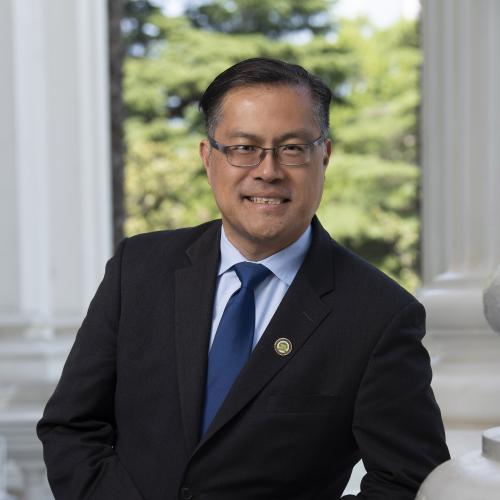
This measure would urge President Donald J. Trump and the Congress of the United States to approve federal legislation guaranteeing specified rights to classified workers that would, among other things, empower those workers to work in a stable, safe environment and receive livable and competitive wages, as provided.
Existing law governs the admissibility of evidence in court proceedings and generally provides a privilege as to communications made in the course of certain relations, including the attorney-client, physician-patient, and psychotherapist-patient relationship, as specified. Under existing law, the right of any person to claim those evidentiary privileges is waived with respect to a communication protected by the privilege if any holder of the privilege, without coercion, has disclosed a significant part of the communication or has consented to a disclosure. This bill would establish a privilege between a union agent, as defined, and a represented employee or represented former employee to refuse to disclose any confidential communication between the employee or former employee and the union agent made while the union agent was acting in the union agent's representative capacity, except as specified. The bill would permit a represented employee or represented former employee to prevent another person from disclosing a privileged communication, except as specified. The bill would further provide that this privilege may be waived in accordance with existing law and does not apply in criminal proceedings.
Existing law establishes the Division of Labor Standards Enforcement within the Department of Industrial Relations. Existing law authorizes the division, which is headed by the Labor Commissioner, to enforce the Labor Code and all labor laws of the state the enforcement of which is not specifically vested in any other officer, board, or commission. This bill would limit the use of workplace surveillance tools, as defined, by employers, including by prohibiting an employer from monitoring or surveilling employees in a bathroom located in the workplace, except as specified. The bill would provide an employee with the right to leave behind workplace surveillance tools that are on their person or in their possession when entering a bathroom, except as specified. This bill would authorize the commissioner to enforce the bill's provisions, as prescribed, and would authorize a public prosecutor to bring specified enforcement actions. The bill would subject an employer who violates the bill to a civil penalty of up to $500 for each violation. The bill would include findings that changes proposed by this bill address a matter of statewide concern rather than a municipal affair and, therefore, apply to all cities, including charter cities.
Existing law establishes the Division of Labor Standards Enforcement, under the direction of the Labor Commissioner, within the Department of Industrial Relations to enforce various labor laws. Existing law requires certain employers to disclose certain salary information in job postings. This bill would require a private employer who publicly advertises a job posting to include in the posting a statement disclosing whether the posting is for a vacancy for the advertised position or not, as specified.
Existing law authorizes the Labor Commissioner to investigate employee complaints and to provide for a hearing in any action to recover wages, penalties, and other demands for compensation. Existing law requires the Labor Commissioner to determine all matters arising under the commissioner's jurisdiction. Existing law makes any employer or other person acting on behalf of an employer who violates or causes to be violated specified provisions regulating hours and days of work in any order of the Industrial Welfare Commission to be subject to a civil penalty, as specified. This bill would revise and recast the provisions relating to the process for the Labor Commissioner to investigate, hold a hearing, and make determinations relating to an employee's complaint. The bill would set forth timelines for the Labor Commissioner to notify parties of an employee complaint, as provided, and for the defendant to respond, as provided. The bill would require the Labor Commissioner, if the Labor Commissioner determines to prosecute the action or that no action will be taken, to notify the parties within 30 days of receipt of the defendant's answer. If the Labor Commissioner does not make either of those determinations, the bill would require the Labor Commissioner, within 90 days of receipt of the defendant's answer, to conduct an investigation of the employee complaint, make an estimated appraisal of the amount of wages, damages, penalties, expenses, and other compensation owed, and to determine all the parties liable for the assessment. The bill would set forth a process for the Labor Commissioner's investigation, assessment, and determination, including authorizing the Labor Commissioner to issue a subpoena for records and requiring the Labor Commissioner to issue a formal complaint. This bill would require the Labor Commissioner, within 90 days of the issuance of the formal complaint, to set a hearing date and would set forth procedures for the hearing. The bill would require the Labor Commissioner, within 15 days of the hearing, or upon a failure of the defendant to answer or appear, to file in the office of the Division of Labor Standards Enforcement a copy of the order, decision, or award. This bill would authorize the Labor Commissioner, in an order, decision, or award granted pursuant to specified provisions to impose an administrative fee of up to 30% of the award, as provided. The bill would require the administrative fee to be deposited into the Wage Recovery Fund, which would be created by the bill. The bill would require the money in the fund, upon appropriation, to be disbursed by the Labor Commissioner only to persons determined by the Labor Commissioner to have been damaged by the failure to pay wages and penalties and for other damages by an employer. The bill would require a disbursement to be made pursuant to a claim for recovery from the fund in accordance with procedures prescribed by the Labor Commissioner and would require any disbursed funds subsequently recovered by the Labor Commissioner from a liable party, as provided, to be returned to the fund. The bill would require the Labor Commissioner to waive any or all of the administrative fee upon request by a defendant, if specified conditions are met. This bill would classify an appeal filed in a superior court relating to the Labor Commissioner's order, decision, or award as an unlimited civil case. The bill would grant a court hearing the action jurisdiction over the entire wage dispute, including related wage claims not raised in front of the Labor Commissioner, but would prohibit the court from consolidating the action with any other actions not arising out of, or related to, the underlying order, decision, or award, absent an executed agreement in writing by all parties.
Existing law establishes the Division of Labor Standards Enforcement, headed by the Labor Commissioner, within the Department of Industrial Relations, for the purpose of enforcing labor laws. Existing law prescribes the duties and rights of employers and employees relating to specified labor laws, including, among other things, workers' compensation and notice requirements related to inspections conducted by an immigration agency. This bill would establish the Workplace Know Your Rights Act. The bill would require an employer, on or before February 1, 2026, and annually thereafter, to provide a stand-alone written notice to each current employee of specified workers' rights, including, among other things, the categories described above, as well as constitutional rights of an employee when interacting with law enforcement at the workplace, as specified. The bill would also require the employer to provide the written notice to each new employee upon hire and to provide the written notice annually to an employee's authorized representative, if any. This bill would require the Labor Commissioner to develop a template notice that an employer may use to comply with the notice requirement described above. The bill would require the Labor Commissioner to post the template notice on its internet website on or before January 1, 2026, and to post an updated template notice annually thereafter. The bill would also require the Labor Commissioner, on or before July 1, 2026, to develop a video for employees advising them of their rights under the areas described above and to develop a video for employers advising them of their rights and requirements under those areas, as provided. The bill would require the Agricultural Labor Relations Board, the Public Employment Relations Board, and the Attorney General's office to provide specified input for the template notice and the videos. This bill would require an employer, if an employee has designated an emergency contact for this purpose, to notify the designated emergency contact if the employee is arrested or detained on their worksite. If the arrest or detention occurs during work hours, or during the performance of the employee's job duties, but not on the worksite, the bill would require the employer to notify the employee's designated emergency contact only if the employer has actual knowledge of the arrest or detention of the employee. The bill would require an employer to provide an employee the opportunity to name an emergency contact on or before March 30, 2026, for an existing employee, and at the time of hiring for a new employee hired after March 30, 2026. This bill would prohibit an employer from discharging, threatening to discharge, demoting, suspending, or in any manner discriminating or retaliating against an employee for exercising or attempting to exercise their rights under the bill, as provided. This bill would require the Labor Commissioner to enforce the bill, as specified, and would also alternatively authorize enforcement by a public prosecutor. The bill would provide that an employer who violates the bill may be subject to a penalty of up to $500 per employee for each violation, except that the penalty for a violation of the provisions relating to emergency contacts would be an amount up to $500 per employee for each day the violation occurs, up to a maximum of $10,000 per employee.
Existing law establishes a workers' compensation system, which generally requires employers to secure the payment of workers' compensation for injuries incurred by their employees that arise out of and in the course of their employment. Existing law entitles, among others, local law enforcement and probation officers and firefighters employed on a regular full-time basis to a leave of absence without loss of salary while disabled by injury or illness arising out of and in the course of their duties. Existing law provides that a leave of absence under those provisions is in lieu of temporary disability payments or maintenance allowance payments otherwise payable under the workers' compensation system. This bill would expand these provisions to entitle specified peace officers who are employed on a regular, full-time basis by a county of the eighth class, as defined, to this leave of absence.
Existing law, the California Fair Employment and Housing Act, prohibits various forms of employment and housing discrimination, including various types of discrimination because of national origin. Existing law empowers the Civil Rights Department to investigate and prosecute complaints alleging unlawful practices. Existing labor law also prohibits an employer or other person or entity from engaging in, or to directing another person or entity to engage in, unfair immigration-related practices against a person for exercising specified rights. Existing law defines unfair immigration-related practices for these purposes. Existing law additionally makes it unlawful for an employer to request more or different immigration documents than are required under federal law, to refuse to honor documents tendered that reasonably appear to be genuine, and to take other related actions concerning employee work authorization documents. Existing law authorizes an applicant for employment or an employee who is subject to an unlawful act that is prohibited by these provisions, or a representative of that applicant for employment or employee, to file a complaint with the Division of Labor Standards Enforcement. Existing law establishes specified civil penalties for a violation of these provisions. This bill would require each employee, upon request, to be released by their employer for up to 5 unpaid working days within a 12-month period in order to attend appointments, interviews, adjudications, legal proceedings, detainment, or any other meeting at which the employee's presence is required concerning the employee's immigration status, work authorization, visa status, or any other immigration-related matter, as specified. The bill would also require a postintroductory employee, as defined, whose employment has been terminated due to an inability to provide documentation of proper work authorization, to be immediately reinstated to their former classification without loss in seniority, subject to producing proper work authorization, except as provided. The bill would also require an employer, if the employee demonstrates a need for additional time, to rehire the employee into the next available opening in the employee's former classification, as a new hire without retaining seniority, subject to the employee providing proper work authorization and meeting certain other conditions. This bill would require an employer that is notified that an employee has been detained or incarcerated as a result of pending immigration or deportation proceedings, to place the employee on an unpaid leave of absence for a period pending the employee's release from detainment or incarceration and not to exceed 12 months. If the employee is released and provides appropriate work authorization documentation within the period of the authorized unpaid leave of absence, the bill would require the employer to return the employee to their former job classification without loss of seniority, except as specified. This bill would apply the above requirements to a public or private employer, but would exempt a public or private employer with 25 or fewer employees. The bill would prohibit each public or private employer from disciplining, discharging, or discriminating against an employee because of national origin or immigration status, or solely because the employee is subject to immigration or deportation proceedings, except as required to comply with the law. The bill would prohibit an employee subject to immigration or deportation proceedings from being discharged solely because of those proceedings, so long as the employee is authorized to work in the United States. This bill would provide that its provisions do not invalidate a collective bargaining agreement or a memorandum of understanding that contains a provision addressing rehire or reinstatement rights or leave rights regarding employees who are subject to immigration proceedings, nor does it supersede the seniority provisions of a collective bargaining agreement or a memorandum of understanding. The bill would require the Labor Commissioner to enforce the bill's provisions. This bill would make these provisions inoperative on July 1, 2029, and would repeal them on January 1, 2030.
Existing law establishes the Division of Labor Standards Enforcement, under the direction of the Labor Commissioner, within the Department of Industrial Relations and sets forth its powers and duties regarding the enforcement of labor laws. Existing law authorizes the commissioner to investigate employee complaints and to provide for a hearing in any action to recover wages, penalties, and other demands for compensation, as specified. Existing law provides that the judgment creditor, or the commissioner, as assignee of the judgment creditor, is entitled to court costs and reasonable attorney's fees for enforcing the judgment, as specified. This bill would instead require that the judgment creditor, or the Labor Commissioner or public prosecutor as assignee of the judgment creditor, be awarded the above-described court costs and reasonable attorney's fees. Existing law provides for enforcement if a final judgment against an employer arising from the employer's nonpayment of wages for work performed in this state remains unsatisfied after specified periods of time, including prohibiting the employer from conducting business in the state, as specified, if a final judgment against the employer remains unsatisfied for 30 days. This bill would additionally require the judgment debtor to be subject to a civil penalty not to exceed 3 times the outstanding judgment amount if a final judgment arising from the nonpayment of work performed in this state remains unsatisfied after a period of 180 days, as provided. The bill would require a court to award a prevailing plaintiff all reasonable attorney's fees and costs in any action brought by a judgment creditor, the commissioner, or a public prosecutor to enforce a final judgment arising from the nonpayment of wages, penalties, or other amounts owed arising from work performed in this state, as provided. This bill would also make findings and declarations related to its provisions.
Existing law establishes the Department of Industrial Relations in the Labor and Workforce Development Agency and requires the department to be conducted under the control of an executive officer known as the Director of Industrial Relations. Existing law states that the function of the department, among other things, is to foster, promote, and develop the welfare of the wage earners of California, to improve their working conditions, and to advance their opportunities for profitable employment and vests the department with responsibility for administering the state plan for the development and enforcement of occupational safety and health standards relating to issues covered by corresponding standards adopted pursuant to federal law. Existing law establishes the Occupational Safety and Health Standards Board within the department to adopt occupational safety and health standards for the state, including standards dealing with exposure to harmful airborne contaminants. Existing law requires the Division of Occupational Safety and Health within the department to enforce all occupational safety and health standards, as specified. A violation of these standards and regulations under specific circumstances is a crime. Existing law, the California Occupational Safety and Health Act of 1973 (OSHA) , requires employers to comply with certain safety and health standards, as specified, and charges the Division of Occupational Safety and Health with enforcement of the act. OSHA defines "serious injury or illness" for purposes of the act to mean any injury or illness occurring in a place of employment or in connection with any employment that results in one of a list of conditions, including inpatient hospitalization, as provided, the loss of a member of the body, any serious degree of permanent disfigurement, and impairment sufficient to cause a part of the body or the function of an organ to become permanently and significantly reduced in efficiency on or off the job, as specified. Under OSHA, certain knowing, negligent, or willful violations of safety and health standards are punishable as a misdemeanor. This bill would add silicosis and silica-related lung cancer to the list of conditions that, if resulting from an injury or illness occurring in a place of employment or in connection with an employment, would constitute a "serious injury or illness." By expanding the scope of a crime under OSHA, the bill would impose a state-mandated local program. OSHA creates a rebuttable presumption that a "serious violation" exists in a place of employment if the division demonstrates that there is a realistic possibility that death or serious physical harm could result from the actual hazard created by the violation. OSHA defines "serious physical harm" for purposes of that provision. This bill would expand that definition of "serious physical harm" to include silicosis and silica-related lung cancer. The bill would impose restrictions on specified high-exposure trigger tasks on artificial stone, as those terms are defined. Specifically, a person or entity engaged in high-exposure trigger tasks would be prohibited from using dry methods, and would be required to use effective wet methods when engaging in any high-exposure trigger tasks. The bill would make a violation of these provisions grounds for, among other disciplinary action, an immediate order by the division prohibiting continued work. The bill would require the division to enforce these provisions by issuing a citation alleging a violation and a notice of civil penalty. The bill would require the owner or operator of a fabrication shop, or any individual who will employ another individual to perform high-exposure trigger tasks in a fabrication shop, to ensure that an employee who will perform high-exposure tasks receives specified training and, beginning on July 1, 2026, and annually thereafter, to attest to the division that these employees have been trained. The bill would require the division to enforce these provisions by issuing a citation alleging a violation and a notice of civil penalty. The bill would require the State Department of Public Health to consider a report of silicosis related to occupational exposure to artificial stone a serious illness and to report that case to the division. The bill would require the division, if it receives such a report, to subject the employer or place of employment to investigation, as specified. The bill would require the division to notify the State Department of Public Health of any cases of silicosis related to artificial stone identified through enforcement activities. The bill would require the State Department of Public Health to conduct specified activities to address silicosis risk exposure in fabrication shops, including providing technical assistance to local health jurisdictions engaged in silicosis surveillance and prevention activities. The bill would define various terms for these purposes. The bill would make findings and declarations related to these provisions. Existing constitutional provisions require that a statute that limits the right of access to the meetings of public bodies or the writings of public officials and agencies be adopted with findings demonstrating the interest protected by the limitation and the need for protecting that interest. This bill would make legislative findings to that effect. The California Constitution requires the state to reimburse local agencies and school districts for certain costs mandated by the state. Statutory provisions establish procedures for making that reimbursement. This bill would provide that no reimbursement is required by this act for a specified reason.