Issue · Healthcare

Healthcare

Every healthcare bill, vote, and legislator stance in California, automatically classified by Maddy, our AI policy reader.

Total bills
487
2025-2026 Regular Session
Top supporter
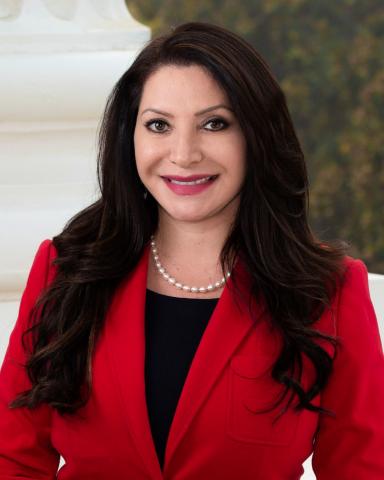
Susan Rubio
99% support rate
Top opponent
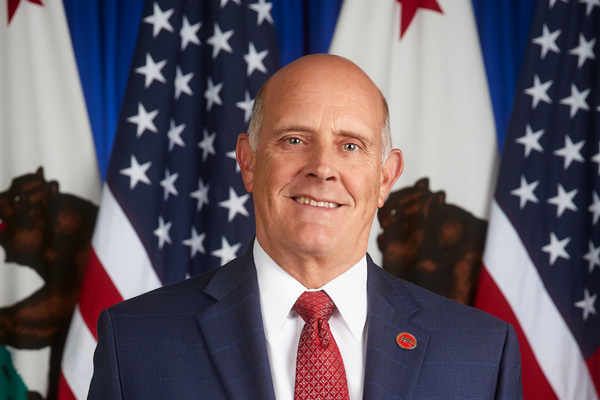
Brian Jones
3% support rate
Ranked legislators
10
5 support · 5 oppose
Key legislators

Who's moving healthcare in California

Legislators moving healthcare in California
Legislator Party Stance Support rate Votes
Susan Rubio
Susan Rubio Senate · District 22
D
Strong +
99% 210
JA
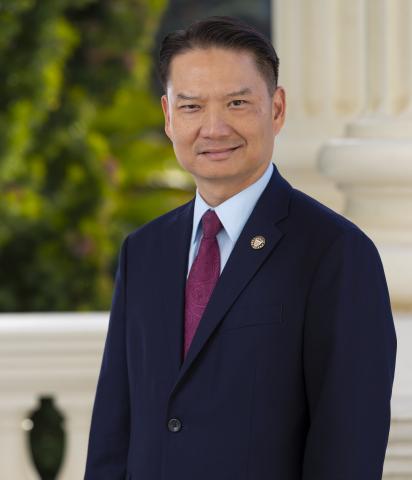
Jesse Arreguín Senate · District 7
D
Strong +
99% 252
ML
Monique Limón Senate · District 21
D
Strong +
99% 212
Celeste Rodriguez
Celeste Rodriguez House · District 43
D
Strong +
98% 188
Jerry McNerney
Jerry McNerney Senate · District 5
D
Strong +
98% 227
Brian Jones
Brian Jones Senate · District 40
R
Strong −
3% 184
Tri Ta
Tri Ta House · District 70
R
Strong −
4% 235
Tony Strickland
Tony Strickland Senate · District 36
R
Strong −
4% 224
Kelly Seyarto
Kelly Seyarto Senate · District 32
R
Strong −
5% 317
Natasha Johnson
Natasha Johnson House · District 63
R
Strong −
5% 140
Showing 21–30 of 487 bills

All healthcare bills

passed · California · Assembly Aug 13, 2026

HR 128: Relative to Aromatic L-Amino Acid Decarboxylase Deficiency Awareness Day.

California House Resolution 128 designates October 23, 2026, as Aromatic L-Amino Acid Decarboxylase (AADC) Deficiency Awareness Day. The resolution aims to increase public and medical community awareness of this ultrarare genetic condition, which prevents the body from producing dopamine and causes severe developmental delays. By highlighting the challenges faced by patients and their caregivers, the bill encourages Californians to learn more about the disease to support earlier diagnosis and continued research into treatments.
passed · California · Senate Aug 13, 2026

SR 137: Relative to National Chiropractic Health Month.

Senate Resolution 137 formally declares October 2026 as National Chiropractic Health Month in California. The resolution highlights chiropractic care as a drug-free option for treating musculoskeletal conditions and notes that the profession is regulated by the State Board of Chiropractic Examiners, which operates without using state general fund money. It also directs the Secretary of the Senate to send copies of the resolution to the California Chiropractic Association and the bill's author.
in committee · California · Assembly Mar 6, 2026

AB 1762: Public employment: retirement benefits.

Existing law, the Public Employees' Medical and Hospital Care Act (PEMHCA) , which is administered by the Board of Administration of the Public Employees' Retirement System, authorizes the board to contract for health benefit plans for employees and annuitants, as defined, which may include employees and annuitants of contracting agencies, as specified. Under existing law, the employee's or annuitant's contribution is the total cost per month of coverage less the portion contributed by the employer. Existing law prescribes a minimum level for the employer's contribution toward the employee's or annuitant's health benefits coverage. Existing law provides that the provisions governing PEMHCA are controlling over a memorandum of understanding, except as specified. Notwithstanding these PEMHCA provisions, existing law authorizes the City of San Gabriel to agree with its employees, as specified, that the employer contribution for postretirement health care coverage shall be subject to specified conditions, including, among other things, a collectively bargained memorandum of understanding and a minimum level for employer contributions, as specified. This bill would, similarly, authorize the City of Indio to enter into an agreement with certain employees hired on or after January 1, 2025 to provide employer contributions for postretirement health care coverage, subject to specified conditions, including, among other things, a collectively bargained memorandum of understanding and a minimum level for employer contributions, as specified. The bill would invalidate an agreement if it provides an employer contribution to employees with less than 5 years of credited service with the City of Indio. The bill would apply only to employees who retire after the date that a memorandum of understanding authorizing this benefit becomes effective. The bill would require the City of Indio to provide notification, as prescribed, of the agreement and any additional information necessary to implement those benefits. This bill would make legislative findings and declarations as to the necessity of a special statute for the City of Indio.
in committee · California · Assembly Mar 9, 2026

AB 2096: Vocational nursing: respiratory care.

Existing law, the Vocational Nursing Practice Act, establishes the Board of Vocational Nursing and Psychiatric Technicians of the State of California to license and regulate vocational nurses and psychiatric technicians. Chapter 624 of the Statutes of 2022 (SB 1436) limited the respiratory tasks and services that a licensed vocational nurse may perform to basic respiratory tasks and services that do not require a respiratory assessment and only require manual, technical skills, or data collection, as identified by the Respiratory Care Board of California, as specified. SB 1436 and subsequent legislation have created exemptions for a licensed vocational nurse to perform respiratory tasks and services under specified circumstances that vary depending on the task or service, the nurse's training, demonstrated competency, and employer, and the setting in which the task or service is performed, as provided. SB 1436 became effective on January 1, 2023. This bill, instead, would authorize a licensed vocational nurse to perform respiratory tasks and services consistent with the scope of practice of a licensed vocational nurse, as it existed on December 31, 2022. The bill would make various conforming changes, including removal of the above-described exemptions.
in committee · California · Assembly Feb 11, 2026

AB 1799: Integrated health care service plan investment disclosures.

Existing law, the Knox-Keene Health Care Service Plan Act of 1975, provides for the licensure and regulation of health care service plans by the Department of Managed Health Care. Existing law requires a health care service plan's assets to be invested in a prudent manner and requires the director of the department to determine the acceptability of a health care service plan's investments, as specified. This bill would state the intent of the Legislature to enact legislation to require the public disclosure of material investment holdings of nonprofit organizations providing integrated health care service plans.
Sub-Topics Medical Licensing
in committee · California · Assembly May 14, 2026

AB 1716: California Victim Compensation Board: tuition reimbursement.

Existing law generally provides for the compensation of victims and derivative victims of specified types of crimes by the California Victim Compensation Board from the Restitution Fund, which is continuously appropriated to the board. Existing law authorizes the board to grant for pecuniary loss, when the board determines that it will best aid the person seeking compensation, as specified. Existing law authorizes the board to reimburse, among other things, the amount of medical or medical-related expenses and outpatient psychiatric, psychological, or other mental health counseling-related expenses incurred by the victim or derivative victim, as specified. This bill would also authorize the board to reimburse the expense of tuition at an educational institution, not to exceed $10,000, to a full- or part-time student who is a victim of sexual assault or violence if the victim is unable to continue attendance or suffers an academic setback, as described. The bill would authorize the board to limit compensation to the term the crime occurred and the immediately following term, and would require the calculation of an award based on certain factors, as specified. By expanding the board's authorization for use of moneys in the Restitution Fund, a continuously appropriated fund, this bill would make an appropriation.
passed both · California · Assembly Aug 26, 2026

AB 1054: Public employees' retirement: deferred retirement option program: public employee health benefits.

Existing law, the County Employees Retirement Law of 1937, prescribes retirement benefits for members of specified county and district retirement systems. Existing law establishes the Deferred Retirement Option Program as an optional benefit program for specified safety members of those systems that, by ordinance or resolution by the county board of supervisors or the governing body, elect to adopt it. The program provides eligible members access, upon service retirement, to a lump sum or, in some cases, monthly payments in addition to a monthly retirement allowance, as specified. Existing law, the Public Employees' Retirement Law (PERL) , creates the Public Employees' Retirement System (PERS) for the purpose of providing pension benefits to state employees and employees of contracting agencies and prescribes the rights and duties of members of the system and their beneficiaries. Existing law vests management and control of PERS in its board of administration. PERS provides a defined benefit to members of the program, based on final compensation, credited service, and age at retirement, subject to certain variations. This bill would establish the Deferred Retirement Option Program as a voluntary program within PERS for employees of State Bargaining Units 5 (Highway Patrol) and 8 (Firefighters) , and certain supervisory or managerial employees of the Department of the California Highway Patrol or the Department of Forestry and Fire Protection. The bill would require certain actions to occur, including completion of an actuarial analysis to determine the proposed program will be cost neutral, before the program becomes effective and applicable. The bill would require members who elect to participate in the program to meet certain requirements, including waiving any claims with respect to age and other discrimination in employment laws relative to the program. The bill would establish a program account for each participant and would require the Board of Administration of the Public Employees' Retirement System to, among other things and at least once annually, provide a statement to the participant that displays the value or balance of the participant's program account. The bill would require PERS to commence paying the member their monthly retirement allowance as of the first day of the month following the deferred retirement date. The bill would authorize the participant to designate a person or persons as beneficiaries of the participant's program account at any time during the program period from their election date to the deferred retirement calculation date. Beginning on July 1 of the fiscal year the program is implemented, and every 5 years thereafter, the bill would require the Board of Administration of the Public Employees' Retirement System to submit a report of an actuarial analysis to specified entities. The bill would entitle participants who entered the program prior to the effective date of any modifications by the Legislature to elect whether to become subject to those modified provisions or to remain subject to the program as it existed on the participant's election date. The bill would specify that the Legislature reserves the right to suspend the program through legislative action ratified by the Governor under certain circumstances. If the Legislature and the Governor approve the program's suspension, the bill would terminate all participants' benefit accrual and would prohibit any participant, eligible spouse, or beneficiary from having any vested right to any prospective program benefit, as specified. The bill would require the member's spouse, as applicable, to execute a signed statement acknowledging the spouse's understanding of, and agreement with, the member's election to participate in the program together with an express statement of the spouse's understanding and agreement that benefits payable to the spouse may be reduced as a result of participation in the program. Existing law requires the board of administration of PERS to administer the Public Employees' Medical and Hospital Care Act (PEMHCA) . PEMHCA further grants the board the power to approve health benefit plans and to contract with carriers offering health benefit plans. Under PEMHCA, an employee or annuitant may enroll in a health benefit plan approved or maintained by the board either as an individual or for self and family. Existing law defines an annuitant for purposes of receiving postretirement health benefits pursuant to PEMHCA and generally requires that a person retire within 120 days of separation from public employment, with specified exceptions. This bill would expand the definition of annuitant, thereby permitting a person, or a surviving family member of that person, as specified, whose deferred retirement date is within 120 days of separation from the Deferred Retirement Option Program and who receives a retirement allowance under any state retirement system to which the state was a contributing party to enroll in a health benefit plan under PEMHCA.
Sub-Topics Hospitals
passed · California · Assembly Aug 10, 2026

HR 129: Relative to Sarcoma Awareness Month.

California Assembly Resolution 129 designates July as Sarcoma Awareness Month to promote public education and support for individuals affected by this rare cancer of bones and connective tissues. The resolution highlights the need for improved early detection, expanded research, and better clinical resources to address the challenges of misdiagnosis and underreporting associated with sarcomas. It directs the Chief Clerk of the Assembly to send copies of the resolution to the authors for distribution.
passed · California · Senate Aug 13, 2026

SR 130: Relative to Recovery Month.

This bill is a procedural resolution that proclaims September 2026 as Recovery Month in California. It aims to honor individuals in recovery, service providers, and communities dedicated to treating substance use disorders and mental health conditions. The text also highlights recent state investments under Proposition 1, which have funded new behavioral health facilities and treatment slots across the state.
passed · California · Assembly Aug 24, 2026

HR 140: Relative to Children's Get Offline and Get Outdoors Month.

California Assembly Resolution 140 designates August 2026 as Children's Get Offline and Get Outdoors Month to promote awareness of the benefits of screen-free play for child development. The resolution cites research linking excessive social media use and reduced free play time to increased rates of anxiety, depression, and other behavioral issues among teenagers. It encourages families and communities to support unstructured outdoor activities and highlights ongoing federal efforts to protect children's mental health through technology guardrails.
Showing 21 to 30 of 487 bills
Previous 1 2 3 4 49 Next