Maddy summaryWyoming's HB 228 prohibits state and county election officials (including county clerks) from accepting private money, grants, or services for election administration costs like voter education, registration, or outreach. The bill requires all election-related expenses to be funded solely with public money, with exceptions only for meals provided to poll workers on election day or during training. It also bans private entities from offering such funds and explicitly allows federal election funding. The law takes effect July 1, 2025, and creates misdemeanor penalties for violations.
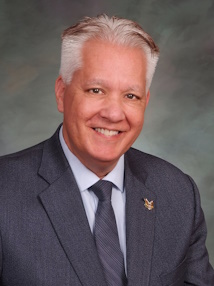
Rep. Chris Knapp
Sponsored bills
Maddy summaryThis bill amends Wyoming's election code to change deadlines for forming new political parties. It requires petitions to form a new party to be filed with the Secretary of State no later than June 1 before a general election year (previously May 1), and allows petition circulation to begin no earlier than April 1 of the preceding year (previously March 1). These changes directly affect groups seeking to establish new political parties in Wyoming that want to qualify for the general election ballot. The bill takes effect July 1, 2025.
Maddy summaryWyoming's HB 43 requires commercial websites that profit from content harmful to minors (such as obscene material or child pornography) to verify users' ages before allowing access. Covered platforms must use specific, accepted methods like driver's licenses, passports, or credit cards (excluding those not requiring users to be 18+) to confirm users are not under 18. The law creates legal liability for platforms that fail to verify ages, imposing penalties of up to $5,000 per violation, and allows parents or minors to sue for damages. It directly affects commercial online platforms hosting such content, not general websites or non-profit services.
Maddy summaryHB 280 modifies Wyoming's sex offender registration requirements for specific offenders. It mandates that people convicted of certain crimes involving minors (e.g., offenses with victims under 13 years old) must verify their address in person every 3 months with local sheriffs, instead of every 6 months for other offenses. The bill also prohibits these individuals from petitioning to be removed from the sex offender registry. These changes apply only to convictions occurring on or after July 1, 2025.
Maddy summaryHB 219 grants permanent rights for existing county and municipal roads to use state and school lands without fees. It applies to roads established before January 1, 2025, that already cross state/school lands. The bill requires counties and cities to submit documentation by April 2030 to secure these rights, with the state land board handling recording and fees. New roads built after 2025 must follow separate procedures, not automatic rights. This directly affects local governments managing roads on public lands.
Maddy summaryHB 83 creates a legal presumption that parents required to register as sex offenders (under Wyoming law) cannot have unsupervised visitation with children. It also requires courts to specifically consider any parent's sex-related conviction when determining child custody in divorce cases. The bill amends Wyoming statutes to add this factor to custody decisions and establishes the visitation presumption, effective July 1, 2025. This directly affects parents with sex offense convictions and family courts handling custody disputes.
Maddy summarySF 132 prohibits operating drones over critical infrastructure (including power plants, water facilities, hospitals, prisons, and military sites) for intentional photography, loitering, or criminal activity. Exceptions allow federal-authorized drone use, government operations, infrastructure owners, model aircraft in parks, and emergency services like police or disaster response teams. Violations face misdemeanor penalties ($2,500 fine or 6 months jail) for first offenses, escalating to felony charges ($5,000 fine or 2 years jail) for repeat violations. Law enforcement may disable violating drones, and the Wyoming National Guard can assist with enforcement, effective July 1, 2025.
Maddy summaryHB 322 clarifies that Wyoming's Secretary of State has the authority to create binding rules and directives for county election operations, directly affecting county clerks who serve as local election officers. The bill amends election statutes to require county clerks to follow all rules and written instructions issued by the Secretary of State under state election law. This establishes the Secretary of State as the central authority for uniform election administration across all counties. The bill takes effect July 1, 2025, but died in committee in March 2025.
Maddy summaryHB 310 allows owners of commercial trailers (defined as part of a commercial vehicle under Wyoming law) to permanently register their trailers for a one-time $350 fee instead of paying annual registration fees. This applies to trailers qualifying as commercial vehicles under existing statutes, directly affecting commercial trailer owners and operators. The bill creates a permanent registration option with fee exemptions for these trailers, while directing 50% of the $350 fee to county treasurers and 50% to the highway fund. It amends several statutes to establish this process and clarifies that permanent registration does not transfer to new owners upon sale.
Maddy summaryHB 147 prohibits all Wyoming state and local government entities - including state agencies, schools, universities, counties, and cities - from implementing diversity, equity, and inclusion (DEI) programs, activities, or policies. It defines "institutional discrimination" as concepts like claiming inherent superiority based on race or requiring individuals to acknowledge guilt based on their race, and bans governmental entities from requiring attendance at related trainings. The bill mandates that all affected entities comply by July 1, 2025, including creating necessary rules. It directly affects all public institutions in Wyoming that receive state funding or operate under state authority.