Maddy summaryThis bill prohibits Wyoming cities, towns, and counties from imposing fees, conditions, or concessions related to workforce housing, unmet housing needs, or affordable housing on new residential or commercial development projects. It applies to all permit applications submitted on or after July 1, 2026, and does not affect existing contracts or obligations for projects approved before that date. The law creates new state code sections (15-1-612 for municipalities and 18-5-209 for counties) to enforce this prohibition, directly affecting local governments and developers by removing potential requirements for affordable housing projects.

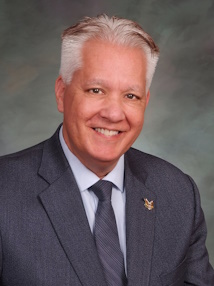
Rep. Chris Knapp
Sponsored bills
Maddy summaryHB 159 protects students' religious, political, and ideological speech in Wyoming public schools. It prohibits schools from discriminating against students for expressing these views in class discussions, assignments, club activities, or clothing - similar to how other student speech is treated. The bill creates a legal cause of action for violations, allowing students or clubs to seek at least $5,000 in damages plus other remedies. Exceptions include unprotected speech (per the First Amendment) or conduct that disrupts school operations or creates a hostile environment.
Maddy summaryThis bill repeals Wyoming's low-carbon energy standards that required public utilities to meet specific clean energy targets. It removes specific legal requirements from the state code (sections 37-1-101, 37-18-101, and 37-18-102) that previously governed utility operations. The repeal eliminates compliance obligations for utilities under these standards. The Public Service Commission must create new rules to implement this change, effective immediately upon enactment.
Maddy summaryHB 97 prohibits state and local governments, as well as financial institutions, from collecting, disclosing, or using financial records related to firearm or ammunition sales. It bans the use of "firearms codes" or merchant category codes that identify firearm retailers, preventing payment processors from discriminating against these businesses or their customers. The bill also prohibits maintaining registries of privately owned firearms or their owners through financial data and allows civil actions for violations. It directly affects firearm retailers, payment processors, and customers purchasing firearms or ammunition. Violations could result in criminal penalties (up to $2,000 fine or 1 year in jail) or civil enforcement.
Maddy summaryWyoming's HB 173 amends laws to increase parental responsibility for minors' actions. It allows property owners (including schools) to seek up to $5,000 in damages from parents if a child aged 10-17 maliciously damages property. Parents who fail to comply with court orders regarding juvenile discipline may face fines up to $1,000 or 120 days in jail. The bill also requires parents to post bonds of up to $1,000 if their lack of supervision directly causes a juvenile's delinquent behavior, with forfeited funds first covering damages and then going to school districts or county treasuries. The law would take effect July 1, 2026.
Maddy summaryHB 172 limits the number of historic horse racing terminals operators can run based on track size and requires a minimum of 16 live racing days at a track to qualify for a permit. It caps terminals at 1,200 per track that’s 7/8 mile or longer and 1,000 per shorter track, and prohibits adding new terminals if existing ones at a location are unused. The bill directly affects racetrack operators seeking simulcasting permits to operate these terminals. It takes effect July 1, 2026, with some provisions effective immediately upon enactment.
Maddy summaryHB 14 requires Wyoming counties to reimburse individuals for legal costs (including attorney fees and bail) when they successfully defend against criminal charges by reasonably using self-defense, resulting in a not-guilty verdict, dismissed charges, or release from prosecution. It also mandates automatic expungement (permanent removal) of criminal records for these individuals without requiring a court hearing, including no filing fees for either reimbursement petitions or expungement requests. The bill directly affects people prosecuted for crimes but acquitted or having charges dismissed due to lawful self-defense. Key provisions include county-funded reimbursement for defense costs and streamlined court orders to erase all related arrest and prosecution records. The law applies to cases where self-defense was used to prevent injury or property damage, as defined in the bill.
Maddy summaryHB 13 would allow human-use ivermectin to be sold as an over-the-counter medication in Wyoming without a prescription or consultation with a healthcare provider. The bill directly affects pharmacies and consumers by removing current prescription requirements for this medication. Key provisions define "over-the-counter medication" and specify that ivermectin cannot be classified as a dangerous substance or a controlled substance under existing laws. The law would take effect on July 1, 2026.
Maddy summaryHB 156 requires voters in Wyoming to prove they have been a bona fide resident of the state for at least 30 days before an election. It mandates that voters provide documentation verifying their residency when registering and prohibits registration based on documents showing noncitizen status. The bill defines "proof of residence" and directs the Secretary of State to establish acceptable documents through rulemaking. This affects all individuals registering to vote in Wyoming elections by adding a residency verification step to the registration process.
Maddy summaryThis bill (SF 165) amends Wyoming's election law (W.S. 22-3-116) to update how county clerks notify voters about potential registration cancellations. It allows county clerks to send cancellation notices via email in addition to mailing them, while keeping the current 20-day window for voters to request their name remain on the registry. The bill directly affects voters whose registrations may be canceled (e.g., due to inactivity or moving) and county clerks managing voter rolls. It does not change the requirement to notify voters before cancellation or the exceptions (like voting in another state or written request). The changes take effect July 1, 2025.