

Maddy summaryHB 150 creates a 13-member Wyoming Business Council Strategic Advisory Task Force to evaluate the state's existing Wyoming Business Council (WBC). The task force, including legislative members, business representatives from agriculture, manufacturing, oil/gas, tourism, and local government, will review the WBC's programs, duties, and operations - including those not specified in the Wyoming Economic Development Act - and compare them to other states. It must recommend changes to retain, modify, privatize, or eliminate WBC functions, develop a strategic direction for the council, and improve communication of its work to state leadership. The bill does not change the WBC's current operations but mandates this review process to inform potential future reforms.
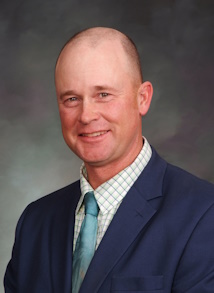
Rep. J.D. Williams
Sponsored bills
Maddy summaryHB 11 (Wyoming's "Landowner's Bill of Rights" bill) requires anyone seeking to take private property through eminent domain (like government agencies or private entities) to provide landowners with a written brochure detailing 11 specific rights before initiating proceedings. Key provisions include mandating written notice of the right to adequate compensation, proof of fair market value, the requirement for good-faith negotiations, and access to legal or appraisal assistance before condemnation. The bill applies to all eminent domain actions starting July 1, 2026, ensuring landowners receive clear information about their legal protections during the process. It directly affects property owners facing potential condemnation, making the process more transparent without changing the underlying eminent domain standards.
Maddy summaryHB 164 creates the Wyoming Generational Investment Account, a permanent trust fund designed to save state money for future generations. Starting July 1, 2026, the state will transfer $100 million annually from the legislative stabilization reserve into this account, with funds invested per specific rules (85% private equity, 15% private credit). Investment earnings from these transfers cannot be withdrawn for 20 years; after that, half the earnings go to the general fund and half to the stabilization reserve. The bill directly affects state budgeting by redirecting annual transfers and setting long-term investment rules for these funds.
Maddy summaryHB 163 limits the state's annual costs that can be charged against Wyoming's Beef Council to 3% of fees collected by the council that aren't already required by state or federal law. This directly affects the Beef Council (which collects industry fees) and state agencies like the Department of Administration and Information that manage these funds. The bill's key provision sets a hard cap on administrative fees, ensuring the council retains more of its collected revenue. The law will take effect on July 1, 2026, and does not alter how the council spends its funds.
Maddy summaryHB 158, the EV Charging Stations Transparency Act, requires operators of direct current (DC) fast-charging stations in Wyoming to display a clear 3x3 inch label showing the primary energy source (e.g., wind, natural gas, coal) powering the station. This applies to stations connected to public utilities or using on-site generation, with labels updated annually based on the utility’s annual energy mix in the station’s service area. If the primary source accounts for less than 50% of electricity, the label must show the top two sources. The law aims to provide transparency for EV drivers about the energy sources powering charging stations, with violations punishable by fines up to $750.
Maddy summaryHB 149 prohibits individuals convicted of specific offenses against minors or under investigation for child abuse/neglect from administering home-based educational programs in Wyoming. It bans parents/guardians with recent convictions (within 7 years) for offenses like child abuse, sexual assault, or crimes involving minors (as listed in subsection 21-4-102(b)(i)), unless the conviction was reversed, annulled, or pardoned. The bill also restricts anyone advised by child protective services not to start home schooling during an active abuse/neglect investigation. Parents already running home schools before an investigation may continue, but must appeal restrictions through administrative hearings if challenged.
Maddy summaryWyoming's HB 192 proposes changes to penalties for drivers who refuse chemical tests after a DUI arrest when a search warrant has been obtained. The bill increases penalties for refusal to include up to six months in jail, a $750 fine, and mandatory license suspension (30 days to one year) for all drivers, including those under 21 and commercial drivers. It also allows refusal to be used as evidence in court and requires offenders to complete substance use disorder assessments and treatment at their own expense. The bill would take effect on July 1, 2026, if passed.
Maddy summaryThis bill amends Wyoming's DUI laws to clarify that "vehicle" does not include horses or other equines when ridden. It specifically updates sections 31-5-233 (DUI penalties) and 31-5-234 (youthful driver alcohol laws) to exclude horse riders from these provisions. The change directly affects people riding horses, ensuring they are not subject to motor vehicle DUI laws. The bill takes effect July 1, 2026.
Maddy summaryHB 71 allows businesses to round cash payments to the nearest five cents when exact change isn't available due to missing pennies. It specifies that payments ending in 1¢, 2¢, 6¢, or 7¢ must round down, while those ending in 3¢, 4¢, 8¢, or 9¢ round up - except exact 1¢ or 2¢ amounts, which round up to 5¢. Businesses must display a sign about rounding, and rounding applies only to cash payments (not credit/debit), with taxes added before rounding. The bill takes effect July 1, 2026, and does not override federal rounding rules for SNAP purchases.
Maddy summaryHB 142 requires Wyoming public schools to implement literacy screening assessments for students in kindergarten through grade 5, administered three times yearly for K-3 and targeted for grades 4-5. Schools must provide evidence-based interventions for students identified as high-risk for reading difficulties (including dyslexia), with individualized plans requiring parental consent, while also mandating research-backed core literacy instruction in areas like phonemic awareness, decoding, and reading comprehension. The bill repeals Wyoming's previous reading assessment program and requires annual reporting to the state education department on student progress toward an 80% target for low-risk reading scores in K-3, with schools failing to meet goals submitting improvement plans. It directly affects K-5 students, school districts, and parents through new screening, intervention, and reporting requirements.