Maddy summaryHB 178 prohibits public employers from automatically deducting union dues or fees from public employees' paychecks. It requires public employee unions to annually report detailed financial information to members, including membership numbers, revenue sources, and spending over $5,000 (such as political activities or legal services), with reports distributed to members, posted online, and available upon request. The bill applies to all public employee unions in Wyoming, including those representing firefighters, and takes effect July 1, 2026. Violations are punishable as misdemeanors, and unions already filing federal LM-2 reports are exempt from the annual reporting requirement.

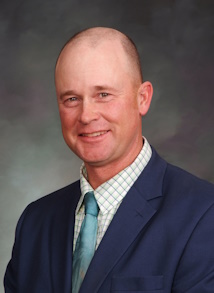
Rep. J.D. Williams
Sponsored bills
Maddy summaryWyoming's SJ 9 is a joint resolution urging Congress to protect the state's access to federal public lands while ensuring local communities have a say in land management decisions. It opposes broad or indiscriminate sales of public lands and demands federal agencies respect Wyoming's existing land-use plans, county-level input, and multiple-use frameworks that support recreation, agriculture, hunting, fishing, and resource development. The resolution also calls for funding to streamline efficient land exchanges under current laws when they benefit local communities and public access, without advocating for specific policy changes.
Maddy summaryWyoming's SF 113 requires county clerks to conduct hand counts of election ballots for the 2026 primary and general elections. Specifically, counties must physically examine approximately 5% of ballots for one federal race, one statewide race (selected by the state secretary of state), and all legislative races on the ballot. The hand count results must be compared to electronic tabulation results within nine days of the county canvass, with any discrepancies reported to the secretary of state. This bill directly affects county election officials who will implement the hand count audits. The law takes effect immediately upon becoming law, with reports due by May 1, 2027.
Maddy summaryWyoming's SF 41 creates "portable benefit accounts" to help independent contractors access benefits like health insurance or retirement savings. The bill allows hiring parties (companies or individuals) or contractors themselves to voluntarily contribute funds to these accounts, with strict rules requiring written opt-in agreements and clear disclosure. It prohibits using these contributions to determine employment status and mandates that accounts be managed by approved financial institutions. The law requires the Department of Workforce Services to create implementing rules and takes effect July 1, 2026. This directly affects independent contractors who currently lack employer-provided benefits.
Maddy summaryThis bill repeals the expiration date (sunset) for Wyoming's property tax exemption that benefits long-term homeowners, making the exemption permanent. It directly affects homeowners who have owned their primary residence in Wyoming for a specified period, typically 10 or more years under existing law. The key provision removes the scheduled end date for this tax break, ensuring eligible homeowners continue to receive the exemption without needing future legislative action. The change takes effect on July 1, 2026, and applies statewide to qualifying properties.
Maddy summaryThis bill appropriates $15 million from Wyoming's tourism reserve fund to support the development of a rodeo and cowboy museum and hall of fame in Wyoming. The funds will be distributed in three installments of $5 million each on July 1, 2026, 2027, and 2028, contingent on the Wyoming Tourism Board certifying that relocation efforts will boost tourism, jobs, and state revenue. Applicants must provide matching funds (at least $1 for every $1 granted) and relocate to Wyoming by June 30, 2028, or repay the grant. The Wyoming Office of Tourism must report annually on fund usage until 2036.
Maddy summaryWyoming's SJ 5 is a joint resolution requesting Congress to call a constitutional convention under Article V of the U.S. Constitution. It specifically asks for a convention limited to proposing amendments that impose spending limits on the federal government, restrict federal power over states, and limit terms for federal officials and Congress members. The resolution includes specific safeguards, such as requiring two-thirds of states to agree on the same purpose before Congress acts, ensuring states vote equally, and prohibiting consideration of any changes to the Bill of Rights. This request directly affects Wyoming's legislative action and the broader process for amending the Constitution, though it does not create new law itself.
Maddy summaryWyoming's SF 72 creates the "Interstate Teacher Mobility Compact," enabling teachers licensed in one participating state to more easily obtain licensure in another member state. The bill directly affects teachers seeking employment across state lines, particularly military spouses relocating due to service. Key provisions establish a streamlined process for recognizing out-of-state licenses, require states to share disciplinary information, and remove barriers to hiring qualified educators. It does not apply to ongoing licensing requirements after initial placement. The compact aims to simplify mobility while maintaining each state's authority over teacher regulation.
Maddy summaryWyoming's HB 140 allows building owners or contractors to hire licensed architects, engineers, or ICC-certified third-party inspectors (not involved in the project's design or construction) to perform most building permit inspections, rather than relying solely on local building departments. Owners must notify the local authority in writing before inspections (via email or online systems), provide the inspector's details, and share inspection reports electronically within deadlines. Third-party inspectors must carry $1 million in liability insurance and cannot conduct final inspections required for certificate of occupancy, which remains the local authority's responsibility. This bill directly affects construction project owners, contractors, and local building departments in Wyoming.
Maddy summaryHB 133 changes how conservation district supervisors are elected in Wyoming. It requires new districts to elect five supervisors: three rural agricultural residents (one specifically for production agriculture), one urban resident, and one at-large candidate, all serving staggered terms. The bill defines "production agriculture" as commercial farming, ranching, or crop production and mandates that at least two supervisors must be rural residents actively involved in such work. These rules apply to supervisors elected on or after July 1, 2026, the bill's effective date. The bill does not alter existing supervisors' terms but sets new election standards for future appointments.