

Maddy summaryThis bill modifies tax rules to provide financial incentives for small oil and gas producers operating in marginal or low-production areas. It changes how the percentage depletion tax deduction is calculated, allowing a higher deduction rate based on oil prices and adjusting that rate annually using an inflation measure called the Producer Price Index. The legislation also removes certain income limits that restrict how much of this tax benefit producers can claim and doubles the minimum oil production threshold from 1,000 to 2,000 barrels to qualify for the deduction. These tax changes would take effect for taxable years beginning after December 31, 2026, primarily affecting independent oil and gas companies and rural communities dependent on these industries.
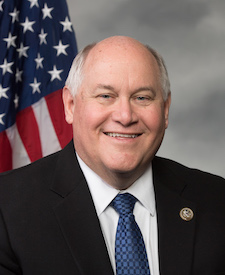
Rep. Ron Estes
Sponsored bills
Maddy summaryThis bill directs the U.S. Trade Representative to investigate whether Canada's Online Streaming Act unfairly targets American streaming companies by imposing discriminatory taxes and content requirements. It authorizes the Trade Representative to consult with affected U.S. businesses and trade partners, then potentially take retaliatory trade actions if Canada does not amend the measures. The legislation also requires regular reporting to Congress on Canada's implementation of these policies and extends similar investigative powers to other countries with comparable digital trade restrictions.
Maddy summaryHR 556, the Protecting Access for Hunters and Anglers Act, prevents federal agencies from banning lead ammunition or tackle on public lands and waters managed for hunting or fishing. It directly affects hunters and anglers using federal lands (like national wildlife refuges, public forests, and BLM lands) by blocking nationwide restrictions on lead products. The bill allows limited exceptions only for specific locations where wildlife decline is directly linked to lead use, and the restriction must align with state law or get approval from the state wildlife agency. This changes how federal land managers can regulate lead, requiring state coordination for any local restrictions.
Enhanced Iran Sanctions Act of 2025 This bill imposes sanctions on certain foreign persons (individuals and entities) that are involved in Iran's petroleum sector as well as certain associated persons. The bill also requires or authorizes actions to facilitate the enforcement of sanctions on Iran. Specifically, the bill requires the President to impose visa- and property-blocking sanctions on any foreign person that, after the bill's enactment, knowingly engages in any transaction related to the processing, export, or sale of oil, condensates, gas, liquefied natural gas, or other petrochemical products in whole or in part from Iran. The President must also impose sanctions on certain foreign persons associated with a sanctioned individual or entity. For example, the President must sanction the subsidiaries and corporate officers of a sanctioned business. The bill provides certain exceptions to these sanctions, including specifying that sanctions do not apply to the importation of goods or to conducting or facilitating transactions for humanitarian assistance. The Department of State must establish an interagency working group that shall seek to establish a multilateral contact group to coordinate international efforts to enforce sanctions on Iran. The bill expands the State Department rewards program to authorize a reward payment to any individual who furnishes information leading to the identification of a person (1) subject to sanctions under this bill, or (2) that has attempted or is attempting to evade sanctions under this bill.
Maddy summaryThe Semi-Trailer Tax Parity Act modifies federal tax rules to allow floor plan financing interest rules to apply to semi-trailers and their chassis. This change directly affects businesses that finance semi-trailers for commercial use, such as trucking companies and logistics firms. The bill amends the Internal Revenue Code to include semi-trailers in the category of property eligible for specific interest deduction treatments previously reserved for other types of vehicles. This adjustment ensures that financing costs for semi-trailers are treated similarly to those for other commercial vehicles under existing tax provisions. The policy change takes effect for taxable years beginning after the bill is enacted.
Maddy summaryHCONRES 76 is a ceremonial resolution recognizing Wichita Police Chief Richard LaMunyon for founding the Law Enforcement Torch Run (LETR) in 1981. It highlights how LETR, starting with a $300 fundraising run in Wichita, has grown into a global movement involving over 150,000 law enforcement officers across 50 U.S. states, Canada, and 25+ countries. The resolution notes LETR has raised $1.14 billion since its inception to support Special Olympics athletes with intellectual disabilities. It does not create new laws or affect policy, but formally commends LaMunyon's leadership and the movement's role in promoting inclusion.
Maddy summaryThis bill, titled the Stop Unemployment Fraud Act, requires states to verify the identity of unemployment compensation claimants using government-issued IDs and supporting documents like utility bills or lease agreements. It mandates that states use data-matching systems to cross-check claimant information against employment records, new hire directories, and databases of incarcerated or deceased individuals to detect and prevent fraud. The legislation also prohibits relying solely on a claimant's self-attestation to prove eligibility and strengthens work search requirements by mandating that claimants maintain and submit weekly records of job search activities. Additionally, the bill allows states to use up to 5% of recovered overpayments or collected contributions to fund fraud prevention efforts, technology modernization, and proper employment classification programs.
Maddy summaryThis bill, known as the Kelsey Smith Act, would require telecommunications service providers to share location data with law enforcement or public safety answering points during emergency situations. It directly affects phone and internet service providers, law enforcement officers, and individuals whose location information might be disclosed. The key provision allows officers to request location data without delay if the device was used to contact emergency services in the past 48 hours or if there is reasonable suspicion of an emergency involving risk of death or serious physical harm. The bill also establishes requirements for obtaining consent from subscribers or their next of kin, with a defined priority order for determining next of kin when consent is needed. Additionally, law enforcement agencies must maintain records of these requests, and the bill does not exempt providers from complying with applicable state laws regarding location information disclosure.
Maddy summaryHRES 1073 is a non-binding resolution designating February 21-28, 2026, as "National FFA Week" to recognize the National Future Farmers of America (FFA) Organization’s role in developing agricultural education leaders and to celebrate the 50th anniversary of Alaska’s State FFA Association. It does not create new laws or affect any specific groups or policies; instead, it formally expresses the House’s support for this commemorative week. The resolution highlights FFA’s mission to prepare students for leadership and careers in agriculture, food, and natural resources. As a symbolic gesture, it has no direct legislative or financial impact on constituents.
Maddy summaryThis bill delays a Medicare payment adjustment for physicians' services until 2030. It prevents the implementation of a 2025 rule that would have adjusted Medicare payment rates based on efficiency metrics for doctors' work. The delay requires the Secretary to submit a report to Congress by 2027 assessing whether a future one-time adjustment to these payment rates is necessary, with specific conditions for any future implementation. The bill does not cancel the adjustment but postpones it, while maintaining existing payment update percentages for Medicare physician services. It directly affects physicians and Medicare providers who rely on these payment structures.