Issue · Environment

Environment

Every environment bill, vote, and legislator stance in Wisconsin, automatically classified by Maddy, our AI policy reader.

Total bills
188
2025-2026 Regular Session
Top supporter
Shannon Zimmerman
89% support rate
Top opponent
Francesca Hong
20% support rate
Ranked legislators
10
5 support · 5 oppose
Key legislators

Who's moving environment in Wisconsin

Legislators moving environment in Wisconsin
Legislator Party Stance Support rate Votes
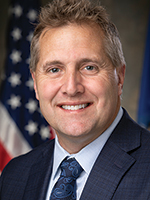
Shannon Zimmerman
Shannon Zimmerman House · District 30
R
Strong +
89% 17
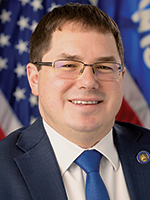
Mark Spreitzer
Mark Spreitzer Senate · District 15
D
Strong +
88% 18
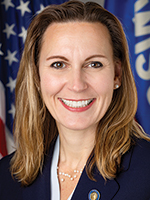
Melissa Ratcliff
Melissa Ratcliff Senate · District 16
D
Strong +
88% 18
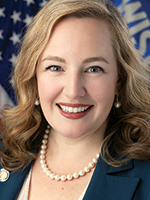
Jodi Habush Sinykin
Jodi Habush Sinykin Senate · District 8
D
Strong +
88% 18
Kelda Roys
Kelda Roys Senate · District 26
D
Strong +
86% 17
Francesca Hong
Francesca Hong House · District 76
D
Strong −
20% 19
Supreme Moore Omokunde
Supreme Moore Omokunde House · District 17
D
Strong −
20% 19
Lori Palmeri
Lori Palmeri House · District 54
D
Strong −
20% 19
Darrin Madison
Darrin Madison House · District 10
D
Strong −
20% 19
Sequanna Taylor
Sequanna Taylor House · District 11
D
Strong −
20% 18
Showing 101–110 of 188 bills

All environment bills

failed · Wisconsin · Senate Mar 23, 2026

SB 774: Relating to: wolf monitoring and nonlethal abatement and making an appropriation. (FE)

SB 774 allocates $3.525 million annually for wolf monitoring and nonlethal abatement projects through the Department of Natural Resources. It directly affects wildlife management efforts by funding ongoing tracking of wolf populations and implementing nonlethal methods (like fencing or deterrents) to prevent conflicts with livestock. The bill creates a permanent funding line (20.370 (1) (js)) in state statutes to cover these activities. This is a procedural funding measure with no voting record or policy changes beyond the specified appropriations.
Sub-Topics Wildlife
failed · Wisconsin · Assembly Mar 23, 2026

AB 781: Relating to: wolf monitoring and nonlethal abatement and making an appropriation. (FE)

AB 781 allocates $3.525 million annually (for 2025-26 and 2026-27) to fund wolf monitoring and nonlethal management programs under the Department of Natural Resources. It creates a new budget line item (20.370 js) specifically for these purposes, continuing existing funding without introducing new regulations or policy changes. The bill directly affects the state's wildlife management operations and does not target specific communities or landowners. This is a procedural budget appropriation, not a substantive legislative change.
failed · Wisconsin · Senate Mar 23, 2026

SB 741: Relating to: food waste reduction grants, granting rule-making authority, and making an appropriation. (FE)

SB 741 creates a new food waste reduction grant program funded with $100,000 annually for 2025-26 and 2026-27. It directs the Department of Agriculture to provide grants for pilot projects focused on preventing food waste, redirecting surplus food to hunger relief organizations, and composting food waste. The program prioritizes projects in census tracts with below-average median income and no grocery stores. The bill also requires the department to establish administrative rules for the grant program. This directly affects organizations implementing food waste reduction initiatives, particularly in underserved communities.
Sub-Topics Appropriations
signed · Wisconsin · Senate Mar 27, 2026

SB 78: Relating to: the distribution and labeling of fertilizers and soil or plant additives produced from manure. (FE)

SB 78 modifies labeling and testing rules for fertilizers and soil additives made from manure compost or vermicompost. It allows producers to use "typical analysis" (an average nutrient analysis) instead of the standard "guaranteed analysis" for claims about plant nutrients and beneficial substances on labels. The bill also exempts these compost-based products from a requirement that mixed fertilizers must contain at least 24% combined nitrogen, phosphate, and potash. This simplifies regulatory compliance for producers of compost-derived soil and plant products.
failed · Wisconsin · Senate Mar 23, 2026

SB 82: Relating to: governmental restrictions based on the energy source of a motor vehicle or other device.

SB 82 prohibits state and local governments from restricting the use or sale of motor vehicles based on their energy source (like gasoline, electric, or hydrogen power). It also bans similar restrictions on other devices that rely on specific energy sources for key functions. The law applies broadly to all government agencies and units, preventing them from enacting policies that target vehicles or devices solely by their power source. The only exception allows governments to maintain their own vehicle purchase policies for their own fleets.
failed · Wisconsin · Assembly Mar 23, 2026

AB 174: Relating to: transmission facilities; installation of large wind energy, large solar energy, and battery energy storage systems; installation of light-mitigating technology systems; and prioritizing nuclear energy resources. (FE)

AB 174 amends energy statutes to redefine "renewable resources" for reporting purposes, explicitly including nuclear energy starting in 2026. It establishes new definitions for large-scale wind/solar systems (100+ megawatts) and battery storage, while clarifying that local governments cannot restrict energy installations more strictly than state rules. The bill affects energy developers, utilities, and local governments by changing how transmission contracts are audited and how renewable/nuclear projects are categorized. It does not create new project requirements but updates existing reporting frameworks for the state legislature and governor. The bill is pending in the Energy and Utilities Committee after being introduced in April 2025.
failed · Wisconsin · Assembly Mar 23, 2026

AB 633: Relating to: the rights of Devil’s Lake State Park and providing a penalty. (FE)

AB 633 grants Devil’s Lake State Park in Baraboo, Wisconsin, specific legal rights, including the right to clean water, natural ecosystems, and freedom from harmful activities. The bill prohibits state agencies, businesses, and government entities from infringing these rights, requiring agencies to review and adjust policies within one year and complete full park restoration within five years. Violations carry $1,000 fines per offense, and damages must fund park restoration via the conservation fund. It also allows individuals to sue to enforce these rights, with courts prioritizing ecological restoration over scientific uncertainty.
failed · Wisconsin · Senate Mar 23, 2026

SJR 61: Relating to: designating June 2025 as Pollinator Awareness Month in Wisconsin.

SJR 61 designates June 2025 as Pollinator Awareness Month in Wisconsin. This symbolic resolution does not create new laws or funding but aims to raise public awareness about the importance of pollinators like bees and butterflies to agriculture and ecosystems. It highlights Wisconsin's existing efforts, such as "No Mow May" initiatives, which have demonstrated positive impacts on bee populations. The resolution encourages community engagement in pollinator-friendly practices, such as planting native species and reducing pesticide use, without imposing new requirements on residents or organizations.
failed · Wisconsin · Assembly Mar 23, 2026

AB 363: Relating to: establishing a dairy cattle innovation program. (FE)

AB 363 creates a no-interest loan program for dairy farms operating 50-714 cows that meet strict criteria, including 98% in-state payroll, no recent environmental or safety violations, and legal workforce compliance. Funds can be used to adopt technology improving milk production efficiency, animal health, milk quality, or reducing environmental impacts from manure management. Priority is given to projects creating jobs, enhancing manure management practices, or lowering environmental effects per gallon of milk produced. The program aims to support sustainable dairy operations while ensuring local economic benefits through targeted financial assistance.
failed · Wisconsin · Assembly Mar 23, 2026

AB 106: Relating to: exempting certain electric vehicle charging stations located at a residence from the electric vehicle charging tax. (FE)

AB 106 exempts electricity delivered to Level 3 electric vehicle (EV) charging stations installed at residences from the existing EV charging tax. This directly affects homeowners who own or operate Level 3 chargers at their primary residence. The bill removes the tax on electricity used for charging EVs at these residential stations, effective retroactively from January 1, 2025. The exemption applies specifically to Level 3 chargers at homes, not to commercial or public charging locations.
Showing 101 to 110 of 188 bills
Previous 1 10 11 12 19 Next