Issue · Environment

Environment

Every environment bill, vote, and legislator stance in Wisconsin, automatically classified by Maddy, our AI policy reader.

Total bills
188
2025-2026 Regular Session
Top supporter
Shannon Zimmerman
89% support rate
Top opponent
Francesca Hong
20% support rate
Ranked legislators
10
5 support · 5 oppose
Key legislators

Who's moving environment in Wisconsin

Legislators moving environment in Wisconsin
Legislator Party Stance Support rate Votes
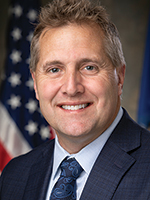
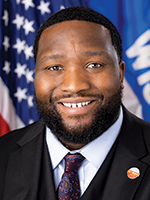
Shannon Zimmerman
Shannon Zimmerman House · District 30
R
Strong +
89% 17
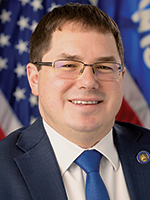
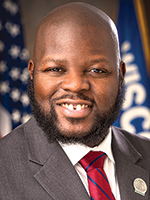
Mark Spreitzer
Mark Spreitzer Senate · District 15
D
Strong +
88% 18
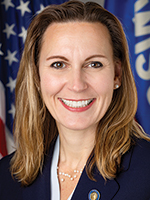
Melissa Ratcliff
Melissa Ratcliff Senate · District 16
D
Strong +
88% 18
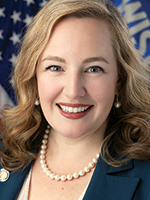
Jodi Habush Sinykin
Jodi Habush Sinykin Senate · District 8
D
Strong +
88% 18
Kelda Roys
Kelda Roys Senate · District 26
D
Strong +
86% 17
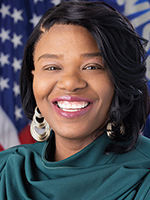
Francesca Hong
Francesca Hong House · District 76
D
Strong −
20% 19
Supreme Moore Omokunde
Supreme Moore Omokunde House · District 17
D
Strong −
20% 19
Lori Palmeri
Lori Palmeri House · District 54
D
Strong −
20% 19
Darrin Madison
Darrin Madison House · District 10
D
Strong −
20% 19
Sequanna Taylor
Sequanna Taylor House · District 11
D
Strong −
20% 18
Showing 91–100 of 188 bills

All environment bills

failed · Wisconsin · Senate Mar 23, 2026

SB 779: Relating to: prohibiting food and beverages from being served in foam polystyrene packaging and providing a penalty. (FE)

SB 779 prohibits restaurants, food vendors, and vending machine operators from serving food or beverages in foam polystyrene packaging (like takeout containers), effective 13 months after publication. Exemptions include pre-sealed containers from outside the state and packaging for raw meat, poultry, fish, or seafood. Violations after 90 days of written notice incur a $250 penalty, increasing to $500 for subsequent offenses after 180 days. The bill directly affects retail food businesses operating in the state, with limited waivers available for undue hardship. It creates a clear policy change to reduce foam polystyrene waste without specifying environmental outcomes.
Sub-Topics Recycling
failed · Wisconsin · Assembly Mar 23, 2026

AB 707: Relating to: managed forest land recording fees. (FE)

AB 707 modifies fees for land designated as "managed forest land" in Wisconsin. It requires new owners of such land to pay a $100 fee within 30 days of transfer (to certify continued compliance with management plans and obtain department approval), and sets a $300 withdrawal fee if land is removed from the program. The fees are deposited into the conservation fund, with $20 allocated to forestry recording under statute 20.370. This directly affects landowners transferring or withdrawing managed forest land, updating existing fee structures under statutes 77.82 and 77.88.
Sub-Topics Conservation Forestry
failed · Wisconsin · Senate Mar 23, 2026

SB 702: Relating to: requiring battery stewardship organizations to administer battery collection and recycling programs and providing a penalty. (FE)

SB 702 requires producers of covered batteries (like portable and medium-sized rechargeable batteries that can be easily removed) to fund and manage recycling programs through designated "battery stewardship organizations." Starting January 1, 2027, producers must mark batteries with their brand and, by January 1, 2029, include chemistry details for proper recycling. Consumers cannot dispose of covered batteries in regular trash after January 1, 2028, and must instead use designated collection sites. The bill excludes medical device batteries, lead-acid batteries, and certain alkaline batteries from these requirements.
signed · Wisconsin · Senate Apr 6, 2026

SB 798: Relating to: a wetland assured delineation program, extending the time limit for emergency rule procedures, providing an exemption from emergency rule procedures, and granting rule-making authority. (FE)

SB 798 establishes a "wetland assured delineation program" that allows certified professionals to identify wetland boundaries for development projects without requiring final government confirmation. To qualify, professionals must meet specific education/experience requirements (e.g., bachelor’s degree with 5 years’ field experience) and submit reports by March 15 annually. This program directly affects land developers, environmental consultants, and property owners needing wetland assessments, as certified delineators’ work will carry the same legal weight as government-verified reports under state law. The bill also extends deadlines for emergency rule procedures and grants the Department of Natural Resources authority to implement program rules.
failed · Wisconsin · Assembly Mar 23, 2026

AB 782: Relating to: prohibiting food and beverages from being served in foam polystyrene packaging and providing a penalty. (FE)

AB 782 bans restaurants and food vendors from serving food or beverages in foam polystyrene containers, directly affecting retail food businesses like restaurants, cafes, and vending machine operators. The bill includes exemptions for containers pre-sealed outside the state and raw meat/fish packaging for off-premise consumption. Businesses violating the ban after receiving written notice face fines up to $250 for the first offense and $500 for repeated violations. A waiver may be granted for undue hardship, but it cannot extend beyond 13 months after the effective date. The law aims to reduce single-use plastic waste while allowing limited exceptions for practical food handling needs.
Sub-Topics Recycling
failed · Wisconsin · Senate Mar 23, 2026

SB 698: Relating to: managed forest land recording fees. (FE)

SB 698 modifies fees for managed forest land transactions. It requires new owners of land designated as managed forest land to pay a $100 fee within 30 days of transfer to maintain the designation, with $20 of that fee credited to forest land management. The bill also sets a $300 withdrawal fee for land exiting the program, both fees deposited into the conservation fund. This directly affects landowners transferring or withdrawing managed forest land. The changes update existing statutes governing these recording fees without altering the land designation requirements.
failed · Wisconsin · Assembly Mar 23, 2026

AB 797: Relating to: grants for testing privately owned wells and providing education, providing an exemption from emergency rule procedures, granting rule-making authority, and making an appropriation. (FE)

AB 797 creates a $2.5 million grant program to help counties, cities, and towns test privately owned wells for water quality and map well locations. It provides up to $10,000 per grant for well testing, groundwater assessment, and geologic studies, plus separate grants for county health departments to offer well-testing education. The bill also requires municipalities with private wells to inform residents about testing importance and exempts the department from standard emergency rule procedures for implementing this program. The law appropriates funds for fiscal years 2025-26 and 2026-27 to support these concrete actions.
failed · Wisconsin · Senate Jun 1, 2026

SB 773: Relating to: funding for the University of Wisconsin System freshwater collaborative and making an appropriation. (FE)

SB 773 increases funding by $5 million for the University of Wisconsin System's freshwater collaborative for fiscal years 2025-26 and 2026-27. This appropriation directly supports the collaborative's work, which focuses on freshwater research and solutions within the UW System. The bill modifies existing budget allocations to provide this specific, dedicated funding for two consecutive fiscal years. It does not change program requirements or create new policies, only adjusting the financial allocation.
failed · Wisconsin · Assembly Mar 23, 2026

AB 771: Relating to: funding for the University of Wisconsin System freshwater collaborative and making an appropriation. (FE)

AB 771 increases annual funding by $5 million for the University of Wisconsin System's freshwater collaborative for fiscal years 2025-26 and 2026-27. This bill directly affects the University of Wisconsin System's freshwater collaborative research program by providing new state funding. The key mechanism is a specific budget appropriation added to existing funding under Section 20.285 (1) (ar). The bill does not change program requirements or create new regulations, only adjusting the financial allocation. The funding supports collaborative research on freshwater resources across the UW System.
failed · Wisconsin · Senate Mar 23, 2026

SB 778: Relating to: packaging reduction and recycling, creating a producer responsibility program, granting rule-making authority, making an appropriation, and providing a penalty.

SB 778 creates a mandatory producer responsibility program requiring businesses that package products sold in the state (like retailers, restaurants, and manufacturers) to fund recycling and packaging reduction efforts. It establishes fees paid by "producers" (including brands, importers, and manufacturers) to a new packaging reduction organization, which will manage recycling programs and track recycled content. The bill defines "recyclable" packaging as materials that can be consistently processed for reuse, excludes advanced recycling methods from this definition, and sets requirements for packaging reduction goals. This replaces voluntary recycling with a structured system where producers directly finance waste management, affecting all businesses selling packaged goods within the state.
Showing 91 to 100 of 188 bills
Previous 1 9 10 11 19 Next