Issue · Criminal Justice

Criminal Justice

Every criminal justice bill, vote, and legislator stance in Wisconsin, automatically classified by Maddy, our AI policy reader.

Total bills
39
2025-2026 Regular Session
Top supporter
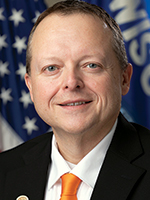
Jeff Mursau
70% support rate
Top opponent
Ryan Clancy
32% support rate
Ranked legislators
10
5 support · 5 oppose
Key legislators

Who's moving criminal justice in Wisconsin

Legislators moving criminal justice in Wisconsin
Legislator Party Stance Support rate Votes
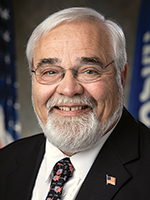
Jeff Mursau
Jeff Mursau House · District 36
R
Support
70% 54
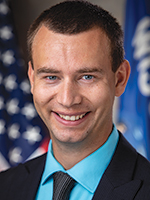
Will Penterman
Will Penterman House · District 38
R
Support
67% 48
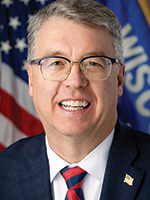
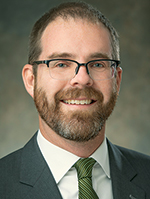
Brad Pfaff
Brad Pfaff Senate · District 32
D
Support
64% 36
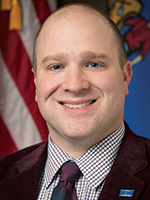
Eric Wimberger
Eric Wimberger Senate · District 2
R
Support
64% 36
Scott Krug
Scott Krug House · District 72
R
Support
64% 58
Ryan Clancy
Ryan Clancy House · District 19
D
Oppose
32% 53
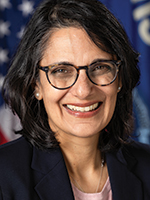
Renuka Mayadev
Renuka Mayadev House · District 77
D
Oppose
32% 58
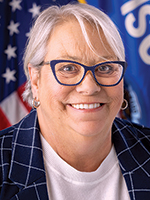
Christine Sinicki
Christine Sinicki House · District 20
D
Oppose
32% 58
Alex Joers
Alex Joers House · District 81
D
Oppose
32% 58
Christian Phelps
Christian Phelps House · District 93
D
Oppose
33% 57
Showing 31–39 of 39 bills

All criminal justice bills

vetoed · Wisconsin · Senate May 13, 2026

SB 146: Relating to: prohibiting persons who have been convicted of a violent crime from changing their name and providing a penalty.

SB 146 prohibits individuals convicted of a violent felony from legally changing their name. It amends existing law to clarify that the prohibition applies specifically to violent crimes classified as felonies, not all violent offenses. This directly affects people with violent felony convictions who seek to change their legal name. The bill establishes a clear legal barrier to name changes for this group, with penalties for violations.
Sub-Topics Violent Crime
failed · Wisconsin · Senate Mar 23, 2026

SB 222: Relating to: extortion, sexual extortion, and providing a penalty.

SB 222 increases penalties for extortion and sexual extortion by making it a Class B felony if the crime directly causes the victim's death. It also expands victim compensation, allowing family members or household members of victims of specific violent crimes (including certain sexual offenses) to claim economic losses from the victim's death. The bill modifies existing statutes to clarify eligibility for these compensation awards, which cover losses like funeral costs or lost wages. These changes directly affect victims of extortion-related deaths and their families seeking financial support.
Sub-Topics Victims' Rights
failed · Wisconsin · Assembly Mar 23, 2026

AB 259: Relating to: criminal trespass at a campground and providing a penalty. (FE)

AB 259 creates a new misdemeanor offense for entering or remaining on a campground without permission from the operator. It directly affects visitors who enter or stay on licensed campground property without consent. The law allows campground operators to issue written requests for individuals to leave, and failing to comply results in fines up to $100 or up to 30 days in jail. This bill specifically applies to campgrounds and camping resorts licensed under state law, clarifying that standard trespass laws do not cover campground occupants or guests.
Sub-Topics Corrections
failed · Wisconsin · Senate Mar 23, 2026

SB 132: Relating to: classification of the crime of impersonating law enforcement officers, fire fighters, and certain other emergency personnel and providing a penalty.

SB 132 upgrades penalties for impersonating emergency personnel, changing the offense from a misdemeanor to a felony. It applies to anyone pretending to be a police officer, firefighter, paramedic (emergency medical services practitioner), or emergency medical responder with intent to deceive. The bill creates a new felony classification under state law, replacing current misdemeanor penalties for these specific impersonation acts. This directly affects individuals who falsely pose as these professionals, increasing potential criminal consequences.
failed · Wisconsin · Assembly Mar 23, 2026

AB 170: Relating to: prohibiting the Department of Justice from using the legal services of nongovernmental employees. (FE)

AB 170 prohibits the Department of Justice from using legal services from non-governmental employees (such as private lawyers or contractors) for investigating or prosecuting civil or criminal cases. The only exception allows legal interns paid no more than $10,000 annually, even if they are not state or federal employees. This directly affects how the Department of Justice hires legal support for case work. The bill creates a new statute (165.252) to enforce this restriction, with no other exemptions beyond the intern provision. It was introduced in April 2025 and referred to the Judiciary Committee.
failed · Wisconsin · Assembly Mar 23, 2026

AB 29: Relating to: impoundment of vehicles used in certain traffic offenses.

AB 29 allows police to seize (impound) vehicles used in specific traffic violations, such as a second speeding offense exceeding 25 mph over the limit, repeated DUI-related violations, or reckless driving. It directly affects drivers convicted of these offenses, requiring vehicles to be held for 90 days unless released earlier through owner request (if they didn’t operate the vehicle during the violation) or court order. Owners can petition a court for immediate release within 30 days if charges are dismissed or if they prove ownership and lack of consent during the violation. If convicted, courts may adjust the impound period, and drivers must cover law enforcement’s reasonable impoundment costs.
failed · Wisconsin · Assembly Mar 23, 2026

AJR 27: Relating to: condemning the pardons and sentence commutations of individuals involved in the violent attack on law enforcement officers at the U.S. Capitol on January 6, 2021.

Assembly Joint Resolution 27 is a resolution passed by the Wisconsin State Legislature condemning the pardons and sentence commutations granted to individuals involved in the violent attack on law enforcement officers at the U.S. Capitol on January 6, 2021. The resolution affirms the legislature's belief that those found guilty of violent assaults against law enforcement should be held accountable for their actions.
Sub-Topics Law Enforcement
passed · Wisconsin · Assembly Mar 23, 2026

AB 91: Relating to: the requirement that first class cities and first class city school districts place school resource officers in schools. (FE)

AB 91 requires first-class city school districts to maintain at least 25 school resource officers (SROs) during school hours, before/after school, and at events starting January 2024, with mandatory 40-hour training for SROs. It mandates a cost-sharing agreement where school districts cover 75% and cities cover 25% of SRO-related expenses. School districts and cities must formally agree on implementation and provide certifications to avoid state funding withholdings of up to 20% for non-compliance. The bill directly affects first-class cities and their school districts, creating specific administrative and financial obligations tied to SRO staffing.
vetoed · Wisconsin · Senate May 13, 2026

SB 76: Relating to: dismissing or amending certain criminal charges and deferred prosecution agreements for certain crimes.

SB 76 requires courts to approve any dismissal or amendment of criminal charges for specific "covered crimes" (like domestic abuse violations, certain traffic offenses, or crimes under Chapter 948). Prosecutors must provide reasons for seeking such changes, and courts can only approve if the action aligns with deterring these offenses. The bill also prohibits deferred prosecution agreements for these crimes and mandates annual court reports detailing approved dismissals. This directly affects prosecutors, courts, and defendants charged with the listed offenses.
Showing 31 to 39 of 39 bills
Previous 1 2 3 4