

Issue · Criminal Justice
Criminal Justice (Domestic Violence)
Every criminal justice bill, vote, and legislator stance in Wisconsin, automatically classified by Maddy, our AI policy reader.
Total bills
8
2025-2026 Regular Session
Top supporter
LaTonya Johnson
100% support rate
Top opponent
-
no data yet
Ranked legislators
2
2 support · 0 oppose
Key legislators
Who's moving domestic violence in Wisconsin
| Legislator | Party | Stance | Support rate | Votes |
|---|---|---|---|---|
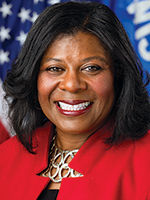
LaTonya Johnson
Senate · District 6
|
D |
Strong +
|
100% | 3 |
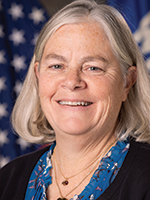
Tara Johnson
House · District 96
|
D |
Strong +
|
100% | 3 |
Showing 8 of 8
bills
All criminal justice bills
AB 1056: Relating to: firearm transfers and possession, law enforcement and prosecution, victims and witnesses, obstruction of justice, mental health and substance use services, hate crimes reporting portal, fraud, making an appropriation, and providing a penalty. (FE)
Topics
✓ Budget & TaxesSupports Budget & TaxesAllocates $10M community policing, $5M officer recruitment, $5M violence prevention, and $180,200 address confidentiality, explicitly increasing state appropriations for public safety services.
✓ Criminal JusticeSupports Criminal JusticeAllocates $20M for community policing, violence prevention, and officer retention while reorganizing domestic violence/sexual assault provisions to advance reform.
AB 938: Relating to: an optional final hearing by affidavit for the dissolution of a marriage (suggested as remedial legislation by the Office of the Director of State Courts).
AB 821: Relating to: forensic examinations done on a crime victim to gather evidence, modifying administrative rules relating to reimbursement for forensic examinations, and making an appropriation. (FE)
Topics
✓ Budget & TaxesSupports Budget & TaxesBill explicitly allocates $2.5M biennial grant for forensic exam staff recruitment and revised reimbursement rules, directly funding public service program.
✓ Criminal JusticeSupports Criminal JusticeFunds forensic exam staff and ensures reimbursement for victim services, advancing victim-centered criminal justice reform through improved evidence collection and provider support.
✓ HealthcareSupports HealthcareFunds healthcare facilities for forensic exam staff recruitment/retention and ensures reimbursement for STD testing/treatment, supporting patient access to care.
SB 844: Relating to: forensic examinations done on a crime victim to gather evidence, modifying administrative rules relating to reimbursement for forensic examinations, and making an appropriation. (FE)
Topics
✓ Budget & TaxesSupports Budget & TaxesAllocates $2.5M biennial grant for forensic exam services, directly funding public health programs through state appropriation.
✓ Criminal JusticeSupports Criminal JusticeFunds forensic exam programs for victims, guarantees reimbursement regardless of police cooperation, advancing victim-centered criminal justice reform.
✓ HealthcareSupports HealthcareBill allocates $2.5M for healthcare facility staffing/funding to conduct forensic exams, guarantees full reimbursement for services including STI treatment, directly advancing patient access to critical healthcare services.
AB 952: Relating to: storage of a firearm in a house in which a resident is prohibited from possessing a firearm and providing a penalty.
SB 20: Relating to: allowing certain married persons to claim the earned income tax credit when filing a separate return. (FE)
Topics
✓ Budget & TaxesSupports Budget & TaxesExpands EITC access for domestic abuse survivors, providing tax relief to lower-income filers through state credit matching federal EITC percentages.
✓ Criminal JusticeSupports Criminal JusticeEnables tax benefits for domestic abuse victims, supporting economic independence and reducing barriers to escaping abuse - aligns with criminal justice reform goals.
✓ Labor & EmploymentSupports Labor & EmploymentExpands access to EITC - a key worker benefit - for domestic abuse victims, strengthening financial support for low-income workers under Labor & Employment.