Issue · Criminal Justice

Criminal Justice

Every criminal justice bill, vote, and legislator stance in Wisconsin, automatically classified by Maddy, our AI policy reader.

Total bills
39
2025-2026 Regular Session
Top supporter
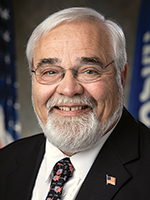
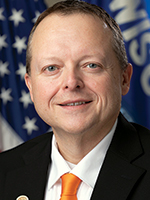
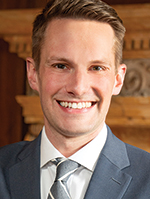
Jeff Mursau
70% support rate
Top opponent
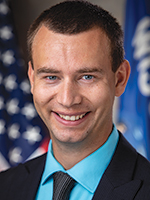
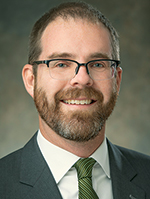
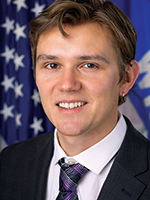
Ryan Clancy
32% support rate
Ranked legislators
10
5 support · 5 oppose
Key legislators

Who's moving criminal justice in Wisconsin

Legislators moving criminal justice in Wisconsin
Legislator Party Stance Support rate Votes
Jeff Mursau
Jeff Mursau House · District 36
R
Support
70% 54
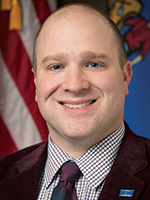
Will Penterman
Will Penterman House · District 38
R
Support
67% 48
Brad Pfaff
Brad Pfaff Senate · District 32
D
Support
64% 36
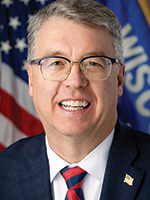
Eric Wimberger
Eric Wimberger Senate · District 2
R
Support
64% 36
Scott Krug
Scott Krug House · District 72
R
Support
64% 58
Ryan Clancy
Ryan Clancy House · District 19
D
Oppose
32% 53
Renuka Mayadev
Renuka Mayadev House · District 77
D
Oppose
32% 58
Christine Sinicki
Christine Sinicki House · District 20
D
Oppose
32% 58
Alex Joers
Alex Joers House · District 81
D
Oppose
32% 58
Christian Phelps
Christian Phelps House · District 93
D
Oppose
33% 57
Showing 1–10 of 39 bills

All criminal justice bills

failed · Wisconsin · Assembly Mar 23, 2026

AB 1073: Relating to: sexual contact or sexual intercourse with a child who is at least 16 years old and providing a penalty.

AB 1073 amends Wisconsin statute 948.09 to address sexual contact or intercourse with a child aged 16 or older who is not the defendant’s spouse. It classifies such acts as a Class A misdemeanor if the defendant is under 19 at the time of the offense, or a felony if the defendant is 19 or older. The bill directly affects individuals aged 19+ who engage in sexual activity with 16- or 17-year-olds who are not their spouses. The legislation modifies existing penalties without changing the age of consent for married couples or the legal definition of "child" under the statute. The bill was introduced on February 26, 2026, and referred to the Committee on Criminal Justice and Public Safety.
failed · Wisconsin · Assembly Mar 30, 2026

AB 1075: Relating to: the age of juvenile court jurisdiction and making an appropriation. (FE)

AB 1075 changes the age threshold for juvenile court jurisdiction by reclassifying 17-year-olds as adults for criminal prosecution purposes. It amends definitions to define "adult" as 17 years or older (instead of 18) for investigating and prosecuting criminal violations, while keeping 17-year-olds under juvenile court jurisdiction for specific cases. The bill also creates a new funding mechanism to reimburse counties for costs related to 17-year-olds accused of crimes starting in 2026. This directly affects 17-year-olds facing criminal charges and county juvenile justice systems managing their cases.
failed · Wisconsin · Senate Mar 23, 2026

SB 1018: Relating to: penalty for the terrorist crimes against the occupants of a church and providing a penalty.

SB 1018 creates a mandatory one-year prison sentence for anyone convicted of a felony committed with the intent to terrorize, intimidate, or coerce two or more people inside a church. It prohibits probation for these offenses and requires courts to obtain a special verdict confirming the intent to terrorize church occupants. Prosecutors cannot dismiss or amend related charges without court approval, and deferred prosecution programs are banned for such cases. This law directly affects defendants charged with church-targeted violent crimes, prosecutors handling these cases, and courts overseeing sentencing.
failed · Wisconsin · Assembly Mar 23, 2026

AB 1039: Relating to: penalty for the terrorist crimes against the occupants of a church and providing a penalty.

This bill increases penalties for individuals convicted of felony crimes targeting church occupants with intent to terrorize or intimidate them. It mandates a minimum one-year prison sentence (with no probation allowed) for such offenses and requires prosecutors to seek court approval before dismissing or amending charges. Additionally, it prohibits deferred prosecution programs for these cases and directs courts to verify the specific intent element during trials. The law applies to any felony where the defendant intended to terrorize two or more people inside a church.
failed · Wisconsin · Senate Mar 23, 2026

SB 866: Relating to: sex offender registration for certain crimes.

SB 866 expands Wisconsin's sex offender registration requirements by adding specific crimes to the list of offenses that trigger registration. It requires registration for violations of certain statutes involving minors (like 948.051 or 948.06) when the perpetrator is not the victim's parent. The law applies to crimes committed on or after the bill's effective date, directly affecting individuals convicted of these newly listed offenses.
signed · Wisconsin · Assembly Apr 3, 2026

AB 905: Relating to: threats to health care providers and providing a penalty.

AB 905 creates a new penalty for threatening healthcare providers, staff, or their family members when the threat is related to their work. It specifically targets threats made knowing the victim is a healthcare worker (current or former) or a family member, and the threat occurs in response to actions taken at a healthcare facility or by a provider acting in their official capacity. The bill defines "health care facility" and "health care provider" using existing statutory terms to clarify the scope of protection. This law directly affects healthcare workers and their families by establishing criminal penalties for targeted threats connected to their professional roles.
signed · Wisconsin · Senate Apr 9, 2026

SB 782: Relating to: intentionally sending false text messages to 911 and providing a penalty.

SB 782 amends Wisconsin statute 256.35(10)(a) to penalize intentionally sending false text messages to 911 reporting a non-existent emergency. It imposes fines of $100-$600 or up to 90 days in jail for a first offense, and classifies subsequent offenses within four years as a Class H felony. The law directly affects individuals who deliberately mislead emergency services via text, such as falsely reporting crimes or medical crises. Key provisions clarify that the penalty applies specifically when the sender knows the reported emergency is fabricated. This bill creates concrete legal consequences for misuse of 911 text services, aiming to deter non-emergency false reports.
Sub-Topics Corrections
failed · Wisconsin · Assembly Mar 23, 2026

AB 791: Relating to: intentionally sending false text messages to 911 and providing a penalty.

AB 791 makes it illegal to intentionally send false text messages to 911 reporting a non-existent emergency. It directly affects individuals who send such deceptive messages, imposing fines ($100-$600) or up to 90 days in jail for a first offense. For repeat offenses within four years, the penalty escalates to a Class H felony charge. The bill targets misuse of emergency services by adding specific penalties for text-based false reports, which previously lacked clear legal consequences. This law aims to deter non-emergency text spam that wastes critical resources.
Sub-Topics Corrections Tags Public Safety
failed · Wisconsin · Senate Mar 23, 2026

SB 91: Relating to: imposing the penalty of life imprisonment for the crime of child trafficking and providing a penalty. (FE)

SB 91 upgrades penalties for child trafficking by imposing mandatory life imprisonment without parole when the crime involves three or more child victims. It applies to individuals who recruit, transport, or exploit children for commercial sex acts (as defined by existing law), as well as those who benefit financially from such trafficking. The bill amends statutes to classify these offenses as Class A felonies with no possibility of parole or extended supervision. This change directly affects convicted traffickers and their enablers, ensuring life sentences for repeat or large-scale cases involving multiple minors.
signed · Wisconsin · Assembly Mar 19, 2026

AB 136: Relating to: classification of the crime of impersonating law enforcement officers, fire fighters, and certain other emergency personnel and providing a penalty.

AB 136 makes it a Class A misdemeanor to intentionally impersonate a peace officer, firefighter, emergency medical services practitioner, or emergency medical responder with the intent to mislead others into believing the person is actually an emergency personnel member. The bill directly affects individuals who falsely claim these roles to deceive others, such as by wearing uniforms or using official equipment. Key provisions define specific penalties for each type of impersonation, clarifying that the offense applies when someone acts with deceptive intent. This legislation updates Wisconsin law to explicitly classify these impersonations as criminal acts with standardized misdemeanor penalties.
Sub-Topics Law Enforcement
Showing 1 to 10 of 39 bills
1 2 3 4 Next