Issue · Healthcare

Healthcare

Every healthcare bill, vote, and legislator stance in West Virginia, automatically classified by Maddy, our AI policy reader.

Total bills
369
2026 Regular Session
Top supporter
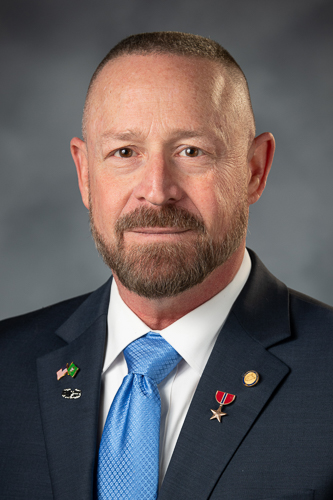
Bill Roop
92% support rate
Top opponent
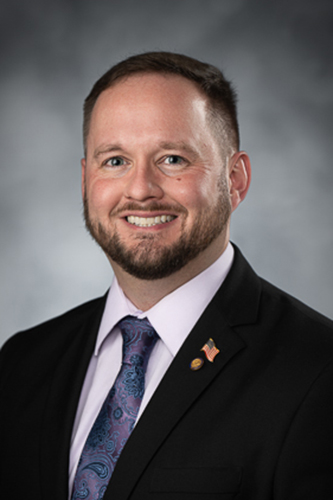
Corby Dillon
25% support rate
Ranked legislators
10
5 support · 5 oppose
Key legislators

Who's moving healthcare in West Virginia

Legislators moving healthcare in West Virginia
Legislator Party Stance Support rate Decisive votes
Bill Roop
Bill Roop House · District 44
R
Strong +
92% 12
Chris Phillips
Chris Phillips House · District 68
R
Strong +
92% 12
Doug Smith
Doug Smith House · District 39
R
Strong +
92% 12
Elliott Pritt
Elliott Pritt House · District 50
R
Strong +
92% 12
Geno Chiarelli
Geno Chiarelli House · District 78
R
Strong +
92% 12
Corby Dillon
Corby Dillon House · District 29
R
Oppose
25% 12
Marty Gearheart
Marty Gearheart House · District 37
R
Oppose
33% 9
Shawn Fluharty
Shawn Fluharty House · District 5
D
Oppose
40% 10
Bill Ridenour
Bill Ridenour House · District 100
R
Mixed −
42% 12
Buck Jennings
Buck Jennings House · District 84
R
Mixed −
42% 12
Showing 151–160 of 369 bills

All healthcare bills

signed · West Virginia · Senate Jun 25, 2026

SB 741: Expanding pilot program to implement involuntary commitment process

SB 741 expands the pilot program for involuntary commitment processes to include additional counties: Cabell, Berkeley, Hampshire, Morgan, Ohio, and Wood. The bill requires mental health centers in these counties to provide timely evaluations (in-person or via video) for potential commitment and explain the process to affected individuals. It also mandates quarterly audits of commitment applications to ensure clinical justification, with findings kept confidential. This bill directly affects mental health centers, courts, law enforcement, and individuals subject to involuntary commitment in the expanded counties.
Sub-Topics Mental Health
in committee · West Virginia · House of Delegates Mar 11, 2026

HB 5301: Supplemental Appropriation to the Department of Human Services- CHIP from the Unappropriated Balance.

HB 5301 increases funding for West Virginia's Children's Health Insurance Program (CHIP) by $871,991 using unused state funds. It specifically adds $422,562 for CHIP administrative costs and $449,429 for CHIP services under the Department of Human Services. This supplemental appropriation draws from the unappropriated balance in the State Fund, General Revenue, to cover existing program expenses during fiscal year 2026. The bill does not change CHIP eligibility or benefits but ensures current funding levels for administration and services.
in committee · West Virginia · House of Delegates Feb 6, 2026

HB 5293: Supplemental Appropriation to the Department of Human Services - Community Mental Health Services from Federal Block Grants.

HB 5293 is a procedural bill that adjusts existing federal funding allocations for West Virginia's Community Mental Health Services. It shifts $200,000 from the "Federal Coronavirus Pandemic" funding category to the "Personal Services and Employee Benefits" category within the same fiscal year (2026). This reallocation does not add new funding but modifies how existing federal block grant money will be used for staffing and operations. The bill directly affects the Department of Human Services' Community Mental Health Services program, ensuring funds are directed toward personnel costs. It is a routine budget adjustment, not a policy change, and requires no new legislative action beyond the funding realignment.
in committee · West Virginia · House of Delegates Feb 5, 2026

HB 5247: Establishing a pilot program to develop school-based mental and behavioral health services

HB 5247 establishes a three-year pilot program in West Virginia schools to provide mental and behavioral health services as an alternative to suspending students for disruptive behavior. It directly affects students with disruptive behaviors, their families, and participating schools that already operate school-based health centers or have implemented the state's "expanded school mental health framework." Schools in the pilot must offer mental health services through direct hire or contracts, accept referrals from school discipline or courts, conduct assessments, involve families, and bill insurance or the school for services. The program aims to redirect students toward support instead of punishment while ensuring services are available for all levels of need.
signed · West Virginia · House of Delegates Jun 29, 2026

HB 5212: Relating to financial aid for post-secondary education.

HB 5212 revises West Virginia's higher education financial aid programs to improve access and align with workforce development goals. It allows part-time enrollment for the higher education grant, combines the adult part-time grant into a new workforce-focused program, and updates medical/health sciences loan repayment programs to require direct payments to federal loan providers. The bill also adjusts eligibility for the PROMISE scholarship and WV Invests grant programs. These changes aim to better connect financial aid with employer needs as outlined in the bill's legislative findings.
in committee · West Virginia · House of Delegates Feb 3, 2026

HB 5113: Relating to a patient’s right to choose physician

HB 5113 requires healthcare providers in West Virginia to ask patients in advance if they consent to being treated by a medical resident (a doctor in training) or having a resident observe a procedure during routine appointments. If a patient declines, the appointment must be rescheduled with a licensed physician instead, applying only to non-emergency situations. This bill directly affects patients seeking routine care and healthcare facilities, ensuring they can choose their primary provider. Emergency or urgent care is exempt from this requirement, as stated in the bill's provisions.
in committee · West Virginia · House of Delegates Feb 3, 2026

HB 5080: Related to 12 weeks of paid leave

HB 5080 establishes West Virginia's first state-run paid family and medical leave insurance program. It provides eligible workers with up to 12 weeks of paid leave annually for personal medical needs, caring for a newborn or newly adopted child, or addressing a family member's serious health condition, funded through payroll contributions from employees and employers. The program covers workers meeting income eligibility requirements (including self-employed individuals who opt in), with benefits calculated based on prior earnings. Key provisions include anti-retaliation protections for employees using leave, employer notice requirements, and administration by the Insurance Commissioner through a dedicated state fund.
Sub-Topics Paid Leave
in committee · West Virginia · House of Delegates Feb 2, 2026

HB 5031: To standardize reporting practices and improve forensic and public health research by including vaccination history in death investigations

HB 5031 requires West Virginia's Fatality and Mortality Review Team (under the Department of Health) to have access to vaccination records during death investigations. The bill amends state law to explicitly include vaccination records as a type of medical information the team may request from government agencies. State, county, and local agencies must provide these records upon written request. This change directly affects the review team's ability to gather data for forensic and public health research, while requiring health and government agencies to share vaccination history in death cases. The bill standardizes reporting practices by adding vaccination records to the types of information investigators can access.
Sub-Topics Public Health
in committee · West Virginia · House of Delegates Feb 16, 2026

HB 5581: Relating to newborn screening (Dawson’s Law)

HB 5581 (Dawson’s Law) adds infantile GM1 gangliosidosis - a rare genetic disorder affecting infants - to the list of conditions required for newborn screening in West Virginia. The bill mandates hospitals to test all newborns for this condition, alongside existing screenings for diseases like phenylketonuria and cystic fibrosis. These screenings will be covered as a standard benefit by Medicaid, state insurance programs, and private insurers offering pregnancy coverage. The law directly affects all newborns in West Virginia by expanding early detection for this specific condition.
Sub-Topics Medicaid
in committee · West Virginia · House of Delegates Feb 6, 2026

HB 5314: Supplemental Appropriation to the Department of Health- The Vital Statistics Account from Special Revenue.

This bill, HB 5314, provides an additional $330,000 in funding to the Department of Health's Vital Statistics Account (fund 5144) for fiscal year 2026. It increases an existing appropriation for "Personal Services and Employee Benefits" within that account to cover ongoing operational costs. The funding comes from unappropriated balances available in the account and directly supports the Vital Statistics office, which manages birth, death, and fetal death records in West Virginia. This is a routine budget adjustment, not a new policy change.
Sub-Topics Appropriations
Showing 151 to 160 of 369 bills
Previous 1 … 15 16 17 … 37 Next