

Maddy summaryThe Sanctioning Russia Act of 2025 establishes a framework for imposing comprehensive sanctions on Russia if the President determines Russia is engaging in actions that undermine peace with Ukraine, such as refusing to negotiate a peace agreement, violating peace agreements, or planning another military invasion. If such a determination is made, the bill mandates blocking property of Russian officials and entities, prohibiting transactions with Russian financial institutions, increasing tariffs on Russian goods to at least 500% ad valorem, banning energy exports to Russia, and prohibiting purchases of Russian sovereign debt. It also imposes sanctions on countries that purchase Russian oil, uranium, or petroleum products, with duties of at least 500% on such goods. The bill requires the President to make determinations every 90 days and allows for termination of sanctions if Russia ceases harmful actions and enters a peace agreement with Ukraine, with immediate reimposition if Russia resumes those actions.
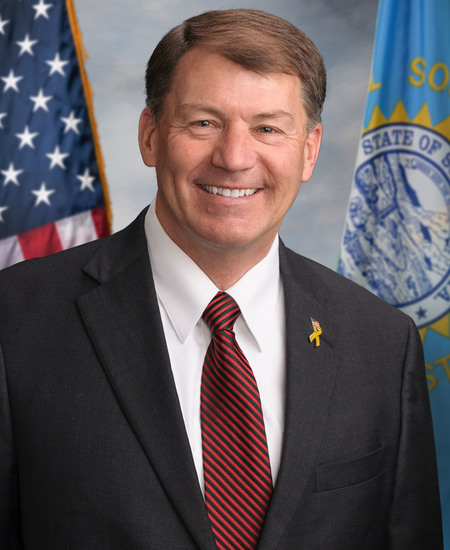
Sen. Mike Rounds
Sponsored bills
Maddy summarySRES 148 is a ceremonial resolution passed by the U.S. Senate to honor the late Senator Alan K. Simpson of Wyoming, who died in 2022. The resolution expresses the Senate's "profound sorrow and deep regret" over his passing and formally requests the Secretary of the Senate to transmit an enrolled copy to his family. It also directs the Senate to adjourn as a mark of respect during its final session following the resolution's adoption. This resolution has no policy impact or direct effect on constituents - it solely serves as a formal tribute to Simpson's legacy.
Maddy summaryThe SHORT Act redefines firearm classifications under federal law to remove certain restrictions on short-barreled rifles and shotguns. It eliminates special prohibitions for these weapons when used lawfully, preempts state taxes or registration requirements for them, and requires federal destruction of historical records related to these firearms. The bill directly affects owners of short-barreled rifles and shotguns, as well as state governments that previously imposed separate regulations. Key provisions include revising IRS definitions to exclude shotgun shells from "destructive devices," mandating record destruction within one year of enactment, and blocking state laws targeting these weapons in interstate commerce. These changes aim to standardize federal treatment while removing duplicative state-level barriers.
Maddy summarySRES 142 is a Senate resolution recognizing the heritage, culture, and contributions of American Indian, Alaska Native, and Native Hawaiian women. It highlights specific achievements, including over 4,400 women serving in the military as of 2025, more than 11,600 women owning businesses as of 2024, and historical roles in fields like science, medicine, and cultural preservation. As a symbolic resolution, it does not create new laws or allocate funds but publicly honors these women’s contributions to communities, tribal sovereignty, and U.S. history without mandating policy changes.
Maddy summaryThis bill requires the U.S. Treasury Department to conduct a study and issue a report within one year of enactment, assessing financial risks posed by China's financial sector to U.S. and global financial stability. The study must evaluate China's economic data transparency, describe current U.S. protective policies, and recommend additional actions for international cooperation. The report will be submitted to relevant congressional committees, published online, and may include a classified annex. It does not create new laws or impose direct requirements on individuals or entities; it solely mandates an analytical review by U.S. agencies.
Maddy summaryThe Mining Schools Act of 2025 creates a Department of Energy grant program to fund mining education at eligible colleges and universities. It directly affects accredited mining engineering programs and specific public university departments in states with significant mining economies, aiming to recruit students and strengthen training in critical mineral extraction, environmental reclamation, and domestic supply chains. Grants - limited to 10 annually - must support curriculum focused on rare earth elements, recycling technologies, reducing environmental impacts, and meeting U.S. energy mineral needs. The program authorizes $10 million yearly for fiscal years 2026-2033, with oversight by a Mining Professional Development Advisory Board.
Financial Integrity and Regulation Management Act or the FIRM Act This bill prohibits the consideration of reputational risk by federal banking agencies when regulating, examining, or supervising a depository institution or credit union. The bill defines reputational risk as the potential for negative publicity or public attention to decrease confidence in the institution, lead to litigation, reduce revenues, or result in other adverse impacts to the institution. Agencies must report on the implementation of this bill.
Maddy summaryThe MedShield Act of 2025 establishes a new pandemic preparedness program under the Department of Health and Human Services (HHS), requiring the use of artificial intelligence to improve national biodefense. It directs HHS to create a system for real-time pathogen tracking, accelerate vaccine development, and optimize treatment distribution using AI tools, as outlined in Section 3(c). The program mandates annual funding of $300 million in 2025, increasing to $500 million by 2029 (Section 6), and requires a report to Congress within 180 days of enactment (Section 4). This bill directly affects federal agencies coordinating pandemic response and aims to create a continuous, integrated system for addressing biological threats, replacing ad-hoc efforts like Operation Warp Speed.
Maddy summaryThis bill expands the Work Opportunity Tax Credit to include military spouses. It adds "qualified military spouse" as a new category eligible for the credit, meaning employers who hire spouses of active-duty service members can claim the tax benefit. To qualify, a spouse must be certified by a local agency as married to an Armed Forces member at the time of hire. The change applies to hires occurring after the law's effective date, directly affecting military spouses seeking employment and employers who hire them.
Maddy summaryThis bill establishes a federal program to improve cybersecurity for rural water and wastewater systems. It directly affects rural water associations by providing technical assistance through "circuit riders" who assess security risks, develop protection protocols, and document cyber readiness. Key mechanisms include rapid threat assessments, developing security plans, and requiring annual reports on program activities. The program is funded at $10 million annually for fiscal years 2025-2029, with circuit riders needing specific cybersecurity certifications. This is a concrete policy change focused on strengthening infrastructure protection for rural communities.