

Maddy summaryThe FEED Act of 2025 amends the Food and Nutrition Act to exclude certain income earned by students under 21 participating in career and technical education (CTE) programs from household income calculations for food assistance programs like SNAP. It specifically exempts income from apprenticeships, internships, or work-based learning programs directly tied to their CTE enrollment, provided the student lives with a parent or under parental control. Households must verify the student’s enrollment in a qualifying CTE program and their age/relationship through documentation. This change directly affects low-income students in CTE programs who earn work-based income, making it easier for them to qualify for food assistance without losing benefits due to that income.
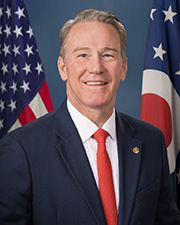
Sen. Jon Husted
Sponsored bills
Maddy summaryS 2700, the DECIDE Act, requires the U.S. Department of Education to expand the College Scorecard with specific, annual data to improve transparency for student loan borrowers. It mandates program-level details like median 10-year earnings for graduates, median debt amounts (including Stafford, Graduate PLUS, and Parent PLUS loans), default rates, and repayment rates for each certificate, degree, and professional program. Institution-level data will include cohort default rates, repayment rates, and specific PLUS loan default/repayment metrics. This directly affects prospective and current students making education decisions by providing concrete financial outcomes data for comparison. The law aims to give borrowers clear, standardized information about long-term costs and outcomes tied to specific academic programs.
Maddy summaryThis bill (S 2529) clarifies the process for switching prescription drugs to over-the-counter (OTC) status. It requires the FDA to hold meetings with drug manufacturers to develop application plans, issue new guidance within 18 months on evidence standards (including how to use medical literature and demonstrate consumer understanding), and create a public stakeholder engagement plan. The bill directly affects drug manufacturers seeking to switch products and the FDA’s review process. Key provisions define "full" (same use conditions) and "partial" (limited conditions) switches and set clear expectations for supporting evidence, aiming to make the approval process more predictable.
Veterans' Assuring Critical Care Expansions to Support Servicemembers (ACCESS) Act of 2025 This bill addresses the administration of the Veterans Community Care Program (VCCP) and other Department of Veterans Affairs (VA) health care matters. Among other provisions regarding the VCCP, the bill establishes in statute access standards that determine when a veteran is eligible to receive non-VA care through the VCCP, requires the VA to notify veterans regarding their eligibility for care within two business days after the VA is aware the veteran is seeking care, and extends the deadline for the submittal of claims under the VCCP by health care entities and providers. The VA must address its mental health treatment programs by establishing a standardized screening process to determine whether a veteran satisfies criteria for priority or routine admission to a mental health residential rehabilitation treatment program or a program for residential care for mental health and substance abuse disorders, tracking the performance of medical facilities and Veterans Integrated Service Networks in meeting the requirements for mental health treatment screenings and timely admission to treatment programs under such screenings, and establishing an appeal process for when a veteran is denied admission to a covered treatment program or is accepted into a program but not offered bed placement in a timely manner. Additionally, the VA must establish an online self-service module for veterans to request and manage appointments, track referrals, and appeal and track decisions related to requests for care.
Maddy summaryThis bill (S 2449, "Recovery of Stolen Checks Act") allows taxpayers who have had paper tax refunds lost or stolen to elect receiving replacement refunds via direct deposit instead of a paper check. It amends the Internal Revenue Code to require the IRS to establish regulations within six months enabling this election process for eligible taxpayers. The key provision creates a new option for individuals needing replacement refunds for lost or stolen paper checks, shifting the method from physical mail to direct deposit. This directly affects taxpayers who previously received paper refunds but now face loss or theft. The bill focuses on streamlining the replacement process without changing tax rates or eligibility.
Maddy summaryS 2434 amends the 1992 Dayton Aviation Heritage Preservation Act to expand the boundary of Dayton Aviation Heritage National Historical Park in Ohio by adding approximately 1 acre of land, as shown on a February 2023 map. This technical adjustment directly affects the park's physical boundaries, incorporating a specific parcel in Dayton without altering the park's management or funding. The bill makes a minor, administrative change to the park's designated area under existing law.
Maddy summaryThis bill amends two existing banking regulations by increasing a numerical threshold from 15 to 20 in two specific sections: the Revised Statutes (12 U.S.C. 24) and the Federal Reserve Act (12 U.S.C. 338a). It makes a technical adjustment to banking rules without creating new programs or directly affecting citizens, businesses, or government programs. The change modifies how certain financial provisions are calculated under current law but does not alter the underlying policy or impact any specific groups. As a procedural amendment to existing statutes, it has no direct public-facing effect.
Maddy summaryThis bill extends tax deferral for company stock sold to employee stock ownership plans (ESOPs) and fixes a rule that previously caused small businesses to lose government benefits after 49% ownership transferred to an ESOP. It creates a new Treasury Department office to provide education and technical assistance for companies adopting ESOPs, and establishes a Labor Department Advocate for Employee Ownership to coordinate federal efforts and promote employee ownership. These changes directly affect S corporations considering ESOPs, current ESOP-owned businesses, and small businesses seeking to maintain eligibility for government programs. The bill focuses on removing barriers to employee ownership through concrete tax, eligibility, and support mechanisms.
Maddy summaryS 2414, the Housing Supply Expansion Act of 2025, updates federal rules for manufactured homes by requiring states to treat homes without permanent chassis equally to those with chassis under state laws. States must certify this parity within 1-2 years of the bill’s enactment, covering areas like financing, insurance, and installation. States that miss deadlines face prohibitions on selling or installing "covered" manufactured homes (built after enactment without a permanent chassis). The bill directly affects states (through their regulations), manufactured home manufacturers, sellers, and buyers by standardizing how these homes are regulated nationwide.
Maddy summaryThis bill creates a new tax credit for businesses capturing methane from mining operations. It directly affects mining companies that install methane capture equipment at facilities meeting specific requirements, including capturing at least 2,500 metric tons of CO2e methane annually. The credit replaces the existing carbon capture tax credit under Section 45Q, paying per metric ton of captured methane instead of carbon dioxide, and applies to methane captured after December 31, 2024. Key provisions require methane to be used for energy (like heating or power) or injected into compliant pipelines without significant release, with equipment construction starting before January 1, 2036.