Maddy summaryHR 3220 establishes a "quantum sandbox" program to accelerate near-term quantum technology applications. The bill requires the Commerce Secretary, working with NIST, to create a public-private partnership focused on developing and testing quantum computing, communication, and sensing solutions that can be deployed within 24 months. This program will engage industry groups, national labs, and research centers to break down barriers to accessing quantum hardware for practical uses. The goal is to deliver tangible benefits to U.S. businesses and consumers through faster innovation in quantum applications.
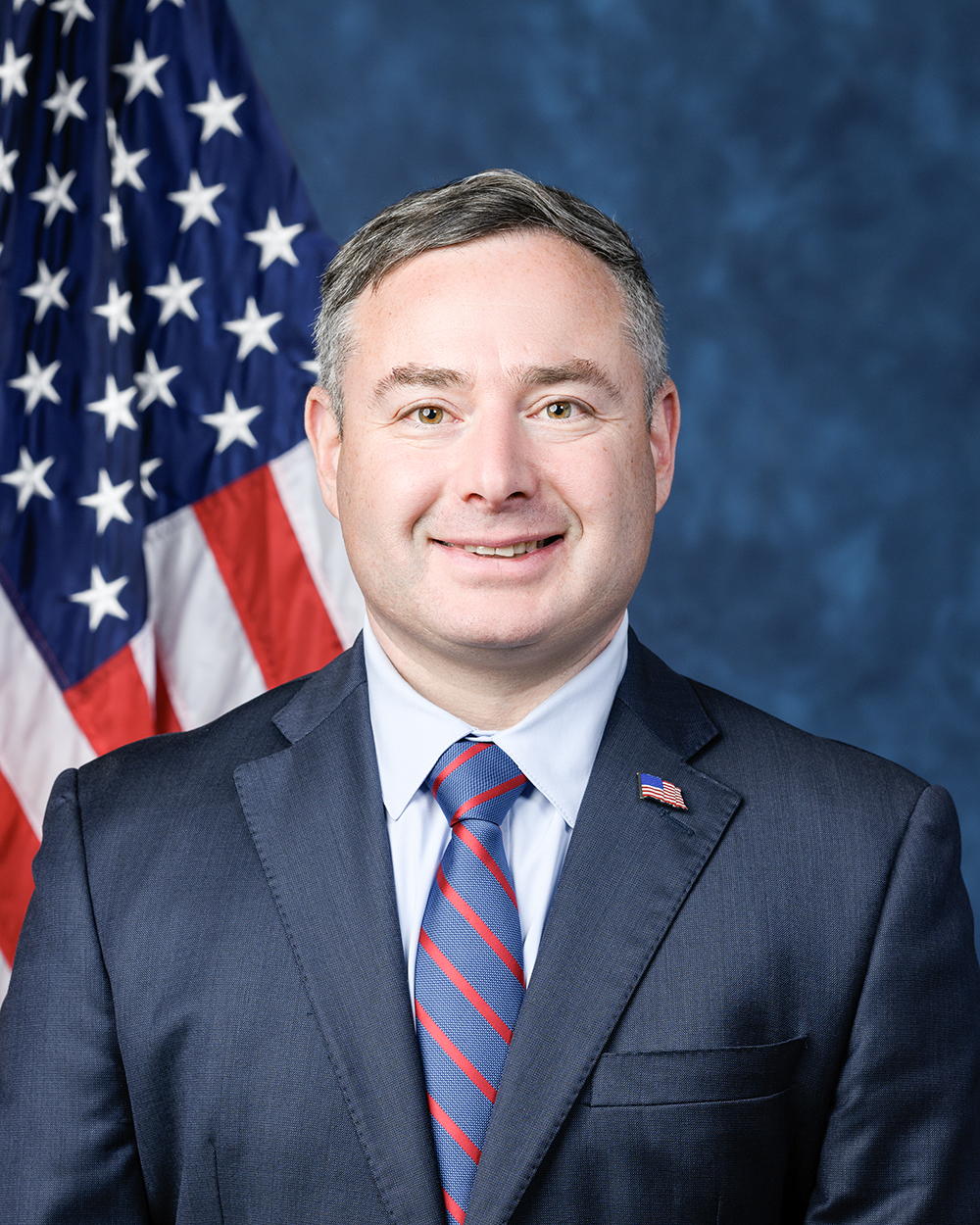
Rep. Eugene Simon Vindman
Sponsored bills
Maddy summaryHR 3184, the PFAS Alternatives Act, funds research to develop turnout gear (firefighter safety clothing) without harmful PFAS chemicals, directly affecting firefighters who wear this gear. It authorizes $25 million annually (2025-2029) for grants to eligible organizations to research and test PFAS-free gear, requiring partnerships with firefighting groups to translate findings into practice. The bill also allocates $2 million yearly (2027-2031) for training programs on safe gear use and decontamination. Its goal is to reduce firefighters' exposure to chemicals linked to occupational illnesses during operations.
Maddy summaryThe MEGOBARI Act (HR 36) is a U.S. legislative proposal that aims to strengthen Georgia's democratic development and Euro-Atlantic integration. It directs the U.S. Secretary of State to suspend the U.S.-Georgia Strategic Partnership Commission until Georgia meets specific democratic standards, including respecting citizens' democratic wishes and advancing EU/NATO membership. The bill establishes potential sanctions against Georgian officials who block Euro-Atlantic integration or undermine Georgia's sovereignty, requiring the President to determine if officials have engaged in significant corruption or actions against Georgia's territorial integrity. Additionally, it mandates reports on Russian intelligence assets in Georgia and a 5-year U.S. strategy for bilateral relations, with the Act set to sunset after 5 years from enactment.
Maddy summaryThis resolution expresses the U.S. House of Representatives' support for designating May 2, 2025, as "NKH Awareness Day" to raise public and medical community awareness of nonketotic hyperglycinemia (NKH), a rare genetic metabolic disorder affecting approximately 1 in 76,000 people worldwide. It directly supports the small community of NKH patients and their families, including the estimated 4 individuals diagnosed in Virginia, by highlighting the need for greater education and research. The resolution does not create new programs or funding but serves as a symbolic gesture to encourage increased attention to NKH diagnosis, research, and patient registry participation.
Maddy summaryHR 3198 establishes a new intergovernmental task force to address U.S. reliance on foreign supply chains for critical minerals, which Congress identifies as a national security risk. The task force, composed of federal agency representatives, tribal and state governments, and private sector stakeholders, will assess vulnerabilities in mineral supply chains (especially dependence on China and other "covered countries"), recommend strategies for domestic production and recycling, and develop international partnerships with allies like NATO members. Key duties include evaluating how to boost environmentally responsible domestic mining and processing, identify alternative sources, and strengthen supply chain security without duplicating existing efforts. The task force must submit a final report to Congress within two years and terminates 90 days after completing its work, with no new funding authorized for its operations.
Maddy summaryThis bill creates an Advisory Committee under the Financial Stability Oversight Council to study how Chinese military actions toward Taiwan could impact U.S. financial markets. The committee, composed of market experts and participants, will annually assess vulnerabilities like banking risks, market volatility, and potential losses from such scenarios, then recommend resilience strategies. It requires an annual public report detailing these findings and actionable steps for regulators - such as improving circuit breakers or coordinating responses - to strengthen market preparedness. The bill does not enact new regulations but mandates ongoing analysis and reporting on this specific geopolitical risk.
Maddy summaryHR 3180, the Taiwan Representative Office Act, would rename the Taipei Economic and Cultural Representative Office in Washington, D.C., to the "Taiwan Representative Office." This change would apply to all U.S. government references, documents, and official purposes, ensuring consistency in communications. The bill explicitly states it does not restore formal diplomatic relations with Taiwan or alter U.S. policy on Taiwan’s international status, aligning with the Taiwan Relations Act and Six Assurances. It directly affects the operational name of Taiwan’s unofficial U.S. representative office and requires the Secretary of State to negotiate this name change with Taiwan’s office. The policy aims to provide Taiwan with practical diplomatic treatment equivalent to other foreign entities, without changing the U.S. stance on Taiwan’s sovereignty.
Maddy summaryHR 3204, the BASIC ACT, increases tax incentives for semiconductor manufacturing. It raises the advanced manufacturing investment credit from 25% to 35% for qualifying semiconductor production facilities and extends the deadline for claiming the credit from 2026 to 2030. The bill directly affects companies building or expanding semiconductor manufacturing plants in the U.S. The changes apply to property placed in service after the bill's enactment date. This provides longer-term financial support for domestic semiconductor investment.
Community Services Block Grant Improvement Act of 2025 This bill reauthorizes the Community Services Block Grant (CSBG) program through FY2032 and makes certain changes to the program and associated eligibility requirements. The CSBG program supports various antipoverty activities, primarily through formula-based allotments to states, tribes, and territories, the majority of which must be made available in grants to eligible local entities. Specifically, the bill permanently sets the measure of eligibility for services, assistance, or resources provided directly to individuals or families under the program at 200% of the poverty line. (Under current law, the eligibility measure is temporarily set at 200% of the poverty line, an increase from the previous measure of 125% of the poverty line.) The bill also makes certain changes to the permitted uses of funding, including by allowing CSBG funds to be used to facilitate low-income individuals’ and communities’ access to high-speed broadband, digital literacy training, technical support, and other services. States may also use certain funds allocated for training and technical assistance to assist eligible entities in responding to statewide and regional conditions that create economic insecurity, including emergency conditions. The bill also expands requirements for the plans that states must submit to the Department of Health and Human Services in order to receive CSBG funds (e.g., transparency assurances), and sets deadlines by which states must make funds available to eligible entities. Finally, the bill repeals a provision that allowed states to use CSBG funds to offset revenue losses associated with state charity tax credits.
Maddy summaryThis bill creates a federal grant program to help cover medical costs for retired Federal working dogs (like police or military K9s). It authorizes $1 million annually (2026-2030) for eligible nonprofits with a two-year history of providing such care to dogs that have received official retirement letters and are now with their handlers. The grants allow these organizations to pay for veterinary expenses, directly supporting retired service dogs and their handlers. The program is administered through the Department of Homeland Security under existing grant authority.