Issue · Labor & Employment

Labor & Employment (Labor Standards)

Every labor & employment bill, vote, and legislator stance in Virginia, automatically classified by Maddy, our AI policy reader.

Total bills
35
2026 Regular Session
Top supporter
Alfonso Lopez
100% support rate
Top opponent
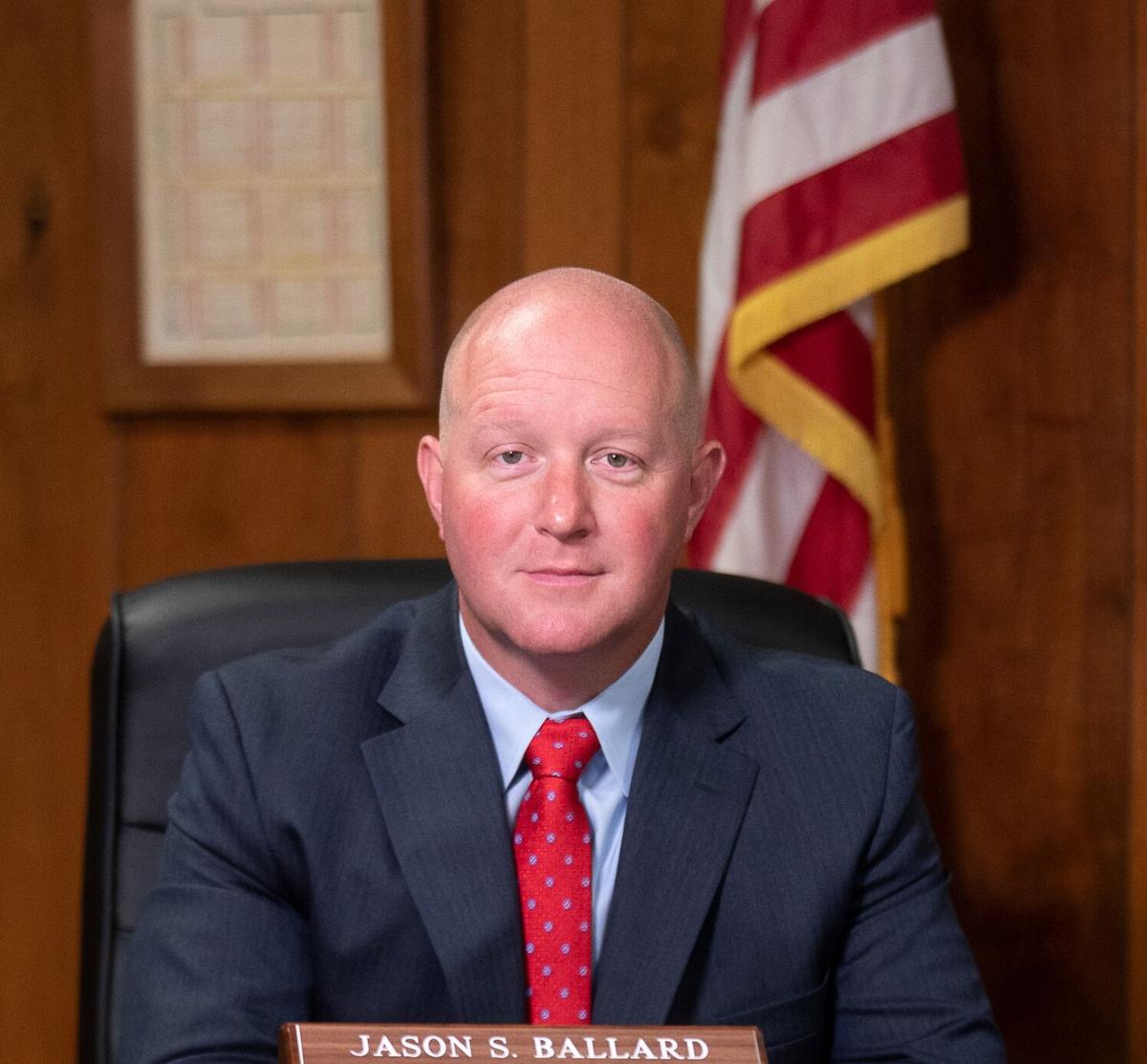
Jason Ballard
0% support rate
Ranked legislators
10
5 support · 5 oppose
Key legislators

Who's moving labor standards in Virginia

Legislators moving labor standards in Virginia
Legislator Party Stance Support rate Votes
Alfonso Lopez
Alfonso Lopez House · District 3
D
Strong +
100% 71
Dan Helmer
Dan Helmer House · District 10
D
Strong +
100% 69
Kelly Fowler
Kelly Fowler House · District 96
D
Strong +
100% 67
Aaron Rouse
Aaron Rouse Senate · District 22
D
Strong +
100% 64
Jeion Ward
Jeion Ward House · District 87
D
Strong +
100% 62
Jason Ballard
Jason Ballard House · District 42
R
Strong −
0% 72
Mark Obenshain
Mark Obenshain Senate · District 2
R
Strong −
0% 63
Ryan McDougle
Ryan McDougle Senate · District 26
R
Strong −
0% 63
Terry Kilgore
Terry Kilgore House · District 45
R
Strong −
0% 59
Wren Williams
Wren Williams House · District 47
R
Strong −
0% 55
Showing 11–20 of 35 bills

All labor & employment bills

in committee · Virginia · House of Delegates Feb 18, 2026

HB 1355: Labor and employment; payment of wages, definition.

Labor and employment; payment of wages. Provides that for purposes of requirements under existing law related to the payment of wages by employers, "wages" means all remuneration paid, or that should have been paid, for personal services, including salaries, commissions, bonuses, tips, back pay, dismissal pay, severance pay, and any other payments made by an employer to an employee during his employment and thereafter, and the cash value of all remuneration payable in any medium other than cash. The bill is intended to reverse Groundworks Operations, LLC v. Campbell, No. 241092 (Va. Dec. 30, 2025).
vetoed · Virginia · Senate Apr 13, 2026

SB 215: Prospective employer; prohibited from seeking wage or salary history of prospective employees.

Prohibiting employer seeking wage or salary history of prospective employees; wage or salary range transparency; cause of action. Prohibits a prospective employer from (i) seeking the wage or salary history of a prospective employee; (ii) relying on the wage or salary history of a prospective employee in considering the prospective employee for employment; (iii) relying on the wage or salary history of a prospective employee in determining the wages or salary the prospective employee is to be paid upon hire; (iv) refusing to interview, hire, employ, or promote or otherwise retaliating against a prospective or current employee for not providing wage or salary history or requesting a wage or salary range; (v) failing or refusing to disclose in each public and internal posting for each job, promotion, transfer, or other employment opportunity the wage, salary, or wage or salary range; and (vi) failing to set a wage or salary range in good faith. The bill establishes a cause of action for an aggrieved prospective employee or employee and provides that an employer that violates such prohibitions is liable to the aggrieved prospective employee or employee for statutory damages between $1,000 and $10,000 or actual damages, whichever is greater, reasonable attorney fees and costs, and any other legal and equitable relief as may be appropriate. This bill is identical to HB 636.
Sub-Topics Labor Standards
signed · Virginia · Senate Apr 13, 2026

SB 288: Protection of employees; standards for heat illness prevention, report.

Protection of employees; standards for heat illness prevention; Safety and Health Codes Board. Requires the Safety and Health Codes Board (the Board) to adopt regulations designed to protect workers from heat illness, as defined in the bill, during indoor and outdoor work. The bill provides that such regulations shall be enforced by the Board's existing authority. The bill directs the Board, in consultation with the Department of Labor and Industry, to develop and adopt regulations that require employers to implement heat illness prevention plans and to convene an advisory panel to assist in developing such regulations. This bill is identical to HB 1092.
vetoed · Virginia · House of Delegates Apr 11, 2026

HB 670: Labor & employment provisions; application of law, protection of employees, definition of employer.

Labor and employment provisions; application of law; protection of employees; definition of employer. Provides that the exemption for the Commonwealth, any of its agencies, institutions, or political subdivisions, or any public body under Title 40.1 does not apply when expressly provided otherwise. The bill defines "public body" as the term relates to labor and employment and provides that for the purposes of various requirements related to the protection of employees, the definition of "employer" includes the Commonwealth and its agencies, institutions, and political subdivisions, and any public body.
passed · Virginia · House of Delegates Mar 9, 2026

HB 339: Employee protections; wage and hour, health and safety, and mining safety provisions.

Employee protections; wage and hour, health and safety, and mining safety provisions; federal rules. Requires that, if a federal wage or hour law, federal occupational health and safety law, or federal mine safety law is repealed, revoked, amended, or reinterpreted in any manner that results in the federal protections becoming less stringent or effective, the Commissioner, the Safety and Health Codes Board, or the Department of Energy, respectively, shall promulgate regulations that incorporate the federal law as it existed prior to being repealed, revoked, amended, or newly interpreted.
passed · Virginia · House of Delegates Mar 6, 2026

HB 260: Public service companies; prevailing wage rate for underground infrastructure work.

Prevailing wage rate for underground infrastructure work by public service companies. Directs the Department of Labor and Industry to determine and make available the prevailing wage rate for underground infrastructure work, as defined in the bill. Under the bill, each public service company shall ensure that its bid specifications or other contracts applicable to underground infrastructure work require payment at the prevailing wage rate. The bill requires contractors and subcontractors to post the prevailing wage rate in a prominent and accessible place at the work site. The bill also requires each contractor or subcontractor subject to the provisions of the bill to comply with certain recordkeeping requirements. The provisions of the bill apply to contracts entered into on or after July 1, 2027.
in committee · Virginia · House of Delegates Feb 13, 2026

HB 1372: Solar energy facilities; prevailing wage & apprenticeship requirements, state & local tax exemption.

Solar energy facilities; prevailing wage and apprenticeship requirements; state and local tax exemption; report; civil penalties. Requires each solar developer, including its contractors and subcontractors, to ensure payment at the prevailing wage rate set by the Department of Labor and Industry for any mechanic, laborer, or worker employed, retained, or otherwise hired to perform construction, maintenance, or repair work for certain electricity generating sources. The bill requires each solar developer to (i) ensure that a percentage of the total labor hours of such work is performed by qualified apprentices and (ii) employ at least one qualified apprentice if four or more individuals are employed to perform such work. Under the bill, a solar developer that fails to meet the requirements of its provisions is required to make penalty payments to the Commissioner of Labor and Industry. Additionally, the bill provides that any certified solar generation facility, as defined in the bill, is declared a separate class of property and shall be classified for local taxation separately from other classifications of real or personal property. Such facilities shall be wholly exempt from state and local taxation under the Constitution of Virginia.
in committee · Virginia · House of Delegates Feb 18, 2026

HB 962: Employer seeking wage or salary history of prospective employees; prohibited, etc.

Labor and employment; nondiscrimination; prohibiting employer seeking wage or salary history of prospective employees; wage or salary range transparency; predictive scheduling for large employers; causes of action; civil penalties. Prohibits an employer, labor organization, employment agency, or joint apprenticeship committee controlling an apprenticeship or other training program to discriminate based on an individual's name or address, if the individual's name or address are used as a proxy for race, color, religion, sex, sexual orientation, gender identity, marital status, pregnancy, childbirth or related medical conditions, age, military status, disability, or ethnic or national origin. Additionally, the bill prohibits a prospective employer from (i) seeking the wage or salary history of a prospective employee; (ii) relying on the wage or salary history of a prospective employee in determining the wages or salary the prospective employee is to be paid upon hire; (iii) relying on the wage or salary history of a prospective employee in considering the prospective employee for employment; (iv) refusing to interview, hire, employ, or promote a prospective employee or otherwise retaliating against a prospective employee for not providing wage or salary history; and (v) failing or refusing to disclose in each public and internal posting for each job, promotion, transfer, or other employment opportunity the wage, salary, or wage or salary range. The bill establishes a cause of action for an aggrieved prospective employee or employee and provides that an employer that violates such prohibitions is liable to the aggrieved prospective employee or employee for statutory damages between $1,000 and $10,000 or actual damages, whichever is greater, reasonable attorney fees and costs, and any other legal and equitable relief as may be appropriate.The bill also requires an employer that is a retail establishment, hospitality establishment, or a food services establishment, including a chain or integrated enterprise, employing 500 or more employees worldwide to provide a written good faith estimate of each new employee's work schedule at the time of hire, to provide 14 days' advanced notice of an employee's work schedule, and to compensate employees for certain employer-requested changes that occur to an employee's work schedule without such advanced notice. The bill prohibits such an employer from scheduling or requiring an employee to work during certain required rest periods and from retaliating against an employee for inquiring about or seeking enforcement of the bill's provisions. The bill permits an employee who is unlawfully discharged, disciplined, threatened, discriminated against, or penalized in violation of its provisions to bring a civil action for certain enumerated remedies. Additionally, the bill subjects an employer who violates any of its provisions to certain civil penalties.
died · Virginia · House of Delegates Mar 9, 2026

HB 923: Protection of employees; stay or pay contracts prohibited, civil penalty.

Protection of employees; stay or pay contracts prohibited; civil penalty. Prohibits an employer from entering into, enforcing, or threatening to enforce a stay or pay contract, as defined in the bill, with any employee, with certain exceptions described. An employer that violates the bill's provisions is subject to a civil penalty of $1,000. The bill allows an employee to bring a civil action against an employer or other person that attempts to enforce a stay or pay contract and to seek appropriate relief, including enjoining the conduct of any person or employer, ordering payment of liquidated damages, and awarding lost compensation, damages, and reasonable attorney fees and costs. The bill provides that if the court finds a violation of the bill's provisions, the plaintiff is entitled to recover reasonable costs, including reasonable fees for expert witnesses, and attorney fees.
Sub-Topics Labor Standards
vetoed · Virginia · House of Delegates Apr 13, 2026

HB 675: Protection of employees; coercion or threat based on immigration status, civil penalty.

Protection of employees; coercion or threat based on immigration status; civil penalty. Prohibits an employer, including the Commonwealth and its agencies and political subdivisions, from using coercion or issuing a threat to an employee based on immigration status in furtherance of committing a violation of the Virginia Minimum Wage Act or provisions related to the payment of wages. An aggrieved employee is permitted to file a complaint with the Commissioner of Labor and Industry within 180 days of the alleged coercive action or threat. The bill authorizes the Commissioner to investigate such complaints and, if the allegation is substantiated, to impose a civil penalty in the following amounts: (i) up to $5,000 for the first violation, (ii) up to $9,000 for the second violation, and (iii) up to $12,000 for any subsequent violation. The bill provides that any such penalty assessed shall be paid to the Commissioner for deposit into the General Fund. The bill also authorizes the Commissioner to seek injunctive relief as may be necessary for enforcement.
Showing 11 to 20 of 35 bills
Previous 1 2 3 4 Next