Issue · Energy

Energy (Electric Grid)

Every energy bill, vote, and legislator stance in Virginia, automatically classified by Maddy, our AI policy reader.

Total bills
14
2026 Regular Session
Top supporter
Aaron Rouse
100% support rate
Top opponent
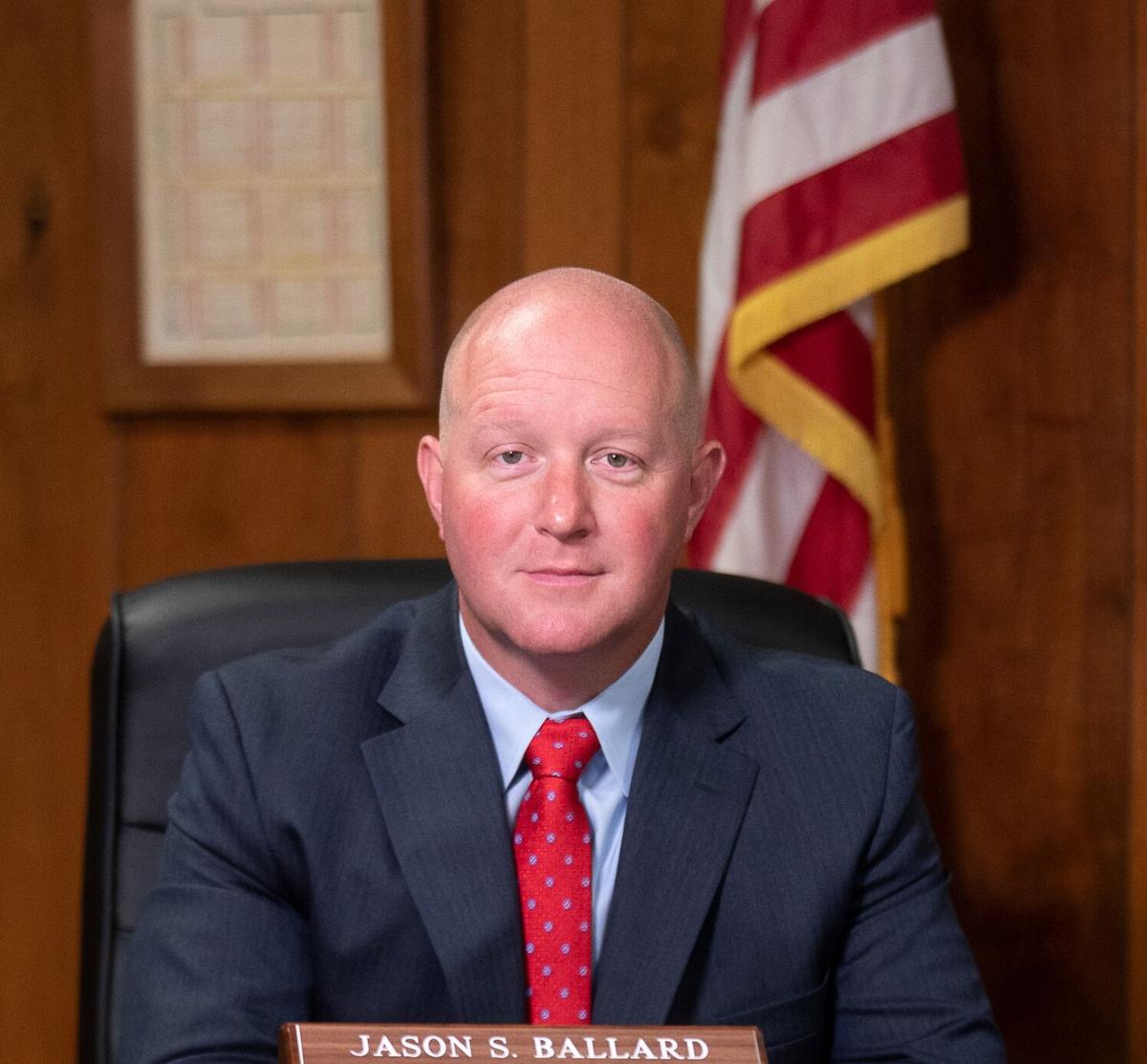
Jason Ballard
0% support rate
Ranked legislators
10
5 support · 5 oppose
Key legislators

Who's moving electric grid in Virginia

Legislators moving electric grid in Virginia
Legislator Party Stance Support rate Votes
Aaron Rouse
Aaron Rouse Senate · District 22
D
Strong +
100% 15
Creigh Deeds
Creigh Deeds Senate · District 11
D
Strong +
100% 15
Jeremy McPike
Jeremy McPike Senate · District 29
D
Strong +
100% 15
Mamie Locke
Mamie Locke Senate · District 23
D
Strong +
100% 15
Scott Surovell
Scott Surovell Senate · District 34
D
Strong +
100% 15
Jason Ballard
Jason Ballard House · District 42
R
Strong −
0% 10
Eric Phillips
Eric Phillips House · District 48
R
Strong −
0% 6
Eric Zehr
Eric Zehr House · District 51
R
Strong −
0% 6
Hillary Pugh Kent
Hillary Pugh Kent House · District 67
R
Strong −
0% 6
Joe McNamara
Joe McNamara House · District 40
R
Strong −
0% 6
Showing 1–10 of 14 bills

All energy bills

in committee · Virginia · House of Delegates Feb 6, 2026

HB 918: Virginia Clean Energy Research and Support Center; established, report.

Virginia Clean Energy Research and Support Center; established. Establishes the Virginia Clean Energy Research and Support Center (the Center) as an interdisciplinary study, research, and informational resource for individuals and businesses in the Commonwealth. The Center is governed by a board of directors that includes representatives from several colleges and universities in the Commonwealth, the Department of Energy, the Department of Environmental Quality, and the Commission on Electric Utility Regulation. The board is directed to establish an advisory council to provide expertise and guidance related to the functions and duties of the Center. Functions and duties of the Center include providing technical assistance in matters related to energy technologies, siting, permitting, project design, interconnection, electric infrastructure, electric utilities, ratepayer proceedings, and environmental impacts of energy projects. Under the bill, the Center shall conduct an annual evaluation and collaborate with state agencies and institutions of higher education to provide technical assistance, research, or support in matters related to siting and permitting, programs to improve electric grid reliability, energy programs established at a participating institution of higher education, and administration and implementation of the Virginia Energy Plan. The bill also requires the Center to submit an annual report to the Commission on Electric Utility Regulation summarizing its research activities and any funding received by the Center by November 1 of each year. This bill is a recommendation of the Commission on Electric Utility Regulation.
vetoed · Virginia · Senate Apr 11, 2026

SB 508: Electric utilities; comprehensive assessments, surplus interconnection service.

Electric utilities; surplus interconnection service sites. Directs Appalachian Power and Dominion Energy Virginia to undertake a comprehensive assessment of available interconnection capacity at each such utility's existing and planned intermittent electric generation facilities located in the Commonwealth. The bill directs such utilities to establish pilot programs for energy storage resources and solar generation facilities that utilize surplus interconnection service, as defined in the bill, including a request for proposals. The bill requires such utilities to submit the results of such requests for proposals as part of their 2027 plans and petitions for approval for the development of new solar and onshore wind generation capacity, which plans are required under existing law. This bill is identical to HB 1065.
signed · Virginia · House of Delegates Apr 13, 2026

HB 1487: Underground transmission lines; pilot program, clarifies qualifying projects, report.

Pilot program for underground transmission lines; qualifying projects; levy; report. Authorizes the State Corporation Commission, in reviewing any application submitted by a public utility for a certificate of public convenience and necessity for the construction of an electrical transmission line of 500 kilovolts filed between January 1, 2025, and July 1, 2033, to approve up to four applications for qualifying projects to be constructed in whole or in part underground as part of the pilot program for underground transmission lines and to provide an expedited review of any such application. The bill removes certain provisions related to the existing pilot program. Under the bill, a project shall be qualified if (i) the Commission finds that an engineering analysis demonstrates that it is technically feasible to place the proposed line in whole or in part underground, (ii) the application contains certain information regarding projections of project costs, (iii) the application contains evidence that the governing body of each locality in which at least a portion of the proposed line will be placed underground supports the project's inclusion in the program and agrees to meet its related funding obligations, and (iv) the Commission finds the overall cost of the project reasonable and consistent with the public interest. The bill permits the Commission to deny an application for a project that otherwise meets the criteria to qualify, provided that the Commission publicly shares its rationale for doing so.The bill requires at least 50 percent of the marginal costs, as defined in the bill, of the portion of a qualifying project chosen to be placed underground within a locality pursuant to its provisions to be paid by such locality. The bill permits such a locality to meet such requirement through imposing a levy on electric utility customers within the locality, issuing a general obligation bond subject to a referendum, or allocating its own funds. The bill extends the Commission's final report deadline for the pilot program from December 1, 2024, to December 1, 2034.
signed · Virginia · House of Delegates Apr 13, 2026

HB 1467: Electric utilities; virtual power plant pilot program, Phase I Utilities.

Electric utilities; virtual power plant pilot program; Phase I Utilities. Requires Appalachian Power to petition the State Corporation Commission for approval to conduct a pilot program to evaluate methods to optimize demand through various technology applications, including the establishment of virtual power plants, by July 1, 2027. The bill requires the pilot program to evaluate electric grid capacity needs and the ability of such virtual power plants to provide grid services, including peak-shaving, during times of peak electric demand.
Sub-Topics Electric Grid
in committee · Virginia · House of Delegates Feb 18, 2026

HB 779: Electric utilities; installation of small portable solar generation devices, local regulation.

Electric utilities; small portable solar generation devices; local regulation; Residential Landlord and Tenant Act. Permits any electric utility customer to own and operate a small portable solar generation device, defined in the bill as a nationally certified, plug-in solar photovoltaic device with a maximum power output of no more than 1,200 watts that is not designed to be interconnected with the electric grid and is intended primarily to offset part of the customer's electricity consumption, provided that such customer has submitted notice to its incumbent investor-owned utility, municipal utility, or electric cooperative. The bill prohibits an investor-owned utility, municipal utility, or electric cooperative from imposing interconnection requirements, charging any fee related to the device, or requiring that the customer obtain the utility's approval before installing or using the device. Under the bill, no electric utility or electric cooperative shall be liable for damage or injury caused by a small portable solar generation device. The bill also restricts (i) localities from prohibiting the use of a small portable solar generation device on a residential structure, provided that certain requirements are met, and (ii) landlords owning more than four rental dwelling units from prohibiting a tenant from installing a small portable solar generation device on the exterior of the tenant's premises, provided that reasonable restrictions may be established concerning size, manner, and placement.
in committee · Virginia · House of Delegates Feb 18, 2026

HB 1512: Electric utilities; renewable energy standard eligible sources.

Electric utilities; renewable energy standard eligible sources. Requires that, in order to qualify as renewable energy standard eligible sources under the renewable portfolio standard program, certain waste-to-energy resources, landfill gas-fired resources, and biomass-fired facilities be electric generating sources. Additionally, the bill requires, for waste-to-energy and landfill gas-fired resources to qualify, that such resources not use waste heat from fossil fuel combustion or credit thermal output or use the renewable thermal energy equivalent calculation to produce renewable energy certificates (RECs). Finally, the bill requires the State Corporation Commission (the Commission) to revoke and invalidate RECs if the Commission finds them to have been inappropriately or erroneously produced, registered, sold, banked, or retired and requires utilities to procure and retire RECs to cover any amount revoked and invalidated.
in committee · Virginia · House of Delegates Feb 18, 2026

HB 1141: Electric utilities; suspension of certain requirements.

Electric utilities; suspension of certain requirements. Provides that the renewable energy portfolio standard requirements and any associated construction, procurement, or retirement mandates are suspended for the applicable compliance year if the State Corporation Commission determines that compliance has resulted in, or will result in, any of the following: (i) an increase in the average residential customer’s total monthly electric bill of more than five percent in any calendar year that is attributable to compliance with the renewable energy portfolio standard or associated zero-carbon generation or energy storage requirements; (ii) an increase in any rate adjustment clause, rider, or non-bypassable charge associated with compliance with this section that exceeds $50 per month for the average residential customer; (iii) a determination that compliance poses a material risk to electric system reliability or resource adequacy in the Commonwealth; or (iv) a determination that the cost of renewable energy certificates necessary for compliance exceeds the applicable alternative compliance payment or deficiency payment for two consecutive compliance years.
signed · Virginia · House of Delegates Apr 13, 2026

HB 893: Electric utility integrated resource planning; energy storage resources.

Electric utility integrated resource planning; energy storage resources. Requires Dominion Energy, as part of its integrated resource plan, to assess the use of energy storage resources through appropriate modeling that accounts for economic charge and discharge times and represents various economic scenarios. The bill also requires systematic evaluation of and permits proposing investments in energy storage resources in the integrated resource plan.
signed · Virginia · Senate Mar 31, 2026

SB 407: Transportation electrification; integrated resource planning, fast-charging stations, etc.

Transportation electrification; integrated resource planning; fast-charging stations; cost recovery by electric utilities. Permits Dominion Energy and Appalachian Power Company to file a proposed tariff with the State Corporation Commission (the Commission) to provide utility owned and operated electrical distribution infrastructure to support electric vehicle charging stations. The bill requires Dominion Energy and Appalachian Power Company to file transportation electrification plans with the Commission by February 1, 2028, and every three years thereafter, and includes requirements for information to include in such plans. Under the bill, Dominion Energy and Appalachian Power Company are required to seek recovery of necessary and appropriate expenditures for transportation electrification only through their rates for generation and distribution services.The bill prohibits Dominion Energy and Appalachian Power Company from petitioning for approval of expenditures to own and operate electric vehicle fast-charging stations unless such stations are located at or beyond a radial distance as determined by the Commission relative to the location of any privately owned fast charging station. The bill also directs the Commission to initiate a rulemaking proceeding to determine the appropriate radial distance for such utility-owned fast-charging stations from privately-owned fast charging stations, to enter its final rule in such proceeding no later than December 31, 2027, and to review such final rule by December 31, 2029. Provisions of the bill restricting the radial distance of utility owned and operated fast-charging stations expire on July 1, 2031. This bill is identical to HB 1225.
failed · Virginia · Senate Mar 14, 2026

SB 651: Underground electric distribution & transmission improvement; levy on utility customers by ordinance.

Qualifying localities; underground electric distribution and transmission improvements; levy on utility customers by ordinance. Authorizes a qualifying locality, defined in the bill, to enter into an agreement with an electric utility to place new or proposed underground electric distribution or transmission lines and facilities or to relocate or convert existing overhead electric distribution or transmission lines and facilities underground. The bill requires any such agreement to provide that the locality pay to the utility its full additional costs of placing new or proposed electric distribution or transmission lines in the qualifying locality or relocating and converting that portion of a line located in the county underground rather than overhead, minus the net of relocation credits.The bill also provides that the qualifying locality may impose an additional levy on electric utility customers, which (i) shall not exceed $1 per month on residential customers; (ii) shall not exceed $10 per month on nonresidential customers; (iii) may be fixed at any amount on nonresidential customers that are major commercial energy consumers, defined in the bill; and (iv) shall be collected by the utility on behalf of the locality.
Showing 1 to 10 of 14 bills
1 2 Next