Issue · Criminal Justice

Criminal Justice

Every criminal justice bill, vote, and legislator stance in Virginia, automatically classified by Maddy, our AI policy reader.

Total bills
211
2026 Regular Session
Top supporter
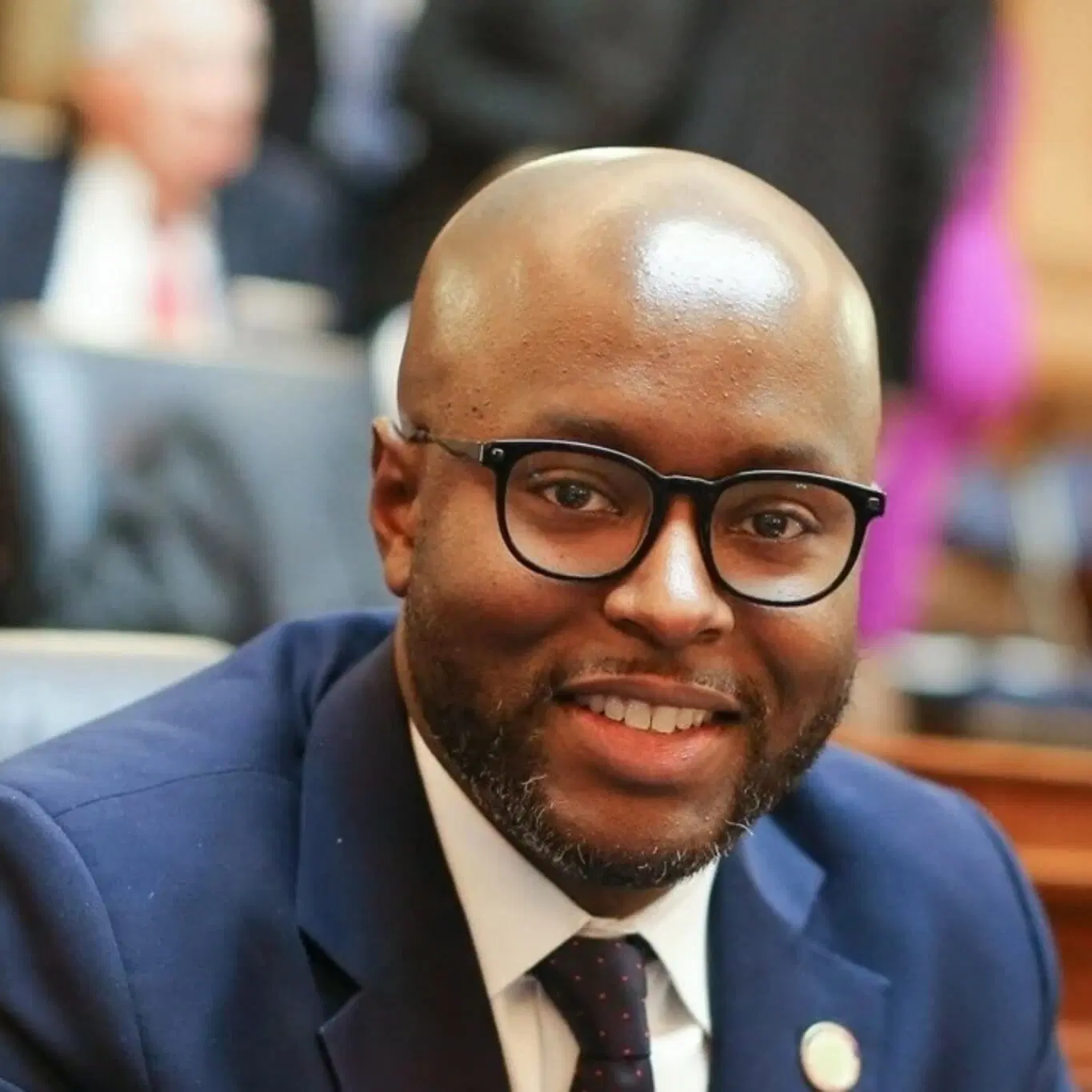
Delores McQuinn
88% support rate
Top opponent
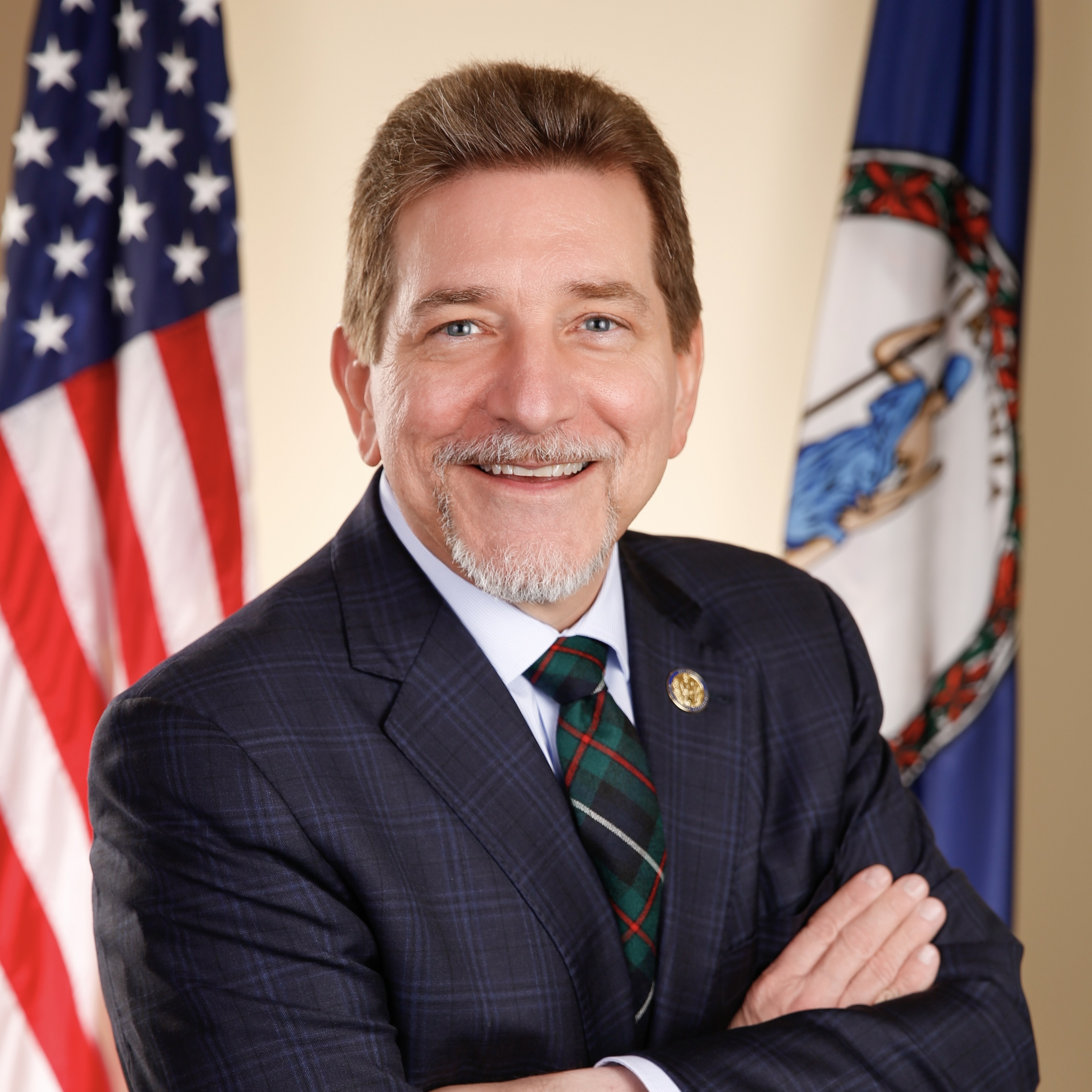
Phil Scott
17% support rate
Ranked legislators
10
5 support · 5 oppose
Key legislators

Who's moving criminal justice in Virginia

Legislators moving criminal justice in Virginia
Legislator Party Stance Support rate Votes
Delores McQuinn
Delores McQuinn House · District 81
D
Strong +
88% 327
Cliff Hayes
Cliff Hayes House · District 91
D
Strong +
87% 322
Alex Askew
Alex Askew House · District 95
D
Strong +
87% 330
David Reid
David Reid House · District 28
D
Strong +
86% 349
Kathy Tran
Kathy Tran House · District 18
D
Strong +
86% 318
Phil Scott
Phil Scott House · District 63
R
Strong −
17% 301
Mark Obenshain
Mark Obenshain Senate · District 2
R
Strong −
19% 443
Mike Webert
Mike Webert House · District 61
R
Strong −
19% 332
Tim Griffin
Tim Griffin House · District 53
R
Strong −
19% 266
Tommy Wright
Tommy Wright House · District 50
R
Strong −
19% 263
Showing 91–100 of 211 bills

All criminal justice bills

vetoed · Virginia · House of Delegates Apr 11, 2026

HB 857: Home/electronic incarceration program; court shall assign pregnant/postpartum persons to program.

Home/electronic incarceration program. Provides that any court having jurisdiction for the trial of a pregnant person or a postpartum person who still has contact with their infant child and is charged with certain offenses shall assign the offender to a home/electronic incarceration program unless there is probable cause to believe that (i) the offender will not appear for trial or hearing or at such other time and place as may be directed or (ii) the offender's liberty will constitute an unreasonable danger to such person, such person's family or household members, or the public. The bill also provides that a pregnant or postpartum person assigned to home/electronic incarceration shall remain eligible for bond.
Sub-Topics Corrections Courts
signed · Virginia · Senate Apr 8, 2026

SB 180: Fines and costs; period of limitations on collection, responsibility for collections.

Fines and costs; period of limitations on collection; deferred payment agreement. Changes the period of limitations for the collection of court fines and costs from within 60 years from the date of the offense or delinquency giving rise to imposition of such penalty if imposed by a circuit court or within 30 years if imposed by a general district court to within 10 years from the date of the judgment whether imposed by a circuit court or general district court. The bill provides that upon the expiration of the period of limitations, no action shall be brought to collect the debt.The bill extends the time period for commencing collection activity from 90 days to 180 days after judgment, but provides that no collection activity shall be commenced while a defendant is incarcerated on an active term of imprisonment and subject to a deferred payment agreement.The bill also provides that for any defendant sentenced to an active term of incarceration and ordered to pay any fine, cost, forfeiture, or penalty related to the charge that such defendant is incarcerated for, or any other charge for which such defendant was sentenced on the same day, the court shall enter such defendant into a deferred payment agreement for such fines, costs, forfeitures, or penalties. The bill requires the due date for such deferred payment agreement to be set no earlier than 180 days after the defendant's scheduled release from incarceration on the charge for which such defendant was sentenced on the same day. This bill incorporates SB 185 and SB 810. The bill has a delayed effective date of January 1, 2027.
signed · Virginia · House of Delegates Apr 13, 2026

HB 361: Earned sentence credits; incarceration while awaiting trial or pending an appeal, effective date.

Earned sentence credits; incarceration while awaiting trial or pending an appeal. Provides that a person's eligibility for earned sentence credits includes any period of time actually spent in any state or local correctional facility, state hospital, or juvenile detention facility awaiting trial or pending an appeal that was deducted from such person's term of incarceration or detention. The bill provides that the provisions apply retroactively to any person who is confined in any state or local correctional facility on July 1, 2028. The bill has a delayed effective date of July 1, 2028.
passed · Virginia · Senate Mar 10, 2026

SB 182: Short-term rental properties; human trafficking awareness training, delayed effective date.

Short-term rental properties; human trafficking awareness training. Requires every operator, defined in the bill, and its employees to complete an approved training course on recognizing and reporting instances of suspected human trafficking, as provided or approved by the Department of Criminal Justice Services, by January 1, 2028, and every two years thereafter. The bill has a delayed effective date of July 1, 2027. The bill contains technical amendments.
Sub-Topics Human Trafficking
signed · Virginia · Senate Apr 13, 2026

SB 513: Comprehensive mental health, substance abuse, & developmt. disability crisis services; written plan.

Comprehensive crisis system; Marcus alert system; Department of Behavioral Health and Developmental Services; comprehensive mental health, substance abuse, and developmental disability crisis services; written plan. Allows the Department of Behavioral Health and Developmental Services, in collaboration with the Department of Criminal Justice Services, to amend the written plan created pursuant to relevant law after the publication of such written plan, provided that (i) the stakeholders listed in relevant law are consulted during the development of any new language to be added to such written plan and (ii) a public comment period of no less than 30 days is held prior to the finalization of such written plan. The bill also provides that the written plan shall serve as the operational framework for relevant components of the comprehensive crisis system and the Marcus alert system and that state agencies and local implementing partners shall align their policies, procedures, and operations on an ongoing basis with the requirements and guidance set forth in the written plan, as amended. As introduced, this bill was a recommendation of the Behavioral Health Commission. This bill is identical to HB 453.
in committee · Virginia · House of Delegates Feb 13, 2026

HB 251: Assault and battery; creates Class 6 felony for serious bodily injury.

Assault and battery; serious bodily injury; penalty. Creates a Class 6 felony for any person who commits an assault and battery that results in serious bodily injury, as defined in relevant law, but does not rise to the level of the current offenses of unlawful or malicious wounding. The bill adds such new offense to the list of violent felony offenses for the purposes of the discretionary sentencing guidelines.
in committee · Virginia · House of Delegates Feb 2, 2026

HB 1257: Law-enforcement agencies; use of certain technologies & interrogation practices; forensic laboratory

Law-enforcement agencies; use of certain technologies and interrogation practices; forensic laboratory accreditation. Directs the Department of Criminal Justice Services to establish a comprehensive framework for the use of generative artificial intelligence (AI), machine learning systems, audiovisual surveillance technologies, and custodial and noncustodial interrogations of adults and juveniles by law-enforcement agencies, which shall include (i) developing policies and procedures and publishing model policies for the use of generative AI, machine learning systems, and audiovisual surveillance technologies and interrogation practices and (ii) establishing compulsory minimum training standards for basic training and recertification of law-enforcement officers on the use of generative AI, machine learning systems, audiovisual surveillance technologies, and conducting interrogations. The bill provides that the Department shall establish and publish such model policies by January 1, 2027, and that all law-enforcement agencies shall adopt policies consistent with such model policies by July 1, 2027. The bill requires any person employed as a law-enforcement officer prior to July 1, 2026, to complete the training required by the bill by January 1, 2030. The bill also prohibits local law-enforcement agencies and campus police departments from purchasing any equipment or instrument that is intended to be used in forensic laboratory analysis or any breath test device, presumptive chemical test, or presumptive mobile instrument unless such equipment, instrument, device, or test has been approved by the Department of Forensic Science or the Forensic Science Board. Such provisions of the bill have a delayed effective date of January 1, 2030.
signed · Virginia · House of Delegates Apr 6, 2026

HB 149: Probation; decreasing period.

Decreasing probation period. Establishes criteria for which a defendant's supervised probation period shall be reduced, including completing educational activities, maintaining employment, completing treatment, or obtaining housing. The bill provides that a court may decrease a defendant's probation period if warranted by the defendant's conduct upon receipt of a request from the Department of Corrections and requires the Department of Corrections to request termination of a defendant's supervised probation period after 12 months in certain situations. This bill is identical to SB 136.
signed · Virginia · House of Delegates Apr 13, 2026

HB 454: DCJS; removes requirement to develop model addiction recovery program.

Department of Criminal Justice Services; powers and duties; local and regional jails; repeal of model addiction recovery program. Removes the requirement that the Department of Criminal Justice Services, in consultation with the Department of Behavioral Health and Developmental Services, develop a model addiction recovery program that may be administered by sheriffs, deputy sheriffs, jail officers, administrators, or superintendents in any local or regional jail. This bill is a recommendation of the Joint Commission on Health Care and identical to SB 690.
vetoed · Virginia · Senate Apr 13, 2026

SB 764: Defendant; deferred disposition in a criminal case, license suspension.

Deferred disposition in a criminal case; license suspension; driving while under the influence. Permits a trial court, with the agreement of the Commonwealth if the charge is ineligible for sealing, to suspend the driver's license of a defendant for a period of not less than 10 days nor more than six months when deferring disposition. The bill also allows a trial court to defer judgment for a violation of driving while intoxicated and require that the defendant participate in and successfully complete an alcohol safety action program and prohibit the defendant from operating a motor vehicle that is not equipped with an ignition interlock system. The bill excludes from its provisions any person with a commercial driver's license or commercial learner's permit or who was operating a commercial motor vehicle during the alleged violation.
Showing 91 to 100 of 211 bills
Previous 1 9 10 11 22 Next