

Maddy summaryThis resolution (SRES 195) directs the U.S. Secretary of State to submit a detailed report to Congress within 30 days on El Salvador’s human rights practices. The report must include verified information about alleged violations such as torture, forced disappearances, judicial independence concerns, and the treatment of foreign nationals detained in El Salvador. It also requires assessments of whether U.S. security assistance could be misused and actions taken to protect U.S. citizens detained there. The resolution specifically requests this information under Section 502B(c) of the Foreign Assistance Act, which governs human rights conditions for foreign aid. The report will inform Congress’s oversight of U.S. policy toward El Salvador.
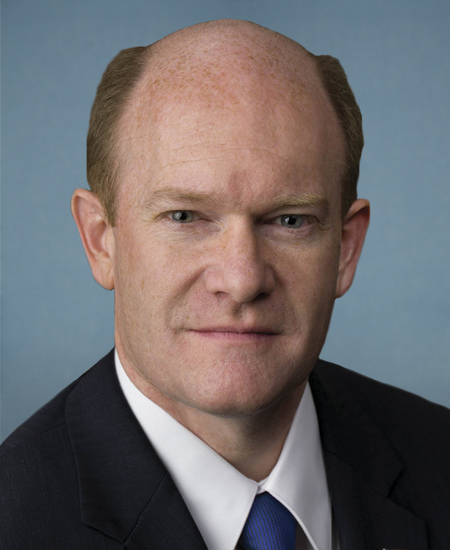
Sen. Christopher A. Coons
Sponsored bills
Maddy summaryThis bill protects employees and independent contractors who report AI-related security risks or violations. It prohibits employers from retaliating against workers who disclose AI security vulnerabilities (like potential theft of AI systems) or AI violations (such as unsafe development practices) to regulators, Congress, or internal supervisors. Covered individuals can seek remedies like reinstatement, double back pay, and legal fees through the Labor Department or federal court if retaliated against. The law explicitly blocks employers from requiring arbitration or waiving these protections through contracts.
Maddy summaryThis bill expands Medicare coverage for mental health services provided to seniors in skilled nursing facilities. It removes a current exclusion, allowing clinical social workers to provide covered mental health services under Medicare Part A. Specifically, it adds coverage for a defined set of mental health and behavioral assessment services (using standard codes) that were previously excluded. The changes will take effect for services provided on or after January 1, 2026, directly benefiting seniors residing in skilled nursing facilities seeking these mental health services.
Maddy summaryS 1778, the Countering Chinese Espionage Reporting Act, requires the U.S. Department of Justice (DOJ) to submit annual reports to Congress and publish them publicly for seven years. These reports must detail DOJ efforts to counter Chinese espionage threats - including intellectual property theft and risks from researchers at universities or defense facilities - and track resources dedicated to these programs. The reports must also describe how civil rights, liberties, and privacy protections are maintained during these activities. This bill does not change existing laws but mandates transparency about current DOJ counter-espionage operations.
Maddy summaryThis bill prohibits U.S. federal agencies from recognizing Russia's claim of sovereignty over Crimea or any other Ukrainian territory seized by force. It requires all federal departments and agencies to avoid any actions, nonhumanitarian aid, or spending that implies such recognition, unless Ukraine's democratically elected government formally approves it. The policy explicitly bans U.S. government actions that could signal acceptance of Russia's territorial claims in Ukraine. This applies directly to all U.S. federal agencies and their spending decisions related to Ukraine.
Maddy summaryThis bill changes how the Nuclear Regulatory Commission (NRC) handles hearings for nuclear facility permits. It allows the NRC to issue construction permits, operating licenses, or amendments without a formal hearing if no affected party requests one, provided the NRC gives 30 days notice and publishes in the Federal Register. The NRC may skip this notice period only for permit amendments involving no significant hazards. The bill directly affects nuclear power plant operators, uranium enrichment facility applicants, and the NRC’s licensing process. It streamlines permitting by reducing mandatory hearings but does not alter safety standards.
Maddy summarySRES 218 is a non-binding Senate resolution condemning the acceptance of presidential aircraft or other substantial gifts from foreign governments. It states such acceptance poses national security risks (citing Air Force One’s sensitive technology) and violates the Constitution’s Foreign Emoluments Clause, which requires congressional consent for presidential gifts from foreign states. The resolution demands that any such gift must have explicit congressional approval and urges rejecting foreign aircraft that don’t meet U.S. defense security standards. It applies to the President and sets a procedural expectation, not a new law, emphasizing constitutional compliance and public trust.
Maddy summarySRES 219 is a Senate resolution directing the Senate Legal Counsel to file a civil lawsuit on behalf of the Senate to enforce the Constitution's Foreign Emoluments Clause. This clause prohibits U.S. officials from accepting gifts, payments, or titles from foreign governments without Congress's consent. The resolution specifically targets alleged violations by President Trump involving a Qatar-provided plane for Air Force One and a $2 billion foreign-backed investment deal (MGX Fund-Binance) that could provide him financial benefits from foreign states. The lawsuit aims to stop Trump from accepting such foreign emoluments without congressional approval.
Maddy summaryThis resolution (SRES 224) calls for urgent U.S. diplomatic action to address the severe humanitarian crisis in Gaza, where approximately 2.2 million civilians face acute hunger and malnutrition, including 10,000 children identified with acute malnutrition since January 2025. It highlights that Gaza’s borders have been blocked since March 2, 2025, preventing entry of food, medicine, and other lifesaving aid, leading to closed bakeries and exhausted food rations. The Senate resolution specifically urges the White House and State Department to use all available diplomatic tools to end the blockade, secure hostage releases, and achieve a durable conflict resolution. As a non-binding resolution, it does not enact law but formally expresses the Senate’s concern and directs executive branch action.
Maddy summarySRES 220 designates the week of May 11-17, 2025, as "National Police Week" to honor law enforcement officers across the United States. The resolution recognizes officers who have been killed, disabled, or injured in the line of duty, including 234 officers honored for 2024 fatalities and 18 officers killed in 2025. It expresses the Senate’s support for law enforcement, acknowledges the need for adequate resources for officer safety, and encourages public observance to celebrate their service and sacrifices. This is a ceremonial resolution with no new policy or funding changes.