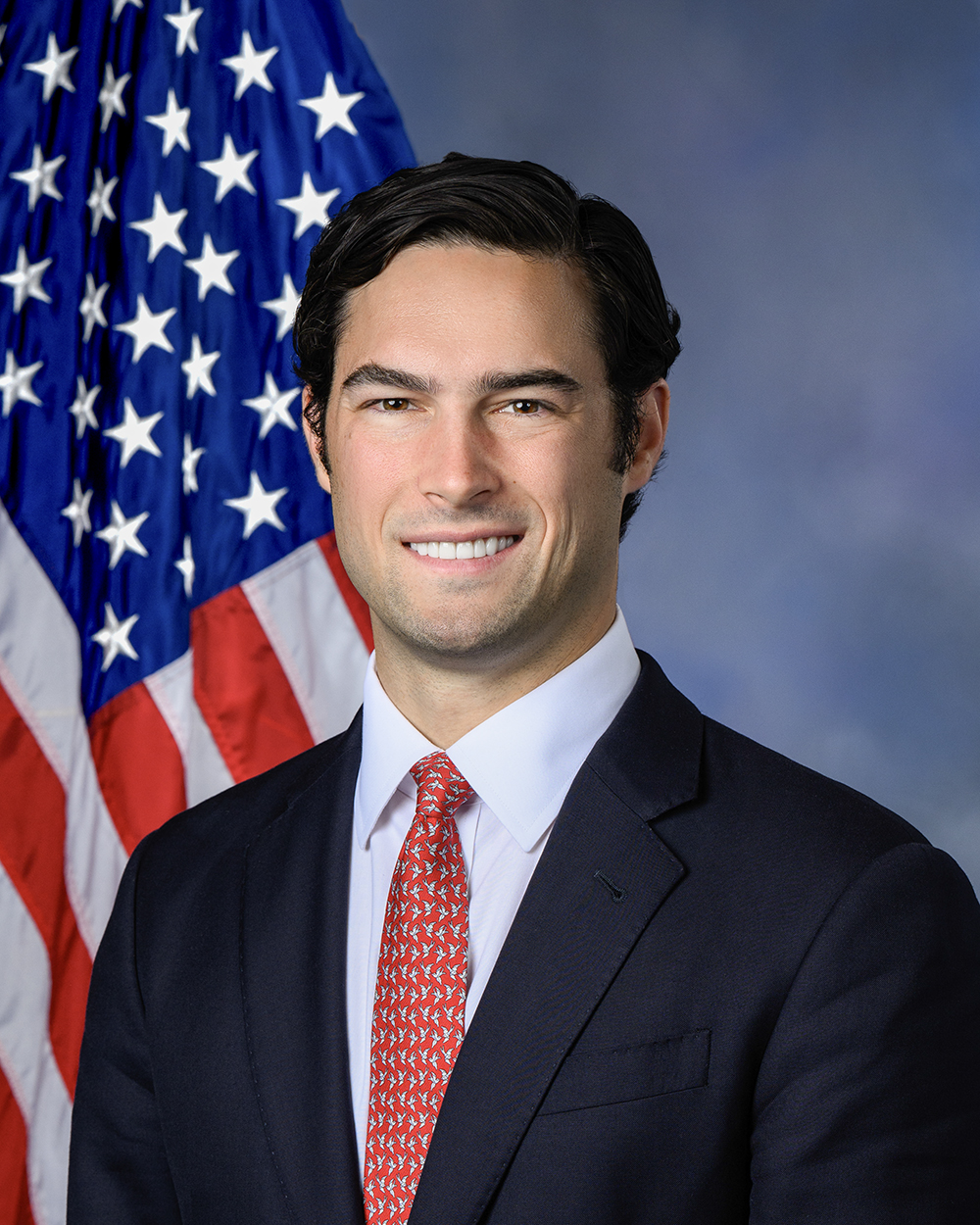
Photo of Brandon Gill
R United States House · District 26 · Texas On the 2026 ballot

Rep. Brandon Gill

Compare
Total votes
669
all sessions
Attendance
98%
14 missed
Near the chamber average
With party
91%
of cast votes
Lower than 92% of chamber peers
Bipartisan score
5%
crosses aisle rarely
Higher than 91% of chamber peers
Sponsored
355
bills & resolutions
Near the chamber average
Committees
9
assignments
355 bills and resolutions

Sponsored bills

Total
355
Primary
26
Co-sponsor
329
This page
355
matching current filters
Co-sponsor HR 7963
In committee · Utah House · Co-sponsor
No Lifeline for the Dead Act

Maddy summaryThis bill directs the Federal Communications Commission to update rules for the Lifeline program, which provides discounted phone and internet services to low-income Americans. It requires the FCC to use a national eligibility verification system and accountability database without allowing opt-outs, and mandates re-examination of current recipients who were approved without using these systems. The legislation also restricts eligibility to U.S. citizens and qualified aliens, and requires applicants to provide Social Security numbers or Tribal identifiers during the application process.

In committee Mar 17, 2026 1 co-sponsor
Co-sponsor HR 1422
Passed · Utah House · Co-sponsor
Enhanced Iran Sanctions Act of 2025

Enhanced Iran Sanctions Act of 2025 This bill imposes sanctions on certain foreign persons (individuals and entities) that are involved in Iran's petroleum sector as well as certain associated persons. The bill also requires or authorizes actions to facilitate the enforcement of sanctions on Iran. Specifically, the bill requires the President to impose visa- and property-blocking sanctions on any foreign person that, after the bill's enactment, knowingly engages in any transaction related to the processing, export, or sale of oil, condensates, gas, liquefied natural gas, or other petrochemical products in whole or in part from Iran. The President must also impose sanctions on certain foreign persons associated with a sanctioned individual or entity. For example, the President must sanction the subsidiaries and corporate officers of a sanctioned business. The bill provides certain exceptions to these sanctions, including specifying that sanctions do not apply to the importation of goods or to conducting or facilitating transactions for humanitarian assistance. The Department of State must establish an interagency working group that shall seek to establish a multilateral contact group to coordinate international efforts to enforce sanctions on Iran. The bill expands the State Department rewards program to authorize a reward payment to any individual who furnishes information leading to the identification of a person (1) subject to sanctions under this bill, or (2) that has attempted or is attempting to evade sanctions under this bill.

Passed Mar 17, 2026 1 co-sponsor
Co-sponsor HR 7843
In committee · Utah House · Co-sponsor
No Free Rides Act of 2026

Maddy summaryThis bill, known as the No Free Rides Act of 2026, would prohibit federal public transportation funding recipients from offering universal free fare policies that allow all riders to use transit services without paying. The law would still permit targeted fare policies that provide free or reduced-cost rides for specific groups such as seniors, low-income riders, students, or employees with employer-paid agreements. Additionally, the Secretary of Transportation could grant waivers if a transit agency can demonstrate a dedicated non-federal revenue source to support universal free fare programs. The measure directly affects public transportation agencies that receive federal assistance under Title 49 of the United States Code.

In committee Mar 5, 2026 1 co-sponsor
Co-sponsor HR 7846
In committee · Utah House · Co-sponsor
Halo Act

Maddy summaryThis bill, known as the Halo Act, creates a new federal crime for intentionally approaching or staying within 25 feet of immigration enforcement officers after receiving a verbal warning, if the person intends to interfere with their work, threaten them, or harass them. It directly affects individuals who may attempt to block or disrupt immigration officers performing their duties, such as during arrests or investigations. The law defines harassment as conduct that causes substantial emotional distress to an officer and serves no legitimate purpose, and it carries penalties of up to five years in prison, a fine, or both. This provision adds to existing Title 18 United States Code by establishing specific boundaries for behavior near federal immigration officials.

In committee Mar 5, 2026 1 co-sponsor
Co-sponsor HR 7678
In committee · Utah House · Co-sponsor
Gun Owner Registration Information Protection Act

Maddy summaryHR 7678, the Gun Owner Registration Information Protection Act, prohibits federal funding for state or local databases that track lawfully owned firearms or their owners. The bill allows federal funding for databases recording lost or stolen firearms but bans it for databases listing legal gun ownership. This means states cannot use federal money to create or maintain systems that compile information about legally owned guns. The bill directly affects state and local governments that rely on federal funds for firearm ownership databases.

In committee Feb 25, 2026 1 co-sponsor
Co-sponsor HR 2189
Passed · Utah House · Co-sponsor
To modernize Federal firearms laws to account for advancements in technology and less-than-lethal weapons, and for other purposes.

Law-Enforcement Innovate to De-Escalate Act This bill removes less-than-lethal projectile devices (e.g., certain TASERs) from regulation under the Gun Control Act. The term less-than-lethal projectile device means a device that (1) is not designed or intended to expel (and may not be readily converted to discharge) commonly used ammunition or projectiles exceeding a velocity of 500 feet per second; (2) is designed and intended to be used in a manner not likely to cause death or serious bodily injury; and (3) does not accept (and cannot be readily modified to accept) an ammunition feeding device. The bill also requires the Bureau of Alcohol, Tobacco, Firearms and Explosives to determine whether a device satisfies the definition of a less-than-lethal projectile device within 90 days of a request.

Passed Feb 24, 2026 1 co-sponsor
Co-sponsor HR 7611
In committee · Utah House · Co-sponsor
Protecting Puppies from Sharia Act

Maddy summaryThis bill is not a real legislative proposal but a widely circulated hoax. It falsely claims to prohibit federal funding for states that "prohibit dog ownership" while misrepresenting Sharia law as a threat to pet ownership - a claim with no basis in reality, as Sharia law does not regulate pet ownership and no U.S. jurisdiction prohibits dog ownership. The bill contains factual inaccuracies (e.g., falsely equating Sharia law with being "against the pursuit of happiness") and would be unconstitutional due to religious discrimination. It was never introduced in Congress and appears to be a satirical or misleading online post.

In committee Feb 20, 2026 1 co-sponsor
Co-sponsor HR 1319
In committee · Utah House · Co-sponsor
Modern Worker Empowerment Act

This bill specifies a legal standard for determining whether an individual is considered an independent contractor rather than an employee for the purposes of federal labor laws that address issues such as the federal minimum wage, overtime compensation, and collective bargaining. The rights and protections provided by these laws exclusively apply to employees. Under the bill, an individual is considered an independent contractor if (1) another individual or entity does not exercise significant control over the details of how the individual's work is performed, without regard to any control the other individual or entity may exercise over the final result of the work performed; and (2) while performing such work, the individual has opportunities and risks inherent with entrepreneurship (for example, the discretion to exercise professional judgment). The bill also sets forth factors that may not be used to determine whether an individual is an employee. Specifically, factors such as whether another individual or entity requires the individual to meet certain legal, health and safety, insurance, or performance requirements may not be used to make such a determination.

In committee Feb 20, 2026 1 co-sponsor
Primary HJRES 142
Signed into law · Utah House · Lead sponsor
Disapproving the action of the District of Columbia Council in approving the D.C. Income and Franchise Tax Conformity and Revision Temporary Amendment Act of 2025.

This joint resolution reinstates provisions of District of Columbia (DC) tax law to conform with federal tax law. As background, DC generally automatically adopts changes to federal tax law (known as rolling conformity). Therefore, upon enactment of the 2025 reconciliation act (commonly known as the One Big Beautiful Bill Act), many of its tax provisions became DC law. DC subsequently enacted its own legislation (the DC Income and Franchise Tax Conformity and Revision Temporary Amendment Act of 2025) that decoupled DC tax law from these federal provisions. This joint resolution nullifies the DC legislation, thereby generally realigning DC tax law with the tax provisions of the 2025 reconciliation act. Specifically, the joint resolution reinstates for DC provisions that •    increase the higher basic standard deduction; •    increase deductible charitable cash contributions (for taxpayers who take the standard deduction); •    establish a $6,000 tax deduction for taxpayers 65 years and older; •    allow a tax deduction of qualified tips, qualified overtime pay, and qualified car loan interest; •    authorize an elective 100% depreciation allowance for nonresidential real property; and •    authorize businesses to deduct 100% of research and experimental costs retroactive to tax year 2022. The DC legislation also amended several other provisions of DC tax law, including restoring the DC child tax credit. The joint resolution negates these changes.

Signed into law Feb 18, 2026 0 co-sponsors
Showing 61 to 70 of 355 bills
Previous 1 … 6 7 8 … 36 Next