

Maddy summaryThe Find It Early Act requires most health insurance plans, Medicare, Medicaid, TRICARE, and VA benefits to cover certain breast cancer screenings without cost-sharing for specific at-risk groups. It affects individuals at increased breast cancer risk (as determined by medical guidelines), those with dense breast tissue (as defined by the American College of Radiology), and others requiring screening due to factors like age, race, ethnicity, or family history. The bill mandates coverage for various screening methods including mammograms, ultrasounds, MRI, and other technologies at frequencies recommended by the National Comprehensive Cancer Network. This requirement takes effect for plan years beginning January 1, 2026, removing financial barriers to early detection.
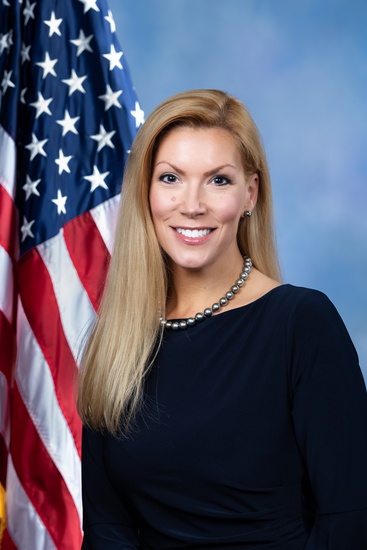
Rep. Beth Van Duyne
Sponsored bills
Maddy summaryHR 909, the Crime Victims Fund Stabilization Act of 2025, modifies how funds from the False Claims Act are deposited into the Crime Victims Fund. It specifies that from 2025 through 2029, certain False Claims Act proceeds (specifically those for qui tam plaintiff payments and government damage reimbursements) cannot be deposited into the fund. This change directly affects the composition of the Crime Victims Fund by excluding these specific revenue streams during the specified period. The bill does not create new benefits or alter victim services; it only adjusts fund allocation rules for existing False Claims Act revenues.
Maddy summaryThis bill would impose additional import duties on goods from foreign countries based on the U.S. trade balance with that country. It requires a 10% duty on imports from nations where the U.S. has a trade surplus (importing more than exporting) and a 15% duty from countries with a trade deficit (exporting more than importing). These new duties would apply in addition to any existing tariffs, affecting importers and foreign exporters. The President may reduce these rates with congressional consultation, but only if deemed necessary for U.S. national interest or security.
Maddy summaryThis bill makes it a federal crime to steal packages from private or commercial carriers (like FedEx or UPS) before the recipient takes physical possession. It directly affects thieves who target delivery vehicles or curbside packages and carriers who report such thefts. The key provision amends federal law to explicitly include "any package... delivered by any private or commercial interstate carrier" under existing protections against embezzlement or theft. This expands current law, which previously covered packages in transit, to cover packages left for pickup by carriers. The law does not change delivery practices but creates new federal penalties for stealing packages during this specific handoff period.
Maddy summaryHR 6824 creates a 10% federal tax credit for businesses installing qualifying combined heat and power (CHP) systems. The credit applies to systems meeting strict efficiency standards (over 60% energy efficiency), producing at least 20% thermal energy and 20% electrical/mechanical power, with construction starting after December 2024. Systems over 50 megawatts electrical or 67,000 horsepower mechanical capacity are excluded, and bonuses of 10% more credit apply for domestic content or projects in designated energy communities. This credit directly affects businesses investing in new CHP infrastructure, reducing their tax liability based on the system's cost.
Miracle on Ice Congressional Gold Medal Act This act provides for the award of Congressional Gold Medals to the members of the 1980 U.S. Olympic men's ice hockey team in recognition of the team's achievement at the 1980 Winter Olympic Games.
Maddy summaryHRES 930 is a symbolic resolution designating December 8, 2025, as "Jimmy Lai Day" to honor Jimmy Lai's advocacy for free press, religious freedom, and democracy in Hong Kong. It calls on the People's Republic of China and Hong Kong authorities to release Jimmy Lai and other Hong Kong prodemocracy advocates detained under Hong Kong's National Security Law. The resolution does not create new laws or policies but expresses congressional support for Lai's work and condemns the imprisonment of those advocating for Hong Kong's freedoms. It directly affects U.S. diplomatic messaging toward China, not Hong Kong's legal system or residents.
Maddy summaryHR 6446 modifies how U.S. customs officials investigate suspected evasion of antidumping and countervailing duty orders on imported goods. It allows the Commissioner to start an investigation independently if they have evidence of evasion, not just when a complaint is filed. Additionally, importers found to have evaded duties must pay all owed customs fees before they can challenge the decision in court. These changes streamline enforcement and clarify the process for addressing duty evasion.
Maddy summaryHR 4305, the DUMP Red Tape Act, creates a Small Business Administration hotline for small businesses to report regulatory burdens they face when complying with federal agency rules. Small businesses (as defined by the Small Business Act) can submit complaints via email, website, or phone through this hotline, which must be established within 180 days of the bill's enactment. The Chief Counsel for Advocacy must then submit annual reports to Congress detailing the most frequently reported rules, affected industries, geographic data, and recommendations for agencies to address these burdens. This bill establishes a reporting mechanism but does not directly change existing regulations.
Maddy summaryHR 2965, the Small Business Regulatory Reduction Act of 2025, requires the Small Business Administration (SBA) to ensure that the cost to small businesses from federal agency rulemaking (including new rules, modifications, or repeals) does not exceed zero starting in fiscal year 2026. It mandates the SBA’s Office of Advocacy to annually report to Congress on all federal rules affecting small businesses, broken down by the issuing agency. The bill applies to all federal agencies, not just the SBA, and focuses on controlling regulatory costs for small businesses. No new funding is provided to implement these requirements.