Maddy summaryHR 4305, the DUMP Red Tape Act, creates a Small Business Administration hotline for small businesses to report regulatory burdens they face when complying with federal agency rules. Small businesses (as defined by the Small Business Act) can submit complaints via email, website, or phone through this hotline, which must be established within 180 days of the bill's enactment. The Chief Counsel for Advocacy must then submit annual reports to Congress detailing the most frequently reported rules, affected industries, geographic data, and recommendations for agencies to address these burdens. This bill establishes a reporting mechanism but does not directly change existing regulations.
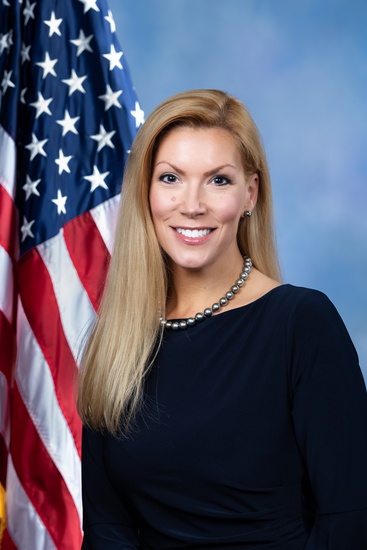
Rep. Beth Van Duyne
Sponsored bills
Maddy summaryHR 2965, the Small Business Regulatory Reduction Act of 2025, requires the Small Business Administration (SBA) to ensure that the cost to small businesses from federal agency rulemaking (including new rules, modifications, or repeals) does not exceed zero starting in fiscal year 2026. It mandates the SBA’s Office of Advocacy to annually report to Congress on all federal rules affecting small businesses, broken down by the issuing agency. The bill applies to all federal agencies, not just the SBA, and focuses on controlling regulatory costs for small businesses. No new funding is provided to implement these requirements.
Maddy summaryThis bill would amend the Anti-Terrorism Act of 1987 to designate the Muslim Brotherhood as a terrorist organization and prohibit its operations within the United States. It would require the President to designate the Muslim Brotherhood as a foreign terrorist organization under immigration law and impose new visa restrictions, including immediate revocation of current visas, for individuals identified as members. The bill mandates annual reports from the Secretary of State identifying Muslim Brotherhood branches worldwide and determining which should be designated as terrorist organizations under existing laws. These provisions would directly affect Muslim Brotherhood members, branches, and affiliated organizations seeking entry to or operating within the United States.
Maddy summaryHR 3806, the New World Screwworm Preparedness Act of 2025, requires the U.S. Department of Agriculture to conduct a study on the nation's readiness to prevent and respond to New World screwworm (NWS) infestations. The study must assess current threats, sterile insect production capabilities, surveillance systems, emergency response plans, research needs, and international cooperation, with input from livestock producers, wildlife agencies, and scientists. The Secretary of Agriculture must submit a report to Congress within six months detailing findings and recommendations for improving preparedness. This bill directly affects agricultural stakeholders and wildlife management by mandating a review of existing capabilities, not by changing current policy.
Maddy summaryHR 5670, the Protecting America’s Roads Act, amends federal commercial driver’s license (CDL) requirements to strengthen verification of applicant eligibility. It directly affects non-citizen applicants for CDLs or commercial learner’s permits by requiring proof of lawful presence (via the federal SAVE system), proof of state residence, and in-person processing for all non-citizen license actions. Key provisions include denying CDLs to non-residents, expiring non-citizen licenses based on immigration status or after one year, and terminating foreign license reciprocity agreements within six months of enactment. The bill also mandates states to downgrade or revoke non-citizen licenses if eligibility lapses and authorizes immigration agencies to identify unauthorized commercial drivers.
Maddy summaryHR 5563, the DRIVE-SAFE Act, creates a structured apprenticeship program for commercial drivers under age 21. It requires employers to provide a two-phase training program: a 120-hour probationary period focused on basic driving skills (like traffic navigation and safety awareness), followed by a 280-hour period covering advanced tasks (such as pre-trip inspections and load management). During both phases, apprentices must operate vehicles equipped with automatic transmissions, collision mitigation systems, and video capture, and must be accompanied by an experienced driver (26+ years old with no recent accidents or violations). The bill does not change existing commercial driver’s license requirements and mandates employers to maintain records and provide remediation for preventable accidents or violations during training.
Maddy summaryThis bill amends the Small Business Act to add penalties for small businesses falsely claiming goods or services are "Made in America" to win federal contracts. It directly affects small business concerns that receive federal contracts based on such false claims. The key provision extends the penalty period from 3 to 5 years for these violations, applying existing remedies from subsection (d)(2) but substituting the longer timeframe. This targets fraud in government procurement by strengthening consequences for misleading claims about domestic production.
Maddy summaryHR 6197, the Health Tech Investment Act, establishes a new payment category under Medicare for algorithm-based healthcare services (like AI tools used in diagnosis or treatment) starting January 1, 2026. It requires Medicare to pay based on manufacturer-provided costs (including software, staff, and overhead) for these services and prohibits removing them from the special payment category for at least five years after initial payment. This directly affects Medicare beneficiaries (through coverage), healthcare providers (who deliver these services), and AI/algorithm service manufacturers (who receive reimbursement). The bill ensures these new technologies get fair payment while gathering sufficient claims data before potentially moving them to standard payment categories.
Maddy summaryHR 5107, the Common-Sense Law Enforcement and Accountability Now in DC Act (CLEAN DC Act), repeals D.C. Law 24-345 (the 2022 Comprehensive Policing and Justice Reform Amendment Act). This bill directly affects Washington, D.C.'s policing and justice systems by reversing all changes made under that 2022 law. The key mechanism is a straightforward repeal, restoring all prior District laws as if the 2022 reform had never been enacted. The bill does not introduce new provisions but undoes existing reforms to the District’s law enforcement framework.
Maddy summaryThis bill regulates healthcare platforms that help patients find providers (like online appointment directories). It prohibits these platforms from steering patients toward specific providers based on payment, requiring full disclosure of financial ties between platforms and healthcare providers. Platforms must use objective criteria for listing providers, cannot offer medical services or collect patient data improperly, and must set fair, pre-agreed compensation rates. It directly affects health tech companies operating these platforms and healthcare providers using them to connect with patients.