Love Lives On Act of 2025 This bill extends entitlement for various benefit programs and services for surviving spouses of deceased members of the Armed Forces or veterans. The bill provides that the remarriage of a surviving spouse must not bar the furnishing of dependency and indemnity compensation or special pension benefits to such spouse. Additionally, the Department of Defense may not terminate the payment of an annuity for a surviving spouse under the Survivor Benefit Plan solely because the surviving spouse remarries. The bill also expands the definition of a dependent under TRICARE to include a remarried widow or widower whose subsequent marriage has ended due to death, divorce, or annulment.
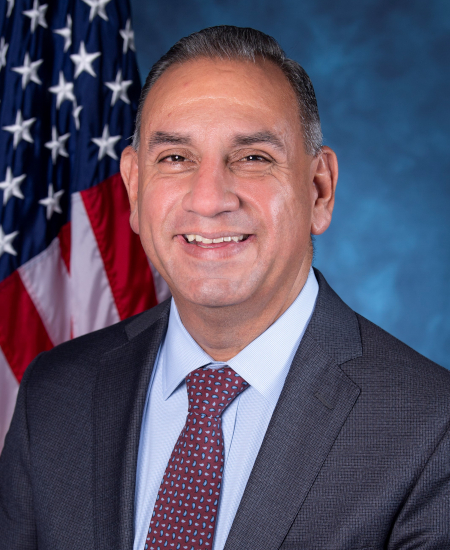
Rep. Gilbert Ray Cisneros, Jr.
Sponsored bills
Maddy summaryThis bill establishes safety and security standards for online platforms and delivery services that accept Supplemental Nutrition Assistance Program benefits. It requires the Food and Nutrition Service to create rules for digital privacy, cybersecurity, fair working conditions including prevailing wages, and food safety for stores and wholesalers participating in the program. Retailers must report their compliance with these standards within 18 months of the rules being finalized, and noncompliance could result in losing authorization to accept SNAP benefits. The legislation aims to protect users and workers while ensuring food safety in the growing digital food assistance landscape.
Maddy summaryThe Military Financial Literacy Act of 2026 expands personalized financial and housing counseling services for members of the Armed Forces. It requires the Department of Defense to establish a one-on-one counseling program within one year that covers credit management, budgeting, anti-predatory lending, rental planning, VA home loans, and legal protections under the Servicemembers Civil Relief Act. The program must partner with HUD-approved, tax-exempt Veteran Service Organizations that have expertise in financial literacy and housing stability. The Secretary of Defense must submit a report to Congress within two years detailing the number of service members who received counseling, completion rates, and indicators of financial stress or housing instability among participants.
Maddy summaryThe GUARDRAILS Act (HR 8031) repeals the December 11, 2025 Executive Order on Artificial Intelligence, which previously established a national policy framework for AI development. By removing this executive order, the bill prevents the federal government from using funds to implement, enforce, or administer the policies outlined in that directive. This change directly affects federal agencies and any organizations that were relying on the executive order's framework for AI regulation. The legislation does not create new AI rules but instead eliminates the existing executive mandate that had been in place.
Maddy summaryThe Energy Bills Relief Act aims to lower household energy costs and accelerate the development of low-cost, clean energy by modifying federal tax credits, expanding weatherization programs, and streamlining permitting processes. Key provisions include restoring tax incentives for renewable energy projects, increasing funding for low-income heating assistance, and requiring federal agencies to treat wind, solar, and storage projects with the same procedural fairness as oil and gas projects. The bill also establishes new incentives for upgrading the electricity grid, such as tax credits for transmission lines and grants for wildfire prevention measures, while creating mechanisms to ensure utilities serve public interests and protect consumers from price volatility.
Maddy summaryThis bill requires the Department of Veterans Affairs (VA) to cover abortion care, counseling, and related medication as part of standard hospital and medical services for eligible veterans and certain dependents. It amends VA healthcare law to explicitly include these services under existing coverage for veterans qualifying under section 1703 and dependents eligible under section 1781(a). The policy directly affects veterans and their dependents enrolled in VA healthcare programs by expanding covered benefits to include abortion-related care. This is a concrete policy change to VA healthcare benefits, not a broader abortion law.
Governing Unaccredited Representatives Defrauding VA Benefits Act or the GUARD VA Benefits Act This bill imposes fines on individuals for soliciting, contracting for, charging, or receiving any unauthorized fee or compensation with respect to the preparation, presentation, or prosecution of any claim for Department of Veterans Affairs benefits. The attempted commission of such offenses is also punishable by fine.
Maddy summaryThis bill directs the Department of Commerce to conduct a study on the challenges faced by small U.S. artificial intelligence businesses. The study will examine issues such as access to funding, tax credits, talent recruitment, and the impact of federal policies on these companies. It defines small AI businesses as independently owned U.S. companies with 250 or fewer employees that primarily create or develop AI products or services. The bill requires the Commerce Secretary to consult with relevant agencies and may involve outside experts to gather data and provide recommendations for addressing identified challenges.
Maddy summaryThis bill designates the Chí'chil Biłdagoteel Historic District, a traditional cultural place significant to Western Apache and other Native American tribes, as protected land within the Tonto National Forest. It prohibits mining, toxic waste disposal, pipeline construction, and other development activities on the area to preserve its cultural and natural integrity. The legislation requires the Secretary of Agriculture to maintain the land in its natural condition, consult with affected tribes, and ensure continued access for traditional religious and cultural practices. By withdrawing the land from public land laws and mining rights, the bill prevents future extraction projects that could damage sacred sites, water sources, and ecosystems.
Enhanced Iran Sanctions Act of 2025 This bill imposes sanctions on certain foreign persons (individuals and entities) that are involved in Iran's petroleum sector as well as certain associated persons. The bill also requires or authorizes actions to facilitate the enforcement of sanctions on Iran. Specifically, the bill requires the President to impose visa- and property-blocking sanctions on any foreign person that, after the bill's enactment, knowingly engages in any transaction related to the processing, export, or sale of oil, condensates, gas, liquefied natural gas, or other petrochemical products in whole or in part from Iran. The President must also impose sanctions on certain foreign persons associated with a sanctioned individual or entity. For example, the President must sanction the subsidiaries and corporate officers of a sanctioned business. The bill provides certain exceptions to these sanctions, including specifying that sanctions do not apply to the importation of goods or to conducting or facilitating transactions for humanitarian assistance. The Department of State must establish an interagency working group that shall seek to establish a multilateral contact group to coordinate international efforts to enforce sanctions on Iran. The bill expands the State Department rewards program to authorize a reward payment to any individual who furnishes information leading to the identification of a person (1) subject to sanctions under this bill, or (2) that has attempted or is attempting to evade sanctions under this bill.