Issue · Budget & Taxes

Budget & Taxes

Every budget & taxes bill, vote, and legislator stance in Utah, automatically classified by Maddy, our AI policy reader.

Total bills
44
119th Congress
Top supporter
Mike Kennedy
75% support rate
Top opponent
Mike Lee
32% support rate
Ranked legislators
6
4 support · 2 oppose
Key legislators

Who's moving budget & taxes in Utah

Legislators moving budget & taxes in Utah
Legislator Party Stance Support rate Votes
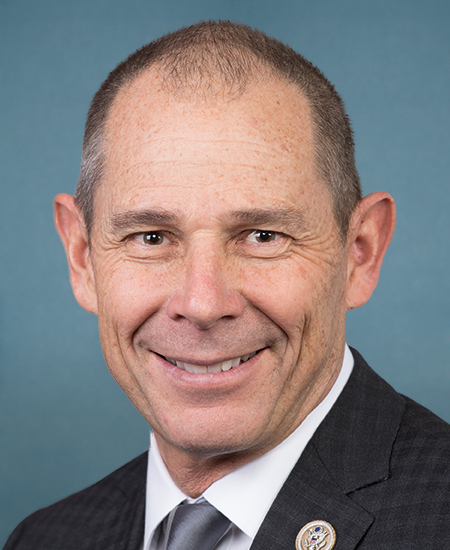
Mike Kennedy
Mike Kennedy House · District 3
R
Support
75% 183
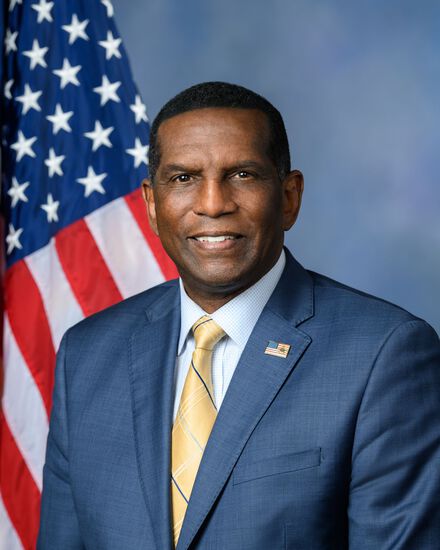
Burgess Owens
Burgess Owens House · District 4
R
Support
66% 185
Celeste Maloy
Celeste Maloy House · District 2
R
Support
63% 186
Blake D. Moore
Blake D. Moore House · District 1
R
Mixed
57% 185
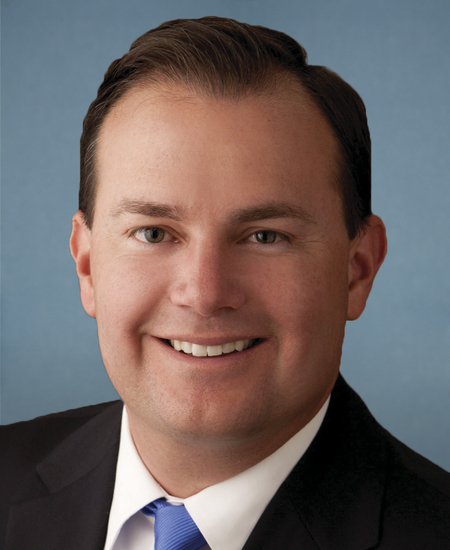
Mike Lee
Mike Lee Senate
R
Oppose
32% 270
John R. Curtis
John R. Curtis Senate
R
Oppose
33% 271
Showing 1–10 of 44 bills

All budget & taxes bills

in committee · United States · House Aug 24, 2026

HR 10148: Safeguarding America’s Nonprofits Act

The Safeguarding America's Nonprofits Act clarifies that tax-exempt status under Section 501 of the Internal Revenue Code does not count as federal financial assistance. This change directly affects charitable organizations, religious groups, and other nonprofits that are exempt from federal income taxes. The bill amends the tax code to ensure these entities are not subject to regulations or restrictions typically applied to recipients of government grants or aid. It also includes a provision stating that this new definition does not apply retroactively to periods before the law is enacted.
in committee · United States · Senate Aug 6, 2026

S 5330: Critical Mineral and Extraction Tax Parity Act

The Critical Mineral and Extraction Tax Parity Act expands the existing advanced manufacturing production tax credit to include nine additional critical minerals - boron, copper, lead, potash, rhenium, silicon, silver, uranium, and phosphate - effective for products sold after December 31, 2025. The bill allows companies that extract ore in the United States (or specific foreign locations where the mineral is not commercially available domestically) to claim tax credits for extraction costs if the ore is subsequently refined into one of these covered minerals. Additionally, the legislation removes a previous restriction that limited the tax credit amount for metallurgical coal, ensuring it receives the same full credit rate as other eligible materials.
Sub-Topics Tax Credits
in committee · United States · House Mar 5, 2026

HR 7817: No Federal Tax Dollars for Illegal Aliens Health Insurance Act of 2026

This bill, titled the No Federal Tax Dollars for Illegal Aliens Health Insurance Act of 2026, amends the Affordable Care Act to restrict the use of federal taxpayer funds for health insurance coverage. It directly affects states that receive funding under the ACA and individuals seeking health insurance coverage through federal programs. The key provision prohibits states from using pass-through funding to pay for health insurance or related benefits for individuals who are not U.S. citizens, nationals, or lawfully present aliens. Additionally, the bill requires the Secretary of Health and Human Services to rescind any existing waivers that would have allowed such funding for unauthorized individuals had the new restrictions been in place at the time of approval.
passed · United States · Senate May 9, 2025

SJRES 7: A joint resolution providing for congressional disapproval under chapter 8 of title 5, United States Code, of the rule submitted by the Federal Communications Commission relating to "Addressing the Homework Gap Through the E-Rate Program".

This joint resolution seeks to block a Federal Communications Commission (FCC) rule that aimed to expand internet access for schools through the E-Rate program, specifically addressing the "homework gap" by increasing funding for student connectivity. The rule, published in the Federal Register on August 20, 2024, would have modified how schools and libraries access broadband under the E-Rate program. If passed, the resolution would cancel this rule, preventing it from taking effect under federal disapproval procedures. This is a procedural action targeting a specific FCC regulatory change, not a new policy.
passed · United States · House Jan 13, 2026

HR 909: Crime Victims Fund Stabilization Act of 2025

HR 909, the Crime Victims Fund Stabilization Act of 2025, modifies how funds from the False Claims Act are deposited into the Crime Victims Fund. It specifies that from 2025 through 2029, certain False Claims Act proceeds (specifically those for qui tam plaintiff payments and government damage reimbursements) cannot be deposited into the fund. This change directly affects the composition of the Crime Victims Fund by excluding these specific revenue streams during the specified period. The bill does not create new benefits or alter victim services; it only adjusts fund allocation rules for existing False Claims Act revenues.
Sub-Topics Victims' Rights
in committee · United States · House Jan 22, 2025

HR 7: No Taxpayer Funding for Abortion and Abortion Insurance Full Disclosure Act of 2025

HR 7 prohibits federal funds from being used for abortions or health insurance plans covering abortion, with exceptions for pregnancies resulting from rape, incest, or when a woman's life is endangered. It blocks federal premium tax credits under the Affordable Care Act for health plans covering abortion (except in specified cases) and requires clear disclosure of abortion coverage and related surcharges in plan materials. The bill allows individuals or employers to purchase separate abortion coverage using non-federal funds, such as out-of-pocket payments, without affecting federal subsidies. It directly affects federal health programs, ACA marketplace plans, and health insurance issuers offering coverage that includes abortion services.
in committee · United States · House Jan 21, 2025

HR 574: ALIGN Act

The ALIGN Act (HR 574) allows businesses to immediately deduct the full cost of certain qualifying equipment and property (like machinery or tools) instead of spreading the deduction over several years. This permanent tax change directly affects businesses that invest in eligible property placed in service after September 2017. The key provision eliminates the previous depreciation rules for these assets, providing an immediate tax benefit to encourage capital investment. It does not change tax rates or apply to all business expenses, only specific types of equipment meeting the defined criteria.
in committee · United States · House Feb 25, 2025

HR 1583: PAR Act

The PAR Act removes restrictions that previously prevented private golf courses and country clubs from using certain tax-advantaged funds for recreational purposes. It amends a specific tax code section by deleting the phrases "private or commercial golf course, country club" wherever they appear. This change directly allows those facilities to access funds they were previously barred from using under existing tax rules. The law applies to new tax obligations after enactment, with limited transitional rules for existing programs.
in committee · United States · House Mar 18, 2025

HR 2198: To amend the Internal Revenue Code of 1986 to restore the taxable REIT subsidiary asset test.

This bill changes a tax rule for Real Estate Investment Trusts (REITs) that use taxable subsidiaries. It increases the percentage limit for assets held in these subsidiaries from 20% to 25% of a REIT's total assets, directly affecting REIT companies that operate through such subsidiaries. The key provision amends the Internal Revenue Code to restore this higher asset threshold, which had been reduced earlier. The change applies to taxable years starting after December 31, 2025.
in committee · United States · House Feb 13, 2025

HR 1301: Death Tax Repeal Act

HR 1301, the Death Tax Repeal Act, would eliminate the federal estate tax and generation-skipping transfer tax for estates of individuals dying on or after its enactment date. It directly affects individuals inheriting significant assets, as it removes taxes on estates exceeding $10 million (adjusted for inflation) and repeals taxes on large transfers between generations. The bill modifies the gift tax by establishing a $10 million lifetime exemption with annual inflation adjustments, replacing previous tax brackets. It applies to estates, gifts, and transfers occurring on or after the bill's effective date.
Showing 1 to 10 of 44 bills
1 2 3 5 Next