

Maddy summaryThe U.S. Tech PATH Act establishes a new program within the Department of State to help foreign governments purchase trusted American cyber and digital technologies, aiming to reduce reliance on suppliers from countries of concern like China. This initiative creates a dedicated office and funding stream to guide foreign partners through procurement hurdles, offering assistance with logistics, financing, and capacity building for items such as software, hardware, and artificial intelligence tools. To ensure security, the bill requires strict vetting of foreign partners to prevent human rights abuses and mandates risk assessments to stop technology misuse or diversion. The program is designed to operate alongside private market competition rather than replacing it, with a sunset provision that ends its authority eight years after enactment.
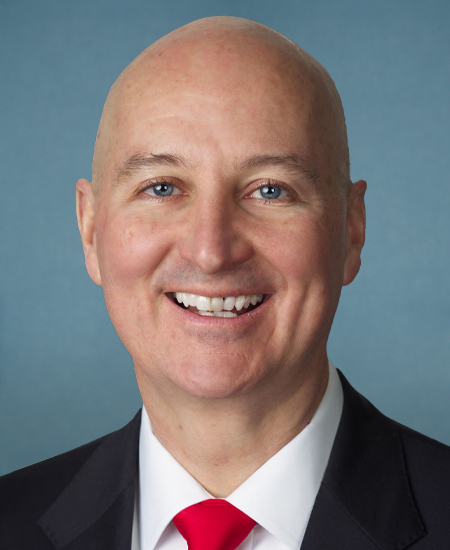
Sen. Pete Ricketts
Sponsored bills
Maddy summaryThe Energy Security Pacts Act authorizes the Secretary of State to create multiyear agreements with eligible partner countries to enhance energy and economic security by diversifying critical mineral and energy supply chains. This legislation establishes a new Office of Energy Security Pacts within the State Department, led by a dedicated Director, and creates an interagency Council to coordinate efforts among various federal departments. Funding for these pacts can be drawn from existing national security and development accounts, with strict rules prohibiting military assistance, projects that harm U.S. jobs, and any activities posing environmental or safety risks. To qualify for these agreements, partner countries must generally have low per capita incomes or be in the process of graduating from World Bank aid, and the pacts must include detailed plans for economic growth and private sector investment.
Maddy summaryThe CLEAR LABELS Act (S 3788) requires drug manufacturers, packers, and distributors to label finished drugs and active pharmaceutical ingredients with specific supply chain information. This includes the name, location, and unique facility ID of the original manufacturer for both active ingredients and finished products, either directly on labels or via QR codes/link to an electronic portal. The bill directly affects drug companies and distributors by mandating clearer labeling to trace products through the supply chain. It also exempts compliant drugs from separate customs country-of-origin marking requirements. These changes aim to improve transparency for consumers and regulators about drug origins.
Maddy summaryThis resolution designates July 25, 2026, as "National Day of the American Cowboy" to honor the historical and cultural contributions of cowboys to the United States. It encourages citizens to observe the day with ceremonies and activities that recognize the cowboy's role in establishing the American West and its enduring presence in literature, media, and the economy. The measure highlights values associated with the cowboy archetype, such as integrity, hard work, and environmental stewardship, while noting that the role transcends gender, ethnicity, and political affiliation.
Maddy summaryThe RAAM Act repeals federal fuel economy standards for cars and light trucks starting with the 2029 model year, removing the requirement for manufacturers to meet specific mileage targets. It also prevents states from creating their own fuel economy rules, reserving this authority exclusively to the federal government. Additionally, the bill updates legal definitions to clarify how vehicles are classified and modifies the process for challenging federal regulations in court. These changes directly affect automobile manufacturers, state governments, and consumers by eliminating federal mileage mandates and blocking state-level fuel economy laws.
Maddy summaryThe FIRST Act establishes a new program within the Department of State to promote the international deployment of American small modular reactor technology. Managed by the Under Secretary for Arms Control and International Security, the program will advocate for U.S. nuclear exports, ensure high safety and security standards, and provide support for project development and workforce training abroad. The legislation requires the program to submit detailed reports and briefings to Congress every 120 days regarding its activities and funding, and it is set to expire in 2034.
Maddy summaryThe Connected Vehicle Security Act of 2026 restricts the importation, sale, and use of connected vehicles and related technology from China, Russia, Iran, and North Korea to protect national security. Starting in 2027, the bill generally bans these vehicles if they originate from or are controlled by these countries, with separate restrictions on software and hardware taking effect in 2030. The Secretary of Commerce is authorized to issue specific exemptions for items that do not pose a security risk and must publish a list of approved products. The law also requires companies to submit declarations confirming their vehicles comply with the rules and imposes heavy fines for violations.
Maddy summaryThis resolution honors the life and legacy of the late Senator Lindsey Olin Graham from South Carolina. It formally acknowledges his extensive career in the military, state government, and Congress, noting his service as a Senator and his roles as Chairman of the Judiciary and Budget committees. The Senate expresses its sorrow over his death and requests that this tribute be shared with the House of Representatives and Graham's family.
Maddy summaryThis bill establishes a comprehensive sanctions framework targeting the Russian government and its affiliated entities in response to ongoing military actions. It authorizes the President to block assets, revoke visas, and prohibit financial transactions for Russian officials, military leaders, and foreign persons supporting Russia's defense industry or undermining Ukraine. The legislation also bans U.S. investments in Russian energy sectors, prohibits the purchase of Russian sovereign debt, and imposes high tariffs on Russian imports while restricting crude oil purchases by specific foreign nations. Additionally, the bill prevents Russian companies from listing on U.S. stock exchanges and includes mechanisms for terminating sanctions only if Russia signs a peace agreement accepted by Ukraine and ceases hostilities.
Maddy summaryThe Protecting American Taxpayers Act is a comprehensive bill designed to combat government fraud, recover misused funds, and strengthen oversight across various federal programs. It directly affects federal agencies, state governments administering public assistance, small businesses, veterans, and contractors by imposing new reporting requirements, extending statutes of limitations for fraud cases, and restricting financial assistance to entities linked to foreign agents or the Taliban. Key mechanisms include requiring child care payments to be based on recorded attendance rather than enrollment, mandating investigations into sudden spikes in health care spending, prohibiting small businesses with convicted fraudsters from receiving loans, and creating a new officer within the Department of Veterans Affairs dedicated to scam prevention. Additionally, the legislation rescinds unspent pandemic-era funds for deficit reduction, expands whistleblower protections for defense and non-defense contractors, and establishes stricter rules against transferring public assistance money abroad via remittance transfers.