Maddy summaryThis joint resolution seeks to disapprove a specific rule issued by the Environmental Protection Agency regarding pollution control standards for nonroad engines used in ocean-going vessels while they are at berth. If passed, the measure would legally void the EPA rule, preventing it from taking effect or continuing to apply to the shipping industry. The bill directly impacts the Environmental Protection Agency and maritime operators subject to these emission regulations by removing the federal mandate associated with the California standards.

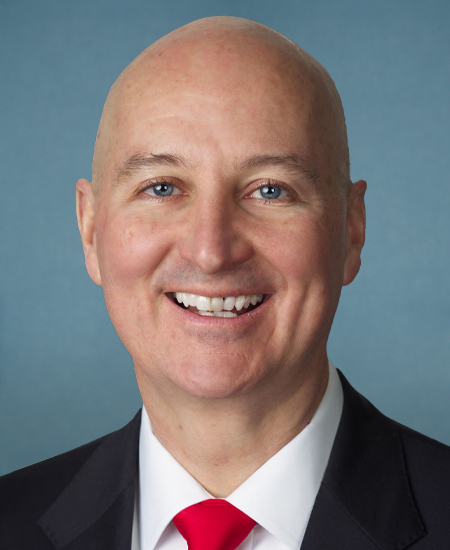
Sen. Pete Ricketts
Sponsored bills
Maddy summaryThis resolution designates the week of August 22 through August 30, 2026, as "National Park Week." It directly affects the public by encouraging responsible visits and support for the National Park System, which includes parks, battlefields, and historical sites located across the United States and its territories. The measure serves as a formal declaration to highlight the parks' role in recreation, education, and economic activity without altering any laws or funding.
Maddy summaryThe Keep Our Communities Safe Act of 2026 significantly expands the authority of the Secretary of Homeland Security to detain non-citizens who are facing removal from the United States. The bill removes time limits on detention during removal proceedings and allows for indefinite detention after a final order is issued if specific conditions, such as national security threats or public safety risks, are certified by government officials. It restricts access to bond hearings for many detainees, requiring them instead to prove they are not flight risks or community threats through clear and convincing evidence. Additionally, the legislation establishes administrative review processes that permit detention beyond standard removal periods if an individual fails to cooperate with deportation efforts or poses a continuing danger.
Maddy summaryThe Advancing American Wi-Fi Against Foreign Adversaries Act requires the Secretary of Commerce to develop a comprehensive strategy for promoting global adoption of Wi-Fi and unlicensed wireless technologies, with a specific focus on the 2027 World Radiocommunication Conference in Shanghai. This plan must be created in coordination with multiple federal agencies, including the Federal Communications Commission and the Department of State, and must include strategies to counter efforts by foreign adversaries to undermine U.S. technological leadership. The legislation mandates that the government seek public input during the planning process and submit a progress report to Congress within 90 days after the conference concludes.
Maddy summaryThe Biotech Investment National Security Act (BINSA) amends the Defense Production Act to subject biotechnology transactions to federal outbound investment screening, specifically targeting investments and licensing agreements involving Chinese entities. The bill defines the covered biotechnology sector to include pharmaceuticals, biological products, and therapeutic compounds, while explicitly excluding agricultural biotechnology, industrial fermentation unrelated to therapeutics, and basic academic research. It requires the Secretary of the Treasury to issue regulations within one year that prioritize scrutiny of intellectual property licensing, joint ventures, and equity investments that transfer innovation capacity or manufacturing know-how to China. Additionally, the legislation mandates that the Secretary of Defense submit a report to Congress within 60 days assessing whether U.S. capital flows into Chinese biotechnology negatively impact national security.
Maddy summaryThe Campus Lifeline Act expands federal grant programs to support student-led mental health and substance use disorder interventions at institutions of higher education. It authorizes funding for peer awareness activities, such as suicide prevention education and digital campaigns that encourage students to seek help, while requiring grantees to provide accessible resources for online and distance-learning students. Additionally, the bill directs the National Suicide Prevention Lifeline program to coordinate with schools and universities to list hotline numbers on student identification cards and promote behavioral health resources through public service announcements.
Maddy summaryThe PREPARE Act directs the Secretaries of Agriculture and Interior to establish a pilot program for prepositioning aerial wildfire suppression resources in Nebraska, Colorado, Kansas, South Dakota, and Wyoming. This initiative specifically targets early-season fires involving fine fuels and must be implemented in consultation with state agreements and the Rocky Mountain Area Coordination Center. The bill requires these actions to be carried out using existing funds available for wildland fire management, explicitly prohibiting any new appropriations for this purpose.
Maddy summaryThis bill allows Congress to reject a specific rule issued by the Environmental Protection Agency that concerns vehicle pollution standards in California. The measure would effectively cancel the EPA's decision to reinstate a waiver that previously let California set its own stricter air quality rules for cars. If passed, the rule would have no legal force, meaning California would lose the ability to enforce its Advanced Clean Car Program under the current framework. The legislation directly impacts the relationship between federal environmental regulations and state-level automotive policies.
Maddy summaryThis joint resolution seeks to overturn a specific rule issued by the Environmental Protection Agency that allowed California to set its own stricter vehicle emission standards. By using a congressional disapproval mechanism, the bill aims to nullify this waiver, which would otherwise let California enforce unique pollution control requirements for cars and trucks. If passed, the measure would require all states to follow the federal government's uniform vehicle emission rules instead of California's separate standards. The legislation directly impacts automakers, state regulators, and consumers by ensuring a single set of national rules applies to motor vehicle pollution.
Maddy summaryThis joint resolution seeks to overturn a specific rule issued by the Environmental Protection Agency that allowed California to set its own stricter greenhouse gas emission standards for new vehicles. By disapproving this waiver, the bill aims to restore federal preemption, ensuring that all states must follow the same national emission rules rather than California's unique requirements. If passed, the measure would effectively cancel the EPA's decision, forcing automakers to comply with uniform federal standards for vehicle pollution control.