Maddy summaryThis resolution commemorates the 250th anniversary of the United States by reaffirming the nation's historical commitment to separating church and state. It highlights key constitutional principles, such as the First Amendment and the prohibition of religious tests for public office, which protect individual religious freedom and prevent government endorsement of specific beliefs. The document cites historical figures like Thomas Jefferson and James Madison to underscore the importance of maintaining a secular government that safeguards religious pluralism. Ultimately, the measure serves as a formal statement of values rather than a law that changes existing policies or imposes new requirements.
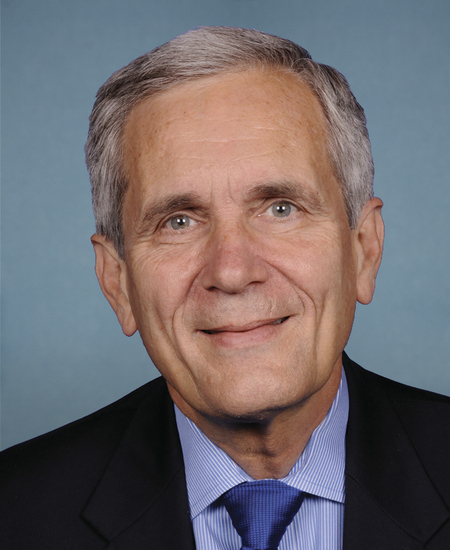
Rep. Lloyd Doggett
Sponsored bills
Maddy summaryThe LIFT the BAR Act aims to restore access to federal benefits for lawfully present noncitizens by repealing several restrictions imposed by the 1996 welfare reform law and a 2024 reconciliation bill. Specifically, it would allow eligible noncitizens to receive SNAP food assistance, Medicaid, CHIP, and child nutrition programs, while also updating legal terminology to refer to "noncitizens" rather than "aliens" in relevant statutes. The legislation includes provisions to ensure these individuals can qualify for premium tax credits and would require federal agencies to issue implementation guidance within 180 days of enactment.
Maddy summaryThis concurrent resolution directs the President to withdraw all U.S. armed forces from hostilities in Lebanon within seven days of the bill's adoption. It uses the War Powers Resolution to mandate this withdrawal while explicitly allowing continued security cooperation with Lebanese forces and the protection of diplomatic facilities. The measure clarifies that it does not authorize the use of military force, serving as a specific instruction to end active combat operations in the region.
Maddy summaryThe Pell Grant Preservation and Expansion Act of 2026 aims to increase financial aid for college students by raising the maximum Pell Grant amount to $15,000 by the 2031-2032 award year and ensuring the program is fully funded through mandatory spending rather than annual appropriations. The bill also expands eligibility for students who receive means-tested government benefits by automatically assigning them a lower financial need score, while simultaneously allowing Dreamer students - undocumented immigrants who meet specific criteria such as graduating high school or serving in the military - to qualify for federal aid. Additional provisions restore the total number of semesters a student can receive Pell Grants from 12 to 18 and adjust the rules for satisfactory academic progress to reduce penalties for students who struggle to meet grade requirements. Finally, the legislation restores Pell Grant eligibility for some students who previously received outside scholarships and sets the law's effective date for July 1, 2026.
Maddy summaryThis resolution commemorates the 30th anniversary of Taiwan's first direct presidential election in 1996 and expresses support for the preservation of its democratic institutions. It acknowledges Taiwan's history of free elections and peaceful transfers of power while reaffirming U.S. policy commitments under the Taiwan Relations Act and previous agreements. The text explicitly states that it does not authorize the use of military force, serving as a symbolic statement rather than a legislative action that changes laws or policy.
Maddy summaryThe Keep Public Funds in Public Schools Act of 2026 eliminates a federal tax credit that allowed parents to deduct contributions to scholarship granting organizations from their income. By removing these specific tax breaks, the bill prevents the use of public tax dollars to support private school vouchers and scholarship programs. This change directly affects families who currently rely on these tax incentives to fund education outside the public school system. The provisions take effect for taxable years beginning after December 31, 2026.
Maddy summaryThe Protect Working Musicians Act of 2026 allows independent musicians and small music businesses to collectively negotiate licensing terms with large online music platforms without facing antitrust lawsuits. This protection applies specifically to creators who earn less than $1 million in licensing revenue or qualify as small businesses, enabling them to form groups to discuss fair rates and refuse unfair deals. The law defines "dominant platforms" as those generating over $100 million in music distribution revenue and extends these negotiation rights to include discussions with companies developing generative artificial intelligence. By shielding these groups from legal liability, the bill aims to correct an imbalance where smaller creators currently lack the power to bargain effectively against major digital services.
Maddy summaryThis bill establishes Temporary Protected Status for Iranian nationals currently in the United States who are unable to safely return home due to ongoing armed conflict and human rights abuses, while also addressing legal hardships caused by a government-imposed pause on processing their immigration applications. It defines eligible individuals as those lawfully present in the U.S. since December 2025 who have pending applications for status changes or work authorization that were delayed by this pause, excluding government officials or those with ties to the Iranian regime. Under the legislation, the Department of Homeland Security must grant these individuals temporary legal status and work authorization for an initial 18-month period, with automatic extensions if the processing delay continues, ensuring they do not accrue unlawful presence or face penalties for the government-caused backlog.
Maddy summaryThis bill, known as the Alice Cogswell and Anne Sullivan Macy Act, amends the Individuals with Disabilities Education Act to improve special education services for children who are deaf, hard of hearing, deafdisabled, blind, visually impaired, or deafblind. It requires states to identify these students regardless of how they are currently classified, ensuring they receive specialized instruction in their primary language and access to qualified professionals. Key provisions mandate that state plans include specific strategies for language development, Braille instruction, and the use of assistive technologies, while also establishing a new national center to support research and training for educators of students with visual disabilities. Additionally, the legislation clarifies definitions for deafblindness and interveners, updates data reporting requirements to track these populations more accurately, and ensures early intervention services are delivered in natural environments to support language and communication milestones.
Maddy summaryThe Student Loan Refinancing Act of 2026 establishes a new program allowing borrowers to refinance existing Federal Direct and FFEL Program loans into new Federal Direct loans with fixed interest rates. The bill requires the Secretary of Education to offer these refinanced loans at interest rates equal to the current rates for new loans of the same type, while protecting borrowers from origination fees and ensuring the total repayment period does not increase. To facilitate this process, the legislation mandates a public awareness campaign and includes specific rules that allow payments made on the original loans to count toward income-driven repayment plans and public service loan forgiveness. Additionally, the act limits borrowers to refinancing their loans no more than twice within a ten-year period to prevent repeated refinancing.