Maddy summaryThis bill appropriates $3.5 billion to help Florida farmers and growers recover from the severe freeze that occurred in March 2026. The funds are distributed as block grants specifically to cover losses in crops, trees, bushes, and vines caused by the cold weather, including compensation for multi-year crops. Assistance is restricted to counties officially designated as disaster areas by the Secretary of Agriculture on March 4, 2026, and requires a request from a state agriculture department to release the money. The Secretary of Agriculture must also submit quarterly reports to Congress detailing how the funds are being used until the budget is exhausted.
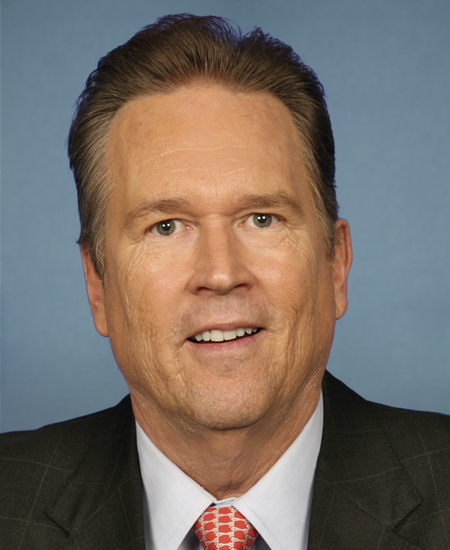
Rep. Vern Buchanan
Sponsored bills
Maddy summaryThe America Bikes Act expands federal funding and flexibility for building and improving infrastructure for walking and bicycling, primarily affecting state and local transportation agencies. It allows the federal government to cover up to 100% of project costs for specific safety improvements and creates a new competitive grant program to fund large-scale networks connecting communities, schools, and workplaces. The legislation also introduces a new grant program to help integrate bicycle facilities with public transit systems and provides tax breaks for employers who reimburse employees for bicycle commuting expenses. Additionally, the bill requires the Department of Transportation to update safety guidelines for schools and set aside dedicated funding for active transportation projects on federal and tribal lands.
Maddy summaryThe Semiconductor Superiority Act expands the advanced manufacturing investment credit to include semiconductor facilities located in outer space, specifically low-Earth orbit. This provision allows companies to claim tax credits for equipment used in space-based manufacturing, even if some components are not physically located in orbit or are used for transporting crew and supplies. The bill also clarifies that flight control, crew habitation, and repair activities in space count as manufacturing functions for the purpose of this credit. Additionally, the law excludes rockets and launch vehicles from qualifying as eligible property under this new rule. These changes apply only to facilities and equipment placed in service after the act is enacted.
Maddy summaryThis bill authorizes the U.S. Mint to produce commemorative $5 gold and $1 silver coins marking the 25th anniversary of the September 11, 2001, terrorist attacks. The coins must feature designs honoring victims and first responders (including the inscription "Never Forget") and will be sold only during 2027-2028. All surcharges ($35 per gold coin, $10 per silver coin) collected from sales will fund the National September 11 Memorial and Museum at the World Trade Center, with no net cost to the federal government. The coins are legal tender but primarily intended for collectors, not circulation.
Maddy summaryThe Smithsonian American Women’s History Museum Act authorizes the creation of a new Smithsonian museum dedicated to women’s history, to be located within the National Mall Reserve in Washington, D.C. If the site is managed by another federal agency, the bill requires that agency to transfer the land after notifying Congress and relevant committees. The museum must ensure exhibits and programs accurately represent diverse women’s experiences by consulting a broad range of experts and community voices. The Smithsonian will submit biennial reports to Congress detailing how the museum meets these representation standards.
Maddy summaryThe At HOME Services Act establishes a two-year demonstration program allowing hospitals to provide outpatient observation services to Medicare beneficiaries in their own homes. To make this possible, the bill grants hospitals specific waivers that exempt them from standard requirements for on-site nursing staff and physical facility safety codes, while also permitting care to be delivered from the patient's residence. Participating hospitals must agree to maintain the same standard of care as inpatient treatment, adhere to patient safety standards, and share data with the government to monitor quality and costs. The legislation also mandates a study comparing the quality, costs, and outcomes of home-based care against traditional hospital settings, with results to be published on a public website.
Maddy summaryThe No Tax on Border Patrol Agent Overtime Act modifies federal tax laws to exclude specific overtime earnings from border patrol agents from taxation. This change directly affects U.S. Customs and Border Protection officers by allowing them to keep more of their extra pay without paying income tax on those amounts. The bill defines "qualified overtime compensation" to include various forms of extra pay, such as premiums for working on holidays or weekends, but explicitly excludes hazardous duty pay. These tax benefits will only become effective for work performed in taxable years starting after December 31, 2025.
Maddy summaryHR 7432, the Foster Youth Housing Opportunity Act, improves housing access for foster youth aged 18 to 26 who are aging out of care. It amends federal law to explicitly include "access to housing" in support services, allowing states to use existing funds for housing-related supportive services like financial counseling, lease assistance, and help with security deposits. The bill also requires the Health and Human Services and Housing and Urban Development departments to create joint guidance within a year to coordinate housing programs and child welfare services. States must report to Congress within three years on outcomes like stable housing rates and homelessness reduction for these youth. The law takes effect one year after enactment.
Maddy summaryThe AVERT Future Violence Act of 2026 authorizes the Attorney General to conduct a study and fund a grant program aimed at addressing animal cruelty as a potential predictor of future human violence. The bill defines animal cruelty to include intentional harm, neglect, and specific abusive acts while explicitly excluding standard veterinary care, hunting, and food slaughter. It establishes a $2 million grant program for eligible entities, such as law enforcement agencies and animal welfare organizations, to train professionals and develop early intervention strategies for offenders. Additionally, the legislation allocates $2 million for a three-year study to analyze the link between animal cruelty and future violent crimes, with the goal of creating evidence-based policies to prevent such violence.
Maddy summaryThis resolution formally recognizes May 15, 2026, as Endangered Species Day to honor the success of conservation efforts under the Endangered Species Act of 1973. The bill highlights how these laws have helped prevent the extinction of many species and supports the economic and cultural benefits of biodiversity. It acknowledges the role of indigenous communities in conservation and celebrates the recovery of various at-risk plants and wildlife. The measure is symbolic and does not create new laws or funding, but rather expresses support for existing conservation achievements.