HR 7432 United States House · 119th Congress

Fostering the Future Act

HR 7432, the Foster Youth Housing Opportunity Act, improves housing access for foster youth aged 18 to 26 who are aging out of care. It amends federal law to explicitly include "access to housing" in support services, allowing states to use existing funds for housing-related supportive services like financial counseling, lease assistance, and help with security deposits. The bill also requires the Health and Human Services and Housing and Urban Development departments to create joint guidance within a year to coordinate housing programs and child welfare services. States must report to Congress within three years on outcomes like stable housing rates and homelessness reduction for these youth. The law takes effect one year after enactment.
Bill status passed 3 of 5 stages cleared
Introduction
Feb 2026
Committee Review
May 2026
House Passage
May 2026
Senate Passage
President
Introduced Feb 9, 2026 Last action May 20, 2026
Maddy AI version diff · 1 comparison

What changed between versions

Introduced in House Engrossed in House · 11 edits · May 19, 2026
MAJOR
The bill was significantly expanded from a housing-focused measure into a comprehensive foster youth transition act. The title changed from 'Foster Youth Housing Opportunity Act' to 'Fostering the Future Act,' and new sections were added covering education and workforce training vouchers (with the maximum raised from $5,000 to $12,000), legal counseling access, home visiting services for parenting youth, tailored case management, and relationship-building supports. The eligibility age was lowered from 16 to 14, and a delayed compliance provision was added for states that need new legislation.
Scope change
The bill expanded substantially from a housing-focused measure to a comprehensive foster youth transition act covering education and workforce training, legal access, parenting supports, relationship-building, and program accessibility. The target population was also broadened by lowering the eligibility age from 16 to 14.
SCOPE

The bill title changed from 'Foster Youth Housing Opportunity Act' to 'Fostering the Future Act,' reflecting a much broader scope beyond housing to include education, workforce training, legal access, parenting supports, and relationship-building.

Voucher coverage was expanded to include short-term training programs eligible for Workforce Pell, apprenticeship program costs, GED acquisition costs, and remedial education (previously limited to cost of attendance at institutions of higher education).

A new section requires states to include 'legal counseling access' in the Chafee program purposes and certifies that case planning processes consider legal issues affecting housing, education, employment, and family connections, including court records and custody matters.

A new section connects foster youth in eligible families with evidence-based home visiting services under the Maternal, Infant, and Early Childhood Home Visiting Program (MIECHV), requiring state certification that processes exist to inform such youth of available services.

New purposes were added to the Chafee program: helping youth develop sustained supportive relationships with adults, mentors, and peers to reduce isolation, and supporting youth still in foster care in exercising their rights under section 475A to participate in permanency planning.

ELIGIBILITY

Eligibility for education and training vouchers was expanded from youth who 'aged out of foster care' (age 16) to those who 'experienced foster care at age 14 or older,' lowering the minimum age by 2 years.

FISCAL

The maximum education and training voucher amount was increased from $5,000 to $12,000 per youth.

States may now use Chafee program funds specifically for tailored case management and resource coordination services for expectant or parenting youth, in addition to general program purposes.

TIMELINE

The maximum participation period in the voucher program was extended from 5 years to 6 years for youth engaged in remedial education activities.

A delayed compliance provision was added: if state legislation is required for certain new requirements, the state plan will not be considered non-compliant before the first calendar quarter after the first regular legislative session following enactment.

REQUIREMENT

States must now make reasonable efforts to ensure eligible youth are aware of available benefits and must provide a simplified, user-tested, standard electronic application form for vouchers.
Floor votes

How they voted

This bill passed the House by voice vote (no roll call recorded).
Full legislative history

Actions timeline

Total actions
15
Key actions
4
Committee
5
Amendments
3
May 20, 2026
Committee
Received in the Senate and Read twice and referred to the Committee on Finance.
upper
May 19, 2026
Introduced
The title of the measure was amended. Agreed to without objection.
lower
May 19, 2026
Introduced
On motion to suspend the rules and pass the bill, as amended Agreed to by voice vote. (text: CR H3558-3560)
lower
May 19, 2026
Lower · Passed
Passed/agreed to in House: On motion to suspend the rules and pass the bill, as amended Agreed to by voice vote. (text: CR H3558-3560)
lower
May 19, 2026
Introduced
Mr. Smith (MO) moved to suspend the rules and pass the bill, as amended.
lower
May 11, 2026
Lower · Passed
Committee on Financial Services discharged.
lower
May 11, 2026
Lower · Passed
Reported (Amended) by the Committee on Ways and Means. H. Rept. 119-643, Part I.
lower
Apr 29, 2026
Lower · Passed
Committee Consideration and Mark-up Session Held
lower
Feb 9, 2026
Committee
Referred to the Committee on Ways and Means, and in addition to the Committee on Financial Services, for a period to be subsequently determined by the Speaker, in each case for consideration of such provisions as fall within the jurisdiction of the committee concerned.
lower
Feb 9, 2026
Introduced
Introduced in House
lower
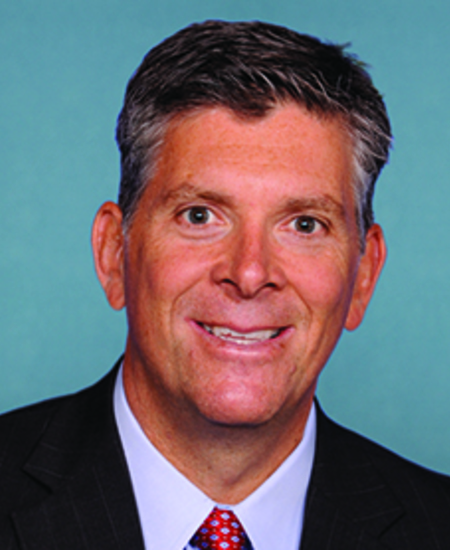
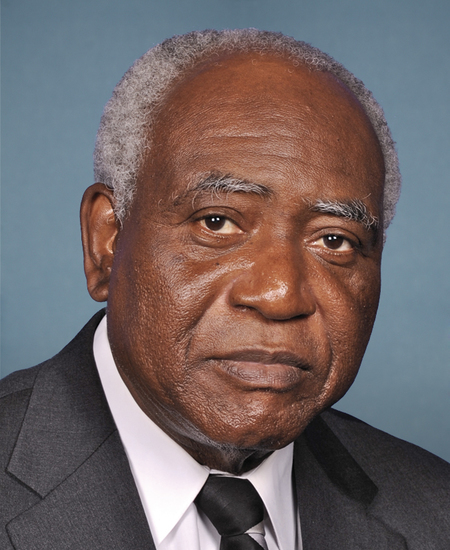
1 primary · 6 co-sponsors

Sponsors