

Maddy summaryThe North Korean FAKER Act authorizes the U.S. State Department to coordinate with allied nations and private companies to stop North Korea from using fake identities and remote work scams to generate illegal money. This legislation specifically targets deceptive employment schemes that allow North Korea to fund its nuclear, missile, and other weapons programs by disrupting the networks involved. The bill mandates annual reports to Congress on these illegal activities and allows the government to increase rewards for information leading to the disruption of such schemes. Additionally, it empowers officials to publicly attribute these fraudulent operations to North Korea and to address the use of emerging technologies like artificial identity in these efforts.
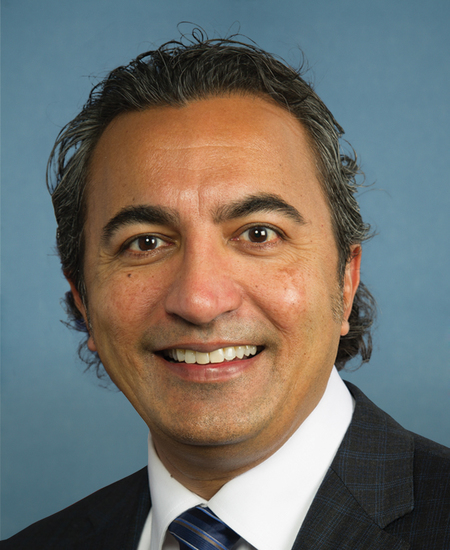
Rep. Ami Bera
Sponsored bills
Maddy summaryThis bill designates the United States Postal Service facility at 4640 Cass Street in San Diego, California, as the Mary Wilding Memorial Post Office Building. It directly affects the specific postal location by changing its official name to honor Mary Wilding. The key provision ensures that all future legal documents, maps, and records referring to this building will use the new memorial name. This is a commemorative measure that updates official records rather than changing operational policies or funding.
Maddy summaryThis resolution celebrates 55 years of diplomatic relations between the United States and Fiji, highlighting their long-standing cooperation on stability and peace in the Pacific. It formally acknowledges specific partnerships, such as joint military training, maritime law enforcement efforts, and economic ties where the U.S. is Fiji's largest export market. The text also commends Fiji's democratic progress and urges that future elections remain free and fair while affirming ongoing support for rule of law and development. Ultimately, the bill serves as a symbolic statement of the House's commitment to maintaining a strong partnership with Fiji without enacting new laws or funding.
Maddy summaryThe STRATA Act of 2026 establishes a new program within the Department of State to foster international partnerships focused on advancing critical minerals technologies, aiming to strengthen U.S. supply chains and national security. This initiative allows the Secretary of State to form alliances with allied and partner nations, universities, and private companies while explicitly prohibiting collaborations with designated countries of concern such as China and Russia. Key provisions include the creation of International Centers of Excellence for research and training, the development of a digital platform to connect stakeholders with funding opportunities, and the establishment of clear guidelines for intellectual property and data security within these partnerships. The program authorizes the use of specific funding sources to support joint projects in extraction, recycling, and manufacturing, with a requirement that all activities conclude within ten years of the bill's enactment.
Maddy summaryThe Wildfire Reduction Market Expansion Act of 2026 updates the Clean Air Act to broaden the definition of renewable biomass eligible for carbon credits. It specifically allows materials from forest management, such as slash, storm debris, and wood residuals, to be counted as renewable fuel if they come from sustainably managed lands or public forests designated for fuel reduction. The bill also includes vegetation cleared from defensible space around buildings and from wildfire risk reduction projects in the wildland-urban interface. By clarifying these categories and establishing certification requirements, the legislation aims to increase the supply of biomass available for generating renewable energy credits.
Maddy summaryThe Biotechnology Diplomacy Leadership Act of 2026 directs the Secretary of State to appoint a Senior Biotechnology Official within 90 days to lead U.S. diplomatic efforts in this field. This official must have expertise in biotechnology, international relations, and national security, and will work across federal agencies to coordinate global partnerships and policy initiatives. Their main duties include representing the State Department in international forums, securing supply chains, facilitating data-sharing agreements, and supporting research and capacity-building programs in partner nations. The official will also provide regular reports to the Secretary of State on the progress and outcomes of these diplomatic activities.
Maddy summaryThe Protecting America's Diplomatic Workforce Act limits how many employees federal foreign affairs agencies can fire at once and requires stricter oversight for large layoffs. It caps reductions in force to 50 employees every six months unless agencies provide detailed justifications to Congress explaining why other options were not considered and how the cuts might affect diplomatic missions. The bill also mandates longer notice periods for employees facing layoffs, updates rules to prioritize performance over tenure when selecting who to retain, and requires the State Department to consult with lawmakers before making major changes to its internal manual. These measures directly impact agencies such as the Department of State, USAID, and the Peace Corps by increasing transparency and adding procedural hurdles to workforce reductions.
Maddy summaryHR 4288 would rename the Department of Veterans Affairs community-based outpatient clinic in San Jose, California, as the "Corporal Patrick D. Tillman VA Clinic." The bill directly affects this specific VA facility, updating all official references to it. The key provision requires the clinic to be designated by this new name in all federal records, documents, and maps following the bill's enactment. This is a procedural naming bill honoring Corporal Tillman, a former NFL player and Army Ranger killed in action in Afghanistan in 2004.
Maddy summaryThe Patients First Act of 2026 modifies how Medicare reimburses physicians and primary care providers to improve access and stabilize payments. It establishes a new hybrid payment model for primary care services from 2027 to 2031, which pays a monthly fee per patient to eligible independent practices while covering specific services like care management and telehealth without cost-sharing for patients. The bill also updates the formula for calculating reimbursement rates to account for high inflation years and requires more frequent updates to the costs used in calculating payments. Additionally, the legislation reforms the performance-based payment system by adding care efficiency measures, creating a task force to recommend new quality metrics, and adjusting penalties for providers who fail to report on certain data.
Maddy summaryThis bill requires Medicare Advantage plans to implement electronic pre-approval systems for medical services by 2028 and meet transparency reporting standards starting in 2027. Plans must publicly report data on approval/denial rates, appeal outcomes, response times, and technology use for pre-approval requests, including details on how denials relate to clinical criteria. It establishes a 24-hour response timeframe for certain requests and mandates annual reviews of pre-approval requirements based on data and input from seniors and providers. The law directly affects Medicare Advantage plans, seniors enrolled in these plans, and healthcare providers who submit pre-approval requests. These changes aim to make the pre-approval process faster, more transparent, and more accountable for seniors seeking covered medical services.