Issue · Technology

Technology

Every technology bill, vote, and legislator stance in United States, automatically classified by Maddy, our AI policy reader.

Total bills
1,678
119th Congress
Top supporter
Ami Bera
86% support rate
Top opponent
Scott Perry
14% support rate
Ranked legislators
10
5 support · 5 oppose
Key legislators

Who's moving technology in United States

Legislators moving technology in United States
Legislator Party Stance Support rate Decisive votes
Ami Bera
Ami Bera House · District 6
D
Strong +
86% 22
Chrissy Houlahan
Chrissy Houlahan House · District 6
D
Strong +
86% 22
Kim Schrier
Kim Schrier House · District 8
D
Strong +
86% 22
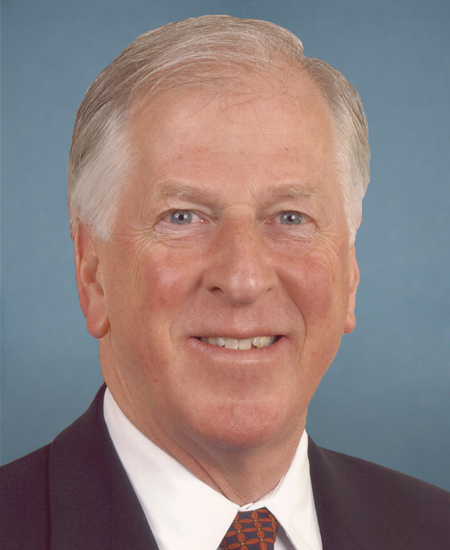
Mike Thompson
Mike Thompson House · District 4
D
Strong +
86% 22
Nancy Pelosi
Nancy Pelosi House · District 11
D
Strong +
86% 22
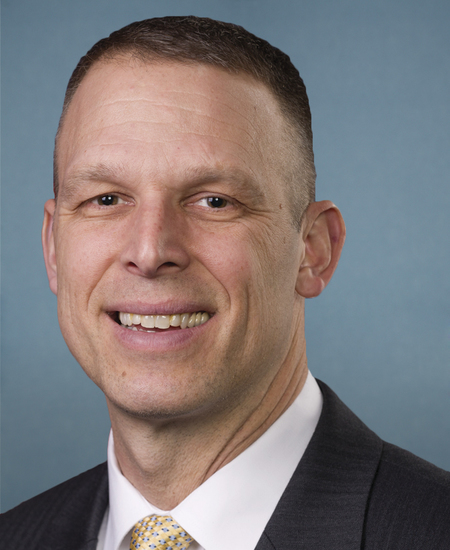
Scott Perry
Scott Perry House · District 10
R
Strong −
14% 21
AA
Alan Armstrong Senate
R
Strong −
17% 29
Rand Paul
Rand Paul Senate
R
Strong −
17% 46
Josh Hawley
Josh Hawley Senate
R
Strong −
18% 45
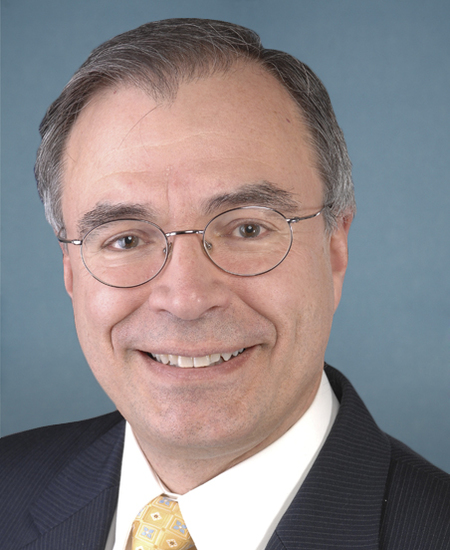
Andy Harris
Andy Harris House · District 1
R
Strong −
18% 22
Showing 971–980 of 1,678 bills

All technology bills

in committee · United States · House Mar 20, 2026

HR 7316: SNAP Payment Security and Fraud Prevention Act of 2026

This bill strengthens SNAP benefit security by requiring all EBT cards to be chip-enabled (replacing magnetic stripes by 2030) and mandating retailers to use chip payment terminals for SNAP transactions. It establishes civil fines of double the stolen benefit value for unauthorized access, and requires states to provide free card replacements within 3 business days for fraud, damage, or loss - eliminating fees for these cases. The bill also expands USDA's fraud investigation authority and sets new cybersecurity standards for digital account management, including mobile-friendly interfaces and transaction alerts. These changes directly affect SNAP recipients, state agencies administering benefits, and participating retailers.
Sub-Topics Cybersecurity
in committee · United States · House Dec 18, 2025

HR 6860: Parental Rights Relief Act

This bill amends federal student privacy laws (FERPA and PPRA) to allow parents (or eligible students aged 18+ or emancipated minors) to directly sue schools in federal court for privacy violations, without first exhausting government complaint processes. It applies to violations involving education records (FERPA) or student surveys (PPRA), such as unauthorized sharing of personal information. The law requires schools to address privacy complaints within 90 days but creates a new civil action pathway for affected individuals. This directly impacts parents and students in K-12 and college settings who believe their school mishandled private educational data.
Sub-Topics Data Privacy
passed · United States · Senate Jun 17, 2025

S 1467: Homebuyers Privacy Protection Act

This bill restricts how credit bureaus share consumer credit reports during mortgage applications. It limits sharing with third parties unless the request is for a firm mortgage offer or the recipient is the loan originator, servicer, or a bank holding the consumer's account. The law directly affects consumers (by limiting data sharing), credit bureaus (requiring new compliance), and mortgage lenders/banks (with restricted access). Key provisions require explicit consumer authorization for sharing and prevent broad data use during prescreening for home loans.
in committee · United States · Senate May 1, 2025

S 1573: SBIR/STTR Reauthorization Act of 2025

The SBIR/STTR Reauthorization Act of 2025 extends the Small Business Innovation Research (SBIR) and Small Business Technology Transfer (STTR) programs through 2032, requiring federal agencies to dedicate increasing percentages of their budgets to these programs (starting at 4% for 2026-2027 and rising to 7% for 2032 and beyond). The bill establishes new requirements for agencies to provide technical and business assistance, expand fellowship opportunities for women and minority entrepreneurs, and improve outreach to historically underrepresented institutions. It also creates "Technology Commercialization Officials" at each federal agency to help advance the commercialization of SBIR/STTR-developed technologies and tracks research institutions involved in these programs through enhanced website reporting. Additionally, the bill includes safeguards to limit participation by small businesses majority-owned by venture capital, hedge funds, or private equity firms.
Tags Small Business
in committee · United States · House Aug 5, 2025

HR 4881: SWIFT VOTE Act

The SWIFT VOTE Act provides $120 million in grants to state and local election offices to fund digital check-in systems (e-pollbooks) and real-time wait time reporting at voting locations for federal elections. It requires jurisdictions to publish hourly wait times for short polling locations or four daily intervals for longer ones on official websites, plus post-election summary reports. The bill mandates that funds supplement, not replace, existing election funding and requires training for election officials on accessibility for voters with disabilities and limited English proficiency. This directly affects state and local election administrators by creating new reporting obligations and funding for technology to reduce voter wait times.
Tags Elections
in committee · United States · Senate May 1, 2025

S 1560: Secure U.S. Leadership in Space Act of 2025

This bill amends the Internal Revenue Code to treat spaceports like airports for tax-exempt bond financing. It defines "spaceport" broadly to include facilities for spacecraft manufacturing, launch services, flight control, and crew/cargo transfer, and allows spaceport property (including leased land) to qualify for tax-exempt bonds under the same rules as airports. The key change enables spaceport developers to access federal tax-exempt bonds for construction and operations, similar to airport projects, by removing barriers related to government leases and federal user fees. This directly affects private spaceport operators, manufacturers, and local governments building space infrastructure, making it easier to finance these facilities through tax-exempt bonds.
Sub-Topics Debt & Bonds
in committee · United States · House Jun 15, 2026

HR 1468: Protect America’s Innovation and Economic Security from CCP Act

HR 1468 establishes a new "CCP Initiative" within the Department of Justice's National Security Division to counter threats from the Chinese Communist Party. The initiative specifically targets intellectual property theft, economic espionage, and unauthorized technology transfers by Chinese entities, focusing on protecting U.S. businesses, academic institutions, and critical infrastructure. Key mechanisms include developing enforcement strategies, prioritizing cases involving trade secret theft and hacking, and requiring annual congressional reports on progress, resource use, and economic impacts. The initiative is designed to operate separately from other DOJ programs and will expire six years after enactment.
passed · United States · House Feb 24, 2026

HR 390: ACERO Act

Advanced Capabilities for Emergency Response Operations Act or the ACERO Act This bill provides statutory authority for the Advanced Capabilities for Emergency Response Operations (ACERO) project. The ACERO project conducts research and development activities regarding aerial response to wildfires using uncrewed aircraft systems (UAS) and other advanced aviation technologies. It is administered by the National Aeronautics and Space Administration (NASA).  The bill directs the ACERO project to address airspace management and deconfliction during wildfire response efforts, including through real-time information sharing among response teams and the development of a platform to provide situational awareness of aerial assets. The bill also directs the ACERO project to establish a multiagency concept of operations to facilitate the coordination of aerial wildfire response among federal, state, and local government agencies. NASA must consult with other federal agencies and departments to avoid duplication of these efforts.  NASA generally may not procure UAS manufactured or assembled by specified foreign entities, including entities domiciled in or controlled by China, for use by the ACERO project.
in committee · United States · House Feb 2, 2026

HR 6704: Drunk Driving Prevention and Enforcement Act of 2025

HR 6704 establishes a $45 million prize competition to accelerate development of passive, in-vehicle technology that prevents operation by drivers with high blood alcohol levels (e.g., breath or touch sensors). It also creates a Traffic Safety Enforcement Center of Excellence to provide states and law enforcement with data-driven strategies for targeting drunk and drug-impaired driving, and mandates a national drug-involved crash data system to track non-alcohol impairments in fatal and serious injury crashes. The bill directly affects vehicle manufacturers (through tech integration incentives), states (via enforcement training and data grants), and law enforcement agencies (through new protocols and resource targeting). Key provisions include requiring standardized toxicology data collection, prioritizing rural/underserved states for grants, and de-identifying public crash data to comply with privacy laws.
in committee · United States · House Dec 11, 2025

HR 6257: SMK Act of 2025

This bill prohibits social media platforms from offering disappearing messages (like Snapchat's ephemeral chats) to users under 17. It requires platforms to provide parents with easily accessible tools to approve or block private messaging for minors, with direct messaging disabled by default for users under 13. App stores must also display clear warnings to parents when minors attempt to download apps with private messaging features. These requirements apply to all social media platforms defined under the bill, with enforcement handled by the Federal Trade Commission.
Showing 971 to 980 of 1,678 bills
Previous 1 … 97 98 99 … 168 Next