Issue · Technology

Technology

Every technology bill, vote, and legislator stance in United States, automatically classified by Maddy, our AI policy reader.

Total bills
1,431
119th Congress
Top supporter
Suzan K. DelBene
86% support rate
Top opponent
Scott Perry
14% support rate
Ranked legislators
10
5 support · 5 oppose
Key legislators

Who's moving technology in United States

Legislators moving technology in United States
Legislator Party Stance Support rate Votes
Suzan K. DelBene
Suzan K. DelBene House · District 1
D
Strong +
86% 259
Mike Thompson
Mike Thompson House · District 4
D
Strong +
86% 261
Chrissy Houlahan
Chrissy Houlahan House · District 6
D
Strong +
86% 259
Nancy Pelosi
Nancy Pelosi House · District 11
D
Strong +
86% 246
Kim Schrier
Kim Schrier House · District 8
D
Strong +
86% 261
Scott Perry
Scott Perry House · District 10
R
Strong −
14% 252
AA
Alan Armstrong Senate
R
Strong −
14% 46
Rand Paul
Rand Paul Senate
R
Strong −
16% 223
Andy Harris
Andy Harris House · District 1
R
Strong −
18% 257
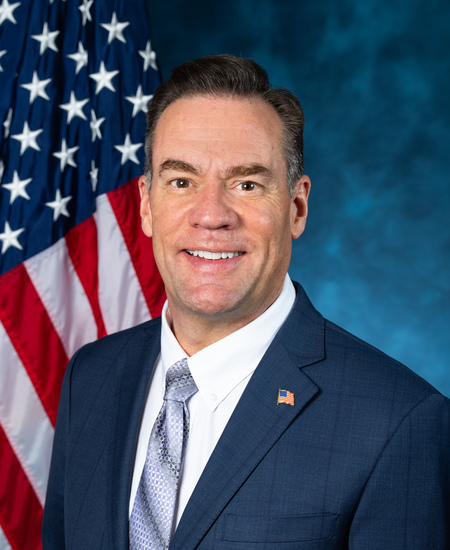
Russ Fulcher
Russ Fulcher House · District 1
R
Strong −
18% 262
Showing 171–180 of 1,431 bills

All technology bills

in committee · United States · House Jun 11, 2026

HR 9268: Stop Crypto ATM Scams Act

The Stop Crypto ATM Scams Act requires digital asset kiosk operators to register their locations with the Treasury Department and makes this information publicly available. To combat fraud and money laundering, the bill mandates strict identity verification, transaction limits of $2,000 per day for new customers, and the use of blockchain analytics to monitor suspicious activity. Operators must also provide clear, standardized disclosures about fees and risks, display scam warnings, offer live customer support, and issue detailed receipts to users. Additionally, the law sets federal transaction limits that supersede state restrictions while allowing states to issue compliance decals and maintain their own licensing requirements.
Sub-Topics Emerging Technology
in committee · United States · House May 14, 2026

HR 8819: Federal Artificial Intelligence Risk Management Act of 2026

This bill directs the National Institute of Standards and Technology to create standards and guidelines for managing risks associated with artificial intelligence systems used by federal agencies and their contractors, while explicitly excluding national security systems. The legislation requires the development of rules for authenticating, tracking, and labeling synthetic content generated by AI, as well as establishing testing and evaluation procedures for future AI acquisitions. Additionally, the bill mandates that the NIST Director provide training recommendations, performance indicators, and periodic assessments to ensure these standards are effectively implemented across the government.
in committee · United States · Senate Jun 17, 2026

S 4810: CHIPS Training in America Act of 2026

The CHIPS Training in America Act of 2026 strengthens the existing CHIPS and Science Act by creating a centralized online database for microelectronics education and workforce information. It directs federal agencies to develop a five-year national strategy to coordinate training programs, ensuring alignment with industry needs and other STEM initiatives. Additionally, the bill authorizes competitive grants of up to $7 million to support colleges and vocational schools in expanding semiconductor-related training, with a focus on recruiting individuals facing employment barriers. To maintain consistency, the legislation prohibits federal agencies from creating duplicate clearinghouses and requires regular public reporting on program outcomes and participant demographics.
in committee · United States · Senate Jul 27, 2026

S 4709: UNLOCK AUKUS Act

The UNLOCK AUKUS Act amends federal export control laws to allow the transfer of specific defense articles and services to partners under the AUKUS security pact. By modifying the Arms Export Control Act, the bill removes certain restrictions that previously limited what technology and equipment could be shared with these allied nations. This change directly impacts the U.S. Department of State and the Department of Defense, enabling them to facilitate the collaboration required for next-generation nuclear-powered submarine programs. The legislation does not alter the core requirements for these transfers but adjusts the regulatory framework to support the partnership's goals.
in committee · United States · House Jun 29, 2026

HR 9515: MFA Act

The Marketplace Fraud Accountability Act requires the healthcare.gov website to use multi-factor authentication for users enrolling in health plans or accessing their personal enrollment data. This security measure, which involves verifying identity through at least two methods like passwords and biometrics, must be implemented within one year of the bill's enactment. The law includes an exception for individuals who lack access to broadband or cellular service or cannot otherwise use this technology. By strengthening identity verification, the bill aims to protect consumer information while maintaining access for those with connectivity limitations.
in committee · United States · House Jun 25, 2026

HR 9372: Data Infrastructure Energy Measurement and Standards Act

The Data Infrastructure Energy Measurement and Standards Act directs the National Institute of Standards and Technology to develop better methods for measuring energy and water use in data centers, including those running artificial intelligence models. This research program aims to create standardized definitions and reporting guidelines that account for different power systems, cooling setups, and varying workload demands. The bill also requires the agency to coordinate with industry experts and international partners to establish global standards while sharing data to improve future energy demand forecasts. To support these efforts, the legislation authorizes $10 million in funding for each of the fiscal years 2027 through 2029.
in committee · United States · Senate Jun 23, 2026

S 4870: Earth MRI Reauthorization Act of 2026

The Earth MRI Reauthorization Act of 2026 extends funding for the Earth Mapping Resources Initiative through 2031. This program will continue to map critical minerals, geothermal energy, and natural hydrogen resources using advanced technologies like digital geochemistry and real-time data systems. The bill also updates the initiative to include data from the 3D Hydrography Program, ensuring a broader range of subsurface information is collected and analyzed.
in committee · United States · House Jun 25, 2026

HR 9477: AI Incident Reporting Act

The AI Incident Reporting Act requires artificial intelligence developers to report specific high-risk incidents to the Secretary of Commerce within seven days of discovery. These reportable events include attempts to evade oversight, unauthorized theft of model weights, capabilities that could accelerate cyberattacks or weapon development, and any incidents posing serious risks to national security or public safety. To encourage transparency, the bill provides legal protections that prevent reported information from being used against developers in lawsuits or regulatory enforcement actions, while also mandating that sensitive data be kept confidential. Developers must submit detailed descriptions of these incidents, and the government must notify key congressional leaders immediately if a report indicates an imminent threat. The Act also establishes a framework for the Secretary to define which AI models are covered and to enforce compliance through civil penalties of up to $2 million for violations.
in committee · United States · House Sep 8, 2026

HR 9501: AI Tax Integrity Act of 2026

The AI Tax Integrity Act of 2026 directs the Treasury Department to launch a pilot program using artificial intelligence to detect tax fraud, identity theft, and errors in returns prepared by third parties. This initiative is designed to target individual and business taxpayers who may file inaccurate returns, with the program running for a minimum of 18 months and a maximum of two years. Upon completion, the Comptroller General must submit a report detailing the amount of improper refunds recovered, the total government recovery, and the accuracy of the AI tools used during the pilot.
in committee · United States · House Jun 25, 2026

HR 9482: Health and Location Data Protection Act of 2026

The Health and Location Data Protection Act of 2026 prohibits data brokers from buying, selling, or sharing specific types of personal information, including an individual's health data and location history. This ban applies to any entity that resells data it did not collect directly from the person, though it allows exceptions for actions compliant with existing HIPAA rules, newsworthy reporting, and disclosures where the individual has given valid consent. The Federal Trade Commission is tasked with defining exactly what counts as "data" and issuing final rules within 180 days of the law's enactment. Violations of these restrictions can lead to enforcement actions by the FTC, state attorneys general, or private individuals, potentially resulting in civil penalties of up to 15 percent of the violator's annual revenue. The legislation also includes a funding provision that appropriates $1 billion to the FTC for fiscal year 2027 to support its work under this act.
Showing 171 to 180 of 1,431 bills
Previous 1 17 18 19 144 Next