Issue · Technology

Technology

Every technology bill, vote, and legislator stance in United States, automatically classified by Maddy, our AI policy reader.

Total bills
1,661
119th Congress
Top supporter
Ami Bera
86% support rate
Top opponent
Scott Perry
14% support rate
Ranked legislators
10
5 support · 5 oppose
Key legislators

Who's moving technology in United States

Legislators moving technology in United States
Legislator Party Stance Support rate Decisive votes
Ami Bera
Ami Bera House · District 6
D
Strong +
86% 22
Chrissy Houlahan
Chrissy Houlahan House · District 6
D
Strong +
86% 22
Kim Schrier
Kim Schrier House · District 8
D
Strong +
86% 22
Mike Thompson
Mike Thompson House · District 4
D
Strong +
86% 22
Nancy Pelosi
Nancy Pelosi House · District 11
D
Strong +
86% 22
Scott Perry
Scott Perry House · District 10
R
Strong −
14% 21
AA
Alan Armstrong Senate
R
Strong −
17% 29
Rand Paul
Rand Paul Senate
R
Strong −
17% 46
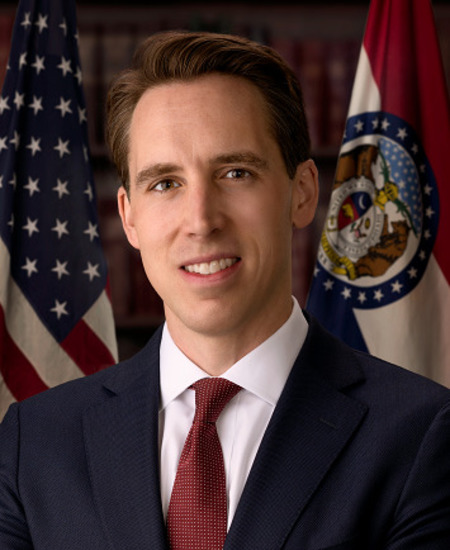
Josh Hawley
Josh Hawley Senate
R
Strong −
18% 45
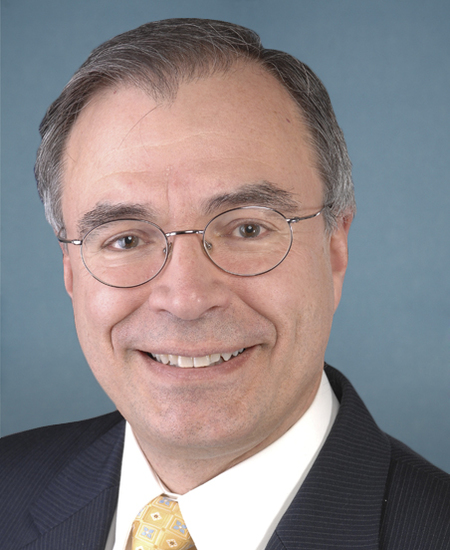
Andy Harris
Andy Harris House · District 1
R
Strong −
18% 22
Showing 1,271–1,280 of 1,661 bills

All technology bills

in committee · United States · House Jan 13, 2026

HR 7045: PROTECT Act

HR 7045, the PROTECT Act, repeals Section 230 of the Communications Act of 1934, which currently shields online platforms from liability for user-generated content. This repeal directly affects websites, social media companies, and other internet services that host third-party content, removing their legal immunity for such content. The bill also updates numerous other federal laws by replacing references to "Section 230" with new definitions from Section 223(i) of the Communications Act. The key change eliminates a foundational legal protection for digital platforms, shifting liability for user content to the platforms themselves.
Sub-Topics Social Media
in committee · United States · House Nov 19, 2025

HR 6075: Water Infrastructure Modernization Act of 2025

The Water Infrastructure Modernization Act of 2025 amends federal water law to define and support "intelligent water infrastructure technology," including real-time monitoring systems, AI-driven wastewater optimization tools, leak detection sensors, and advanced metering for conservation. It directly affects municipal water systems and utilities by expanding eligible uses for federal grants - allowing funds for implementing these technologies (like predictive aquifer recharge systems) while prohibiting grants for planning or maintenance. The bill increases annual grant funding from $25 million to $50 million (starting in 2028) and requires annual reports to Congress on funded projects and their resiliency improvements. This creates a clear pathway for communities, especially disadvantaged ones, to access federal support for modernizing aging water infrastructure through data-driven solutions.
passed · United States · House Jun 24, 2025

HR 1664: Deploying American Blockchains Act of 2025

This bill establishes the Department of Commerce as the lead federal agency for blockchain technology policy, designating the Secretary as the principal advisor to the President on blockchain deployment, use, and competitiveness. It creates a Blockchain Deployment Program to develop best practices for security, interoperability, and cost savings, while requiring the Secretary to form advisory committees with industry experts, small businesses, and cybersecurity stakeholders. The bill directly affects federal agencies (through guidance on adopting blockchain) and the private sector (via voluntary best practices for digital tokens and blockchain applications). It mandates annual reports to Congress on implementation progress, emerging risks, and recommendations for future legislation, with the program set to expire 7 years after enactment.
in committee · United States · House Feb 13, 2025

HR 1283: Protecting Our Children in an AI World Act of 2025

HR 1283, the "Protecting Our Children in an AI World Act of 2025," updates federal laws to address AI-generated child sexual abuse material. It eliminates a legal defense allowing defendants to claim AI-created content wasn't "real" child pornography (by amending 18 U.S.C. § 2252A(c)), and expands the definition of prohibited "sexually explicit conduct" to include simulated obscene exhibitions of certain body parts. This directly affects defendants in federal prosecutions involving AI-generated child pornography and ensures such material is treated as illegal under current laws. The bill makes clear that AI-generated content falls under existing prohibitions without requiring proof of real children.
in committee · United States · Senate Jul 31, 2025

S 2629: Taxpayer Notification and Privacy Act of 2025

This bill requires the IRS to provide taxpayers with specific details before contacting third parties (like banks or employers) about their financial information. It mandates that notices must clearly list each item of information sought from third parties, and gives taxpayers a minimum 45-day window to respond with that information before the IRS contacts others. The bill applies to IRS notices under Section 7602(c) of the Internal Revenue Code and directly affects taxpayers and third-party entities holding financial records. An exception allows the IRS to bypass these requirements if it determines third-party information is necessary regardless of taxpayer availability. The changes take effect 12 months after the bill becomes law.
in committee · United States · House Jul 23, 2025

HR 4640: Stop AI Price Gouging and Wage Fixing Act of 2025

This bill prohibits companies from using automated systems to set prices or wages based on surveillance data about consumers or workers. It bans "surveillance-based price setting" (personalized pricing based on consumer tracking) and "surveillance-based wage setting" (using personal data to determine worker pay), with limited exceptions for standard discounts like student or senior citizen rates when properly disclosed. Companies must publish clear procedures about how their automated systems work, including how data is used and how consumers/workers can challenge inaccuracies. The Federal Trade Commission and Equal Employment Opportunity Commission will enforce the law, and individuals can file lawsuits to challenge violations. The bill also prohibits pre-dispute arbitration agreements that would prevent class action lawsuits.
in committee · United States · House Jun 10, 2025

HR 3841: Healthcare Cybersecurity Act of 2025

HR 3841, the Healthcare Cybersecurity Act of 2025, requires the Cybersecurity and Infrastructure Security Agency (CISA) and the Department of Health and Human Services (HHS) to coordinate on improving cybersecurity for healthcare facilities. It mandates appointing a CISA-HHS liaison, updating a sector-specific risk management plan within one year (including analysis of impacts on rural and small facilities), and creating a biannually updated list of high-risk healthcare assets to prioritize support. The bill also directs CISA to provide training for healthcare providers on cybersecurity risks and mitigation. These provisions directly affect hospitals, clinics, and other healthcare entities handling patient data, aiming to reduce breaches and improve resilience against cyberattacks.
Sub-Topics Cybersecurity
in committee · United States · Senate Apr 9, 2025

S 1396: Content Origin Protection and Integrity from Edited and Deepfaked Media Act of 2025

Content Origin Protection and Integrity from Edited and Deepfaked Media Act of 2025 This bill requires certain tools used to create or modify digital content, including artificial intelligence (AI), to allow users to embed in such content information documenting its origin and history. This is known as content provenance information . The bill also prohibits the removal or alteration of content provenance information in certain circumstances. Specifically, tools used for the primary purpose of creating or significantly modifying content via algorithms, or creating or substantially modifying digital representations of copyrighted work, must allow users to include content provenance information in the resulting digital content. Further, the bill prohibits certain large websites and applications (e.g., social media applications) from removing, altering, tampering with, or disabling content provenance information; and it prohibits any individual or entity from taking such actions in furtherance of an unfair or deceptive act in commerce. Finally, the bill prohibits certain commercial uses of digital representations of copyrighted work that has associated content provenance information without the consent of the work’s owner. Specifically, such representations may not be used to (1) train a system that uses AI or an algorithm, or (2) create algorithmically generated or modified content. The bill provides for enforcement by the Federal Trade Commission and state attorneys general (or other authorized state officials). Owners of digital representations of copyrighted content with associated content provenance information may also bring suit to enforce violations related to their content.
in committee · United States · House Jul 29, 2025

HR 4811: Cell-Site Simulator Warrant Act of 2025

The Cell-Site Simulator Warrant Act of 2025 requires law enforcement agencies to obtain warrants before using cell-site simulators (devices that mimic cell towers to track or intercept phone communications), with strict requirements for demonstrating necessity and minimizing disruption to communications. The bill prohibits most uses of these devices without a warrant, including the use of evidence obtained through unauthorized surveillance, and establishes specific procedures for emergency use with subsequent warrant applications within 48 hours. It requires transparency about potential disruption to emergency services (including 911 calls) and mandates regular reporting on usage to Congress. The law applies to federal and state law enforcement, with specific exceptions for intelligence gathering, research, and correctional facility contraband interdiction systems.
in committee · United States · Senate Dec 3, 2025

S 3336: Reliable Artificial Intelligence Research Act of 2025

This bill establishes two federal prize competitions to advance research on two key AI safety areas: interpretability (making AI decisions understandable to humans) and adversarial robustness (resisting malicious attacks that cause harmful outputs). The Secretary of Homeland Security must launch these competitions within 270 days of enactment, consulting with agencies like the National Institute of Standards and Technology and AI industry experts. Competitions will evaluate submissions based on practical value in high-risk AI applications, such as healthcare or finance, and require participants to submit frameworks or models. The Secretary must report to Congress 180 days after the competitions end, assessing research gaps and suggesting policy actions. The bill authorizes $10 million in funding for these competitions over fiscal years 2026-2030.
Showing 1,271 to 1,280 of 1,661 bills