Issue · Technology

Technology

Every technology bill, vote, and legislator stance in United States, automatically classified by Maddy, our AI policy reader.

Total bills
1,435
119th Congress
Top supporter
Ami Bera
86% support rate
Top opponent
Alan Armstrong
14% support rate
Ranked legislators
10
5 support · 5 oppose
Key legislators

Who's moving technology in United States

Legislators moving technology in United States
Legislator Party Stance Support rate Decisive votes
Ami Bera
Ami Bera House · District 6
D
Strong +
86% 22
Chrissy Houlahan
Chrissy Houlahan House · District 6
D
Strong +
86% 22
Kim Schrier
Kim Schrier House · District 8
D
Strong +
86% 22
Mike Thompson
Mike Thompson House · District 4
D
Strong +
86% 22
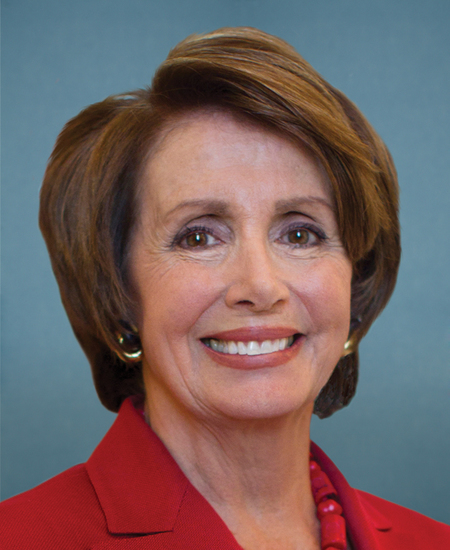
Nancy Pelosi
Nancy Pelosi House · District 11
D
Strong +
86% 22
AA
Alan Armstrong Senate
R
Strong −
14% 28
Scott Perry
Scott Perry House · District 10
R
Strong −
14% 21
Rand Paul
Rand Paul Senate
R
Strong −
16% 45
Josh Hawley
Josh Hawley Senate
R
Strong −
18% 44
Andy Harris
Andy Harris House · District 1
R
Strong −
18% 22
Showing 1,211–1,220 of 1,435 bills

All technology bills

in committee · United States · House Jun 24, 2026

HR 4801: Unleashing AI Innovation in Financial Services Act

The Unleashing AI Innovation in Financial Services Act establishes "AI Innovation Labs" within major financial regulatory agencies to enable financial institutions to test AI-driven financial products and services with temporary regulatory flexibility. Financial institutions can apply for approval to operate AI test projects under alternative compliance strategies that must demonstrate public benefit, risk management, and consumer protection while avoiding systemic risks. Regulators must review applications within 120 days (extendable to 240 days), and approved projects operate under the alternative strategy for a defined period with annual reporting requirements. The bill creates a structured framework for innovation in financial services while maintaining oversight through defined application processes and regulatory reporting.
in committee · United States · Senate Apr 9, 2025

S 1399: Health Tech Investment Act

S 1399, the Health Tech Investment Act, creates a new Medicare payment category for algorithm-based healthcare services (like AI tools used in diagnosis or treatment) starting January 1, 2026. It requires Medicare to pay based on manufacturer costs (including software, staff, and overhead) and protects these services in the special payment category for at least five years, preventing reassignment without sufficient claims data. This directly affects Medicare beneficiaries receiving these AI-driven services and healthcare technology companies developing them. The bill also codifies existing Medicare payment rules for software-as-a-service starting January 1, 2023.
in committee · United States · Senate Dec 3, 2025

S 3341: Investing in All of America Act of 2025

S 3341, the Investing in All of America Act of 2025, modifies rules for Small Business Investment Companies (SBICs) to adjust their debt limits and expand eligible investments. It lowers the maximum leverage ratio for certain SBICs from $300 million to $200 million and sets a new $125 million cap on excluded investments for companies funding businesses in rural areas, critical technology sectors, or small manufacturers. The bill specifically affects SBICs licensed under the Small Business Investment Act of 1958 and the businesses they finance in targeted geographic or industry areas. Key changes include revised financial thresholds and updated definitions for "rural" and "critical technology" to qualify for debt exclusions. These provisions directly alter how SBICs calculate allowable debt when supporting small businesses.
Tags Small Business
in committee · United States · House Jun 25, 2026

HR 5351: NSF AI Education Act of 2025

HR 5351, the NSF AI Education Act of 2025, creates new funding mechanisms to expand artificial intelligence education. It authorizes scholarships and fellowships covering tuition, fees, and stipends for undergraduate and graduate students in AI-related fields, with priority for programs teaching AI in K-12 schools, advanced manufacturing, and agriculture. The bill also establishes up to eight regional "Centers of AI Excellence" at community colleges and career schools to develop AI curricula, build industry partnerships, and create student job pathways. Additionally, it funds research grants to develop K-12 AI teaching materials and supports professional development for educators and industry professionals to integrate AI into classrooms.
in committee · United States · House May 30, 2025

HR 3648: Transit Captions Innovations Act

HR 3648, the Transit Captions Innovations Act, requires transit agencies to implement real-time transcription and translation technology to improve accessibility for deaf, hard of hearing, and limited English proficient riders. It amends federal transit law to add this technology as a qualifying project under existing accessibility funding. The bill authorizes specific annual funding levels - starting at $4 million in 2027 and increasing to $4.4 million by 2031 - to support these projects. This directly affects public transit riders with communication access needs by mandating new technology deployment.
Sub-Topics Public Transit Tags People with Disabilities
in committee · United States · Senate Sep 4, 2025

S 2709: Telehealth Modernization Act

The Telehealth Modernization Act extends Medicare telehealth flexibilities through 2027, allowing more patients to access care remotely without geographic restrictions. It expands who can provide telehealth services (including audio-only visits), extends telehealth use for hospice recertification, and updates coverage for in-home cardiopulmonary rehabilitation. The bill also extends "acute hospital care at home" program flexibilities through 2030 and requires a study on this program's effectiveness. Additionally, it includes provisions to improve telehealth access for patients with limited English proficiency and enhances Medicare coverage for virtual diabetes prevention programs. These changes primarily affect Medicare beneficiaries, healthcare providers, and telehealth service companies.
in committee · United States · Senate May 15, 2025

S 1775: Protecting AI and Cloud Competition in Defense Act of 2025

The Protecting AI and Cloud Competition in Defense Act of 2025 requires the Department of Defense to use competitive bidding for contracts involving cloud computing, data infrastructure, and large AI models (foundation models), aiming to foster market competition. It prohibits contractors from using government data to train commercial AI products without explicit permission and mandates the use of multi-cloud solutions where feasible to avoid vendor lock-in. The Department must submit annual reports to Congress starting in 2027, detailing competition in the AI sector, market concentration, and any exemptions granted to contractors for national security reasons.
in committee · United States · House Feb 13, 2026

HR 7576: AI Workforce Training Act

HR 7576, the AI Workforce Training Act, creates a 30% tax credit for businesses covering qualified AI training costs for their employees. It directly affects businesses that pay for employees to attend accredited AI training programs (such as courses on machine learning or AI ethics), cover wages during training, or develop in-house AI training. The credit is capped at $2,500 per employee per year, adjusted for inflation after 2026. The bill also requires federal agencies to launch a public outreach campaign promoting the credit and submit annual reports to Congress on its implementation.
passed · United States · House Jan 13, 2026

HR 2683: Remote Access Security Act

HR 2683, the Remote Access Security Act, amends the Export Control Reform Act of 2018 to regulate how foreign entities remotely access U.S.-controlled technology. It defines "remote access" as foreign persons accessing U.S. items (like sensitive technology) via internet or cloud services from outside the item's physical location. The bill updates existing export control rules to include remote access as a regulated activity, requiring oversight similar to physical exports or in-country transfers. This primarily affects foreign companies, cloud providers, and technology firms handling U.S.-jurisdiction items.
Sub-Topics Cybersecurity
in committee · United States · Senate Dec 17, 2025

S 3540: LISTOS Act of 2025

S 3540, the LISTOS Act of 2025, requires major online platforms (those with 10 million+ U.S. monthly active users) to ensure consistent content moderation across languages where they generate revenue. It mandates annual public reports detailing staffing levels, language proficiency, translation practices, automated system performance, and moderation outcomes for each monetized language. Platforms must also make reporting tools and policies accessible in all supported languages. Enforcement falls to the Federal Trade Commission and state attorneys general, with penalties for noncompliance.
Sub-Topics Social Media
Showing 1,211 to 1,220 of 1,435 bills