Issue · Technology

Technology

Every technology bill, vote, and legislator stance in United States, automatically classified by Maddy, our AI policy reader.

Total bills
1,435
119th Congress
Top supporter
Ami Bera
86% support rate
Top opponent
Alan Armstrong
14% support rate
Ranked legislators
10
5 support · 5 oppose
Key legislators

Who's moving technology in United States

Legislators moving technology in United States
Legislator Party Stance Support rate Decisive votes
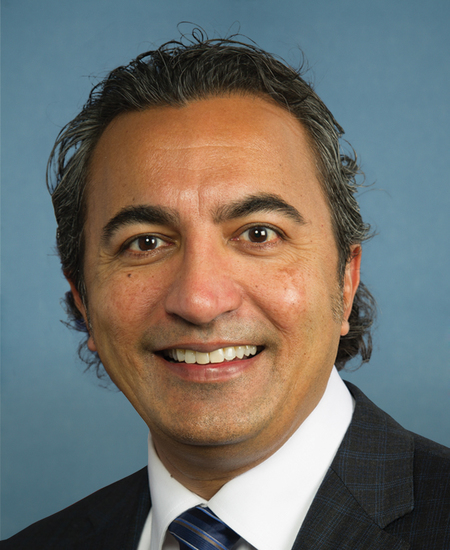
Ami Bera
Ami Bera House · District 6
D
Strong +
86% 22
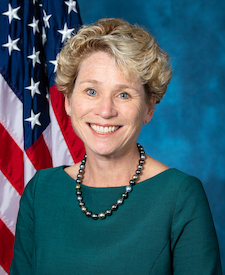
Chrissy Houlahan
Chrissy Houlahan House · District 6
D
Strong +
86% 22
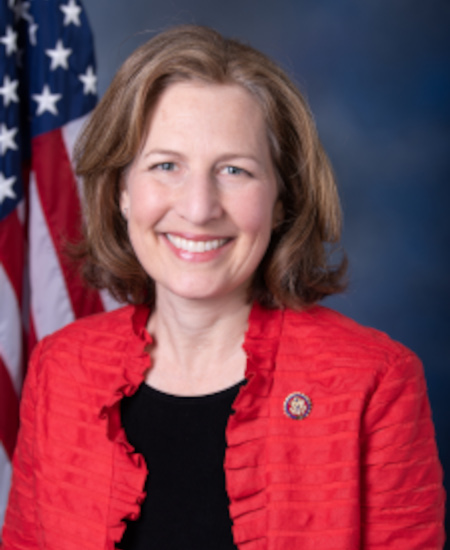
Kim Schrier
Kim Schrier House · District 8
D
Strong +
86% 22
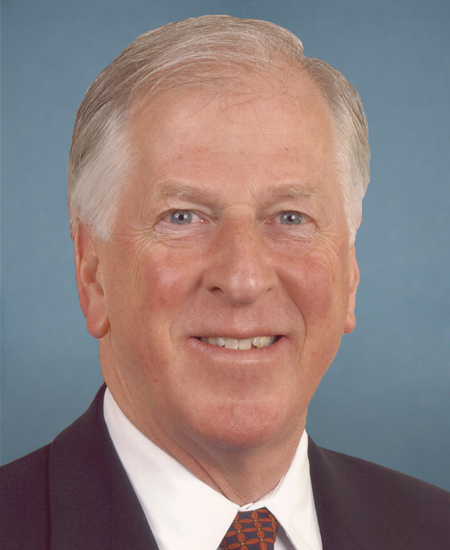
Mike Thompson
Mike Thompson House · District 4
D
Strong +
86% 22
Nancy Pelosi
Nancy Pelosi House · District 11
D
Strong +
86% 22
AA
Alan Armstrong Senate
R
Strong −
14% 28
Scott Perry
Scott Perry House · District 10
R
Strong −
14% 21
Rand Paul
Rand Paul Senate
R
Strong −
16% 45
Josh Hawley
Josh Hawley Senate
R
Strong −
18% 44
Andy Harris
Andy Harris House · District 1
R
Strong −
18% 22
Showing 1,161–1,170 of 1,435 bills

All technology bills

in committee · United States · Senate Jan 7, 2026

S 3586: AI for Mainstreet Act

This bill amends the Small Business Act to require the Small Business Administration (SBA) to provide guidance and support to small businesses on using artificial intelligence (AI). Specifically, it adds a new provision directing the SBA to help small businesses evaluate AI for operations - including best practices, planning for disruptions, protecting data and intellectual property, improving cybersecurity, and ensuring regulatory compliance. The guidance will include training and outreach on integrating AI into business workflows. The bill does not authorize new funding for these activities.
Sub-Topics Artificial Intelligence Cybersecurity Tags Small Business
in committee · United States · Senate Jun 25, 2025

S 2175: Pilot and Aircraft Privacy Act

This bill prohibits using automatic dependent surveillance-broadcast (ADS-B) data to identify aircraft for charging fees or assessments. It also restricts air traffic controllers from using ADS-B data except for safety purposes or with public input for other uses. For airports charging general aviation aircraft (personal/recreational flights, not commercial airlines) landing or takeoff fees, the bill requires public disclosure of how fees will fund only airside safety projects, efforts to reduce other costs, and assessments of impacts on local aviation. The law applies to airport operators, the FAA, and government agencies handling aircraft data. It aims to prevent misuse of tracking data and ensure fee transparency for general aviation users.
in committee · United States · House Feb 27, 2025

HR 1705: Supporting Innovation in Agriculture Act of 2025

HR 1705 creates a new 30% federal tax credit for agricultural businesses investing in qualifying technology projects focused on specialty crop production. The credit applies to eligible equipment, software, and systems used in precision agriculture (like GPS-guided tools for efficient input use) or controlled environment agriculture (indoor farming systems with climate control and automation). Businesses can claim this credit for property placed in service after January 1, 2025, with projects needing completion by December 31, 2035. The bill specifically targets innovations that improve efficiency in growing, processing, or packaging specialty crops as defined in existing law.
in committee · United States · Senate Dec 2, 2025

S 3312: Quantum Readiness and Innovation Act of 2025

This bill requires the National Institute of Standards and Technology (NIST) to develop guidance for upgrading federal and critical infrastructure systems to quantum-resistant encryption (post-quantum cryptography) within 180 days. It mandates a National Quantum Cybersecurity Upgrade Strategy for federal agencies within 360 days, including risk assessments and performance metrics for prioritizing upgrades. The bill also establishes a voluntary pilot program to support high-risk entities (like critical infrastructure operators and federal agencies) in testing quantum-resistant system upgrades, with annual reporting to Congress. It directly affects federal agencies, critical infrastructure sectors (such as energy and finance), and private sector entities through NIST guidance. The focus is on concrete policy actions to prepare systems for future quantum computing threats.
passed · United States · Senate May 21, 2026

S 3023: Safe Cloud Storage Act

This bill creates a legal framework for cloud storage providers to securely store and share digital evidence of child sexual abuse material (CSAM) used in law enforcement investigations. It designates "approved vendors" (cloud companies contracted by U.S. law enforcement) and grants them limited civil/criminal liability protection when following strict cybersecurity protocols, such as using NIST standards, end-to-end encryption, and annual audits. The bill requires all CSAM evidence stored via approved vendors to remain within the U.S., mandates detailed notification procedures to the Department of Justice, and sets requirements for evidence retention and transfer. It directly affects cloud storage companies working with law enforcement agencies and ensures their services meet rigorous security and privacy standards during investigations.
in committee · United States · Senate Oct 23, 2025

S 3038: Health Care Workforce Real-Time Data Dashboard Act

This bill directs the Health Resources and Services Administration (HRSA) to create a real-time online dashboard tracking graduate medical education residency programs. It requires the dashboard to show residency application numbers, geographic applicant distribution, match rates, training completion, and physician placement in rural/underserved areas - all using de-identified data to protect privacy. The dashboard will be developed with collaboration from agencies like Medicare (CMS) and the VA, and must integrate with existing systems to avoid duplication. HRSA must report annually to Congress on the dashboard's operation and findings related to physician workforce distribution.
in committee · United States · Senate Oct 9, 2025

S 2997: Right to Override Act

The Right to Override Act (S 2997) requires healthcare facilities and health plans to establish policies allowing healthcare professionals to override AI-driven clinical decision support systems (AI/CDSS) when they believe it's appropriate for patient care or to comply with law. The bill prohibits employers from taking adverse employment actions against healthcare professionals who override AI/CDSS outputs in good faith, and it provides whistleblower protections for those reporting violations of the law. Covered entities must provide training on AI/CDSS usage, establish committees with healthcare professional representation to oversee implementation, and maintain policies that prevent the sharing of override data that could identify specific professionals. Enforcement will be handled by the Department of Health and Human Services for policy violations and the Department of Labor for employment-related violations, with civil penalties up to $769,870 for repeat violations. This bill directly affects healthcare professionals, healthcare facilities, health plans, and other covered entities that use AI/CDSS in clinical settings.
in committee · United States · House Oct 28, 2025

HRES 836: Calling on the United States to champion a regional artificial intelligence strategy in the Americas to foster inclusive artificial intelligence systems that combat biases within marginalized groups and promote social justice, economic well-being, and democratic values.

This resolution (HRES 836) urges the U.S. government to develop a regional artificial intelligence strategy for the Americas. It calls for U.S. agencies to prioritize inclusive AI development that combats biases against marginalized groups, promotes social justice, and leverages the hemisphere's diverse populations. Key mechanisms include funding AI education and infrastructure across the region, creating ethical frameworks for AI governance, and collaborating with partners like the Organization of American States. The resolution directly affects U.S. foreign policy agencies and aims to shape AI systems used throughout the Western Hemisphere, focusing on equitable outcomes for underserved communities.
in committee · United States · Senate Mar 13, 2025

S 1018: Cybersecurity for Rural Water Systems Act

This bill establishes a federal program to improve cybersecurity for rural water and wastewater systems. It directly affects rural water associations by providing technical assistance through "circuit riders" who assess security risks, develop protection protocols, and document cyber readiness. Key mechanisms include rapid threat assessments, developing security plans, and requiring annual reports on program activities. The program is funded at $10 million annually for fiscal years 2025-2029, with circuit riders needing specific cybersecurity certifications. This is a concrete policy change focused on strengthening infrastructure protection for rural communities.
Sub-Topics Cybersecurity Tags Agriculture Rural Communities
in committee · United States · House Jun 10, 2025

HR 3875: TERMS Act

HR 3875, the TERMS Act, requires online service providers (like social media platforms or apps requiring user accounts) to clearly explain their rules for suspending or terminating accounts. It mandates that providers publicly disclose their acceptable use policies in plain language, including what actions could lead to account restrictions, how enforcement works, and appeal options. Providers must also give users advance written notice before restricting accounts (with limited exceptions for court orders or immediate safety risks) and publish annual reports detailing how often they enforced their policies. These requirements aim to give users transparency about account decisions and promote competition by making platform rules more understandable.
Sub-Topics Social Media
Showing 1,161 to 1,170 of 1,435 bills