Issue · Technology

Technology

Every technology bill, vote, and legislator stance in United States, automatically classified by Maddy, our AI policy reader.

Total bills
1,435
119th Congress
Top supporter
Ami Bera
86% support rate
Top opponent
Alan Armstrong
14% support rate
Ranked legislators
10
5 support · 5 oppose
Key legislators

Who's moving technology in United States

Legislators moving technology in United States
Legislator Party Stance Support rate Decisive votes
Ami Bera
Ami Bera House · District 6
D
Strong +
86% 22
Chrissy Houlahan
Chrissy Houlahan House · District 6
D
Strong +
86% 22
Kim Schrier
Kim Schrier House · District 8
D
Strong +
86% 22
Mike Thompson
Mike Thompson House · District 4
D
Strong +
86% 22
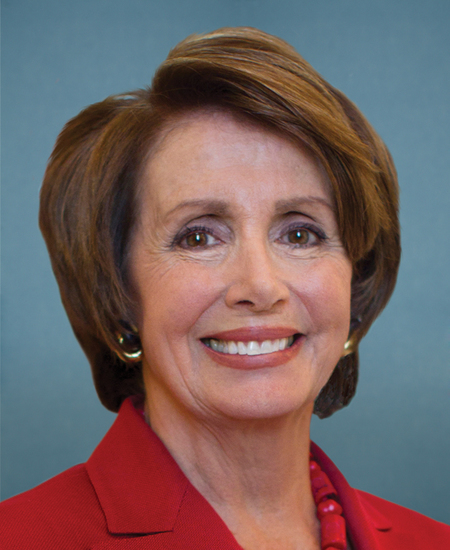
Nancy Pelosi
Nancy Pelosi House · District 11
D
Strong +
86% 22
AA
Alan Armstrong Senate
R
Strong −
14% 28
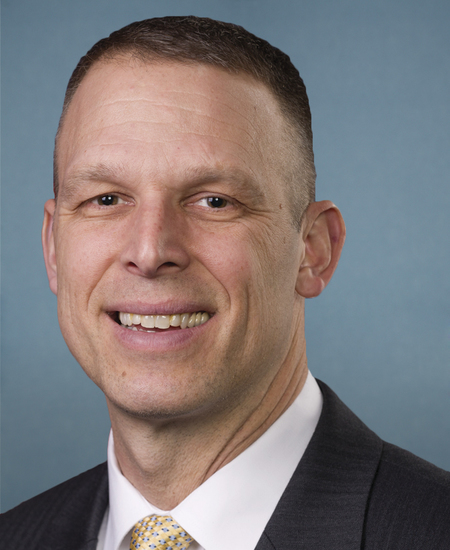
Scott Perry
Scott Perry House · District 10
R
Strong −
14% 21
Rand Paul
Rand Paul Senate
R
Strong −
16% 45
Josh Hawley
Josh Hawley Senate
R
Strong −
18% 44
Andy Harris
Andy Harris House · District 1
R
Strong −
18% 22
Showing 1,111–1,120 of 1,435 bills

All technology bills

in committee · United States · Senate Sep 11, 2025

S 2794: DECLINE Act

The DECLINE Act requires federal agencies to immediately deactivate government payment cards (like purchase or travel cards) when employees leave their positions, including through separation, retirement, or discharge. Agencies must collect physical cards, remove them from digital wallets, and stop card usage within 30 days of an employee’s departure. This applies to all federal employees, including those in senior executive roles and policy-determining positions. Agencies must also report annually to Congress on compliance, card deactivations, and misuse prevention to prevent fraud or unauthorized spending.
in committee · United States · House Sep 10, 2025

HR 5273: Broadband Competition and Efficient Deployment Act

This bill exempts certain broadband infrastructure projects from federal environmental (NEPA) and historic preservation (NHPA) review requirements. It specifically applies to projects involving the placement, construction, or modification of telecommunications facilities on "eligible support infrastructure" (like existing utility poles or buildings) that require Federal Communications Commission (FCC) approval. The law removes these projects from being considered "major federal actions" under NEPA and "undertakings" under NHPA, streamlining the permitting process for broadband providers. This directly affects broadband companies, local governments, and tribes that handle infrastructure permits, by reducing federal review steps for FCC-approved installations on existing communication-supporting structures.
Sub-Topics Conservation Broadband Access Telecommunications Tags Rural Communities
in committee · United States · House Dec 11, 2025

HR 3149: App Store Accountability Act

The App Store Accountability Act requires major app stores (with over 5 million US users) to verify users' ages at account creation and obtain verifiable parental consent before minors can download apps or make in-app purchases. App stores must clearly display age ratings for apps, provide age verification data to developers, and notify parents of significant app changes affecting minors. App developers must verify user age and parental consent through the app store's system, use age data only for age-appropriate restrictions, and cannot enforce terms against minors without verified parental consent. The Federal Trade Commission and state attorneys general will enforce these requirements, with app developers potentially shielded from liability if they follow the rules and industry standards.
in committee · United States · Senate Aug 4, 2026

S 3097: Health Information Privacy Reform Act

S 3097, the Health Information Privacy Reform Act, updates privacy rules for health data by requiring new federal regulations that harmonize with existing HIPAA and HITECH standards. It directly affects healthcare providers, insurers, and technology companies handling health information by mandating clearer privacy rules, stricter breach notifications, and new requirements for patient access to records. Key provisions include requiring written consent for selling health data, banning HIPAA protections for wellness app data (like step counts), and clarifying when health data can be shared without patient permission. The bill also establishes standardized rules for de-identifying health data and requires companies to notify patients if their health data is no longer protected under HIPAA. These changes aim to strengthen patient control over health information while aligning with modern data practices.
in committee · United States · Senate Sep 29, 2025

S 2937: AI LEAD Act

The AI LEAD Act establishes a federal liability framework for artificial intelligence systems that cause harm to individuals or businesses. It sets standards for when developers (who create AI systems) and deployers (who use AI systems) can be held liable for harm, including defective design or failure to provide adequate warnings. The bill prohibits including certain liability limitations in contracts related to AI systems and creates a federal cause of action for individuals harmed by AI. It also requires foreign AI developers to designate a U.S. agent for legal service, with the law applying to claims filed after enactment regardless of when the harm occurred.
in committee · United States · House Sep 18, 2025

HR 5456: NWR Modernization Act of 2025

HR 5456, the NWR Modernization Act of 2025, modernizes the NOAA Weather Radio system to improve nationwide access to weather and hazard alerts. It requires expanding coverage to rural communities, national parks, tribal lands, and areas with poor cellular service while upgrading to internet-based broadcasts and developing backup systems. The bill mandates a 12-month assessment to evaluate access needs, compatibility with third-party apps, and reliability during outages. This directly affects all U.S. residents, particularly those in underserved areas currently lacking reliable access. Key provisions include transitioning to modern infrastructure, enhancing alert systems, and ensuring continuous real-time broadcasts.
in committee · United States · House Feb 5, 2026

HR 7404: Fair Repair Act

The Fair Repair Act (HR 7404) requires electronics manufacturers (like smartphone or computer makers) to provide independent repair shops and device owners with necessary tools, parts, and documentation for repairing digital devices on "fair and reasonable terms." It prohibits manufacturers from using software locks, parts pairing, or other tactics to block third-party parts, reduce device functionality, or charge extra fees for repairs. The law mandates that repair resources must be priced and accessible similarly to what manufacturers offer their own authorized repair centers. Exclusions apply to motor vehicles, medical devices, and safety equipment like emergency communication devices.
in committee · United States · House Dec 11, 2025

HR 6676: State Industrial Competitiveness Act of 2025

The State Industrial Competitiveness Act of 2025 establishes a federal program to fund state and tribal energy efficiency initiatives for manufacturers. It provides $100 million annually (2026-2030) to state energy agencies and Indian Tribes to support energy studies, efficiency upgrades, and advanced technology implementation at manufacturing facilities. The program requires states to allocate 5% of funds specifically for tribes or manufacturers in Indian Country, with strict spending limits (e.g., no more than 50% of funds for studies, 50% for implementation, 10% for admin costs). It directly affects manufacturers - especially smaller ones with under 500 employees - by enabling cost-free energy assessments and funding for equipment like renewable systems, AI-driven efficiency tools, and emissions-reduction measures.
Sub-Topics Energy Efficiency Artificial Intelligence Tags Tribal Nations
in committee · United States · House Jan 3, 2025

HR 193: Maintaining Innovation and Safe Technologies Act

The Maintaining Innovation and Safe Technologies Act requires the U.S. Department of Health and Human Services to issue Medicare Part B payment guidance by January 1, 2027, for remote monitoring devices that use artificial intelligence. This guidance will clarify payment rules for devices like continuous glucose monitors, which must have an AI component (e.g., automatic adjustments) and transmit patient data to healthcare providers for treatment management. The bill directly affects Medicare coverage for these AI-enabled medical devices, used by patients managing chronic conditions such as diabetes. It does not change current reimbursement rates but mandates clear payment criteria through updated guidance by the specified deadline.
passed · United States · Senate Aug 10, 2026

S 2666: Foreign Robocall Elimination Act

The Foreign Robocall Elimination Act establishes a taskforce to address unlawful robocalls made into the United States from foreign countries. The taskforce, composed of government agency representatives and private sector experts from telecommunications and related industries, must produce a report within 360 days detailing the scale of foreign-originating robocalls, their financial impact, and solutions like improved caller ID authentication technology and international cooperation. The report will specifically study call origins, identity theft losses, enforcement strategies, and incentives for foreign countries to collaborate on combating these calls. This bill directly affects federal agencies (including the FCC, FTC, and Department of Justice) and the telecommunications industry by mandating a collaborative effort to develop actionable recommendations for Congress.
Sub-Topics Telecommunications
Showing 1,111 to 1,120 of 1,435 bills