Issue · Technology

Technology

Every technology bill, vote, and legislator stance in United States, automatically classified by Maddy, our AI policy reader.

Total bills
1,447
119th Congress
Top supporter
Ami Bera
86% support rate
Top opponent
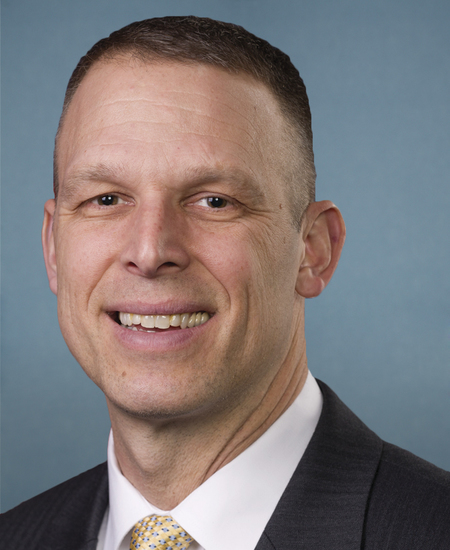
Scott Perry
14% support rate
Ranked legislators
10
5 support · 5 oppose
Key legislators

Who's moving technology in United States

Legislators moving technology in United States
Legislator Party Stance Support rate Decisive votes
Ami Bera
Ami Bera House · District 6
D
Strong +
86% 22
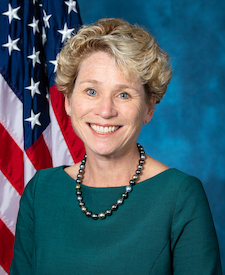
Chrissy Houlahan
Chrissy Houlahan House · District 6
D
Strong +
86% 22
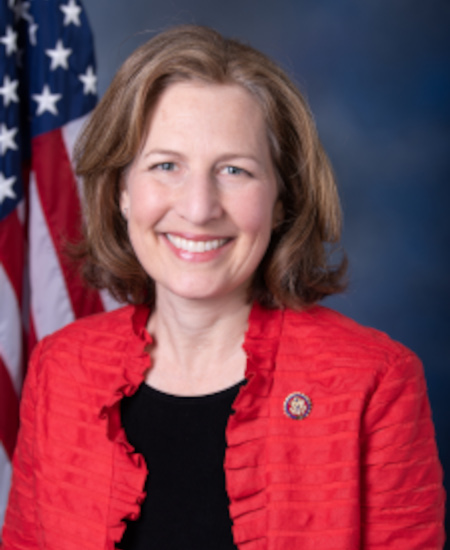
Kim Schrier
Kim Schrier House · District 8
D
Strong +
86% 22
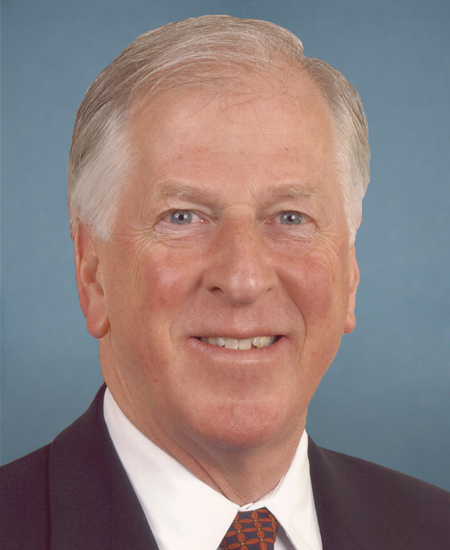
Mike Thompson
Mike Thompson House · District 4
D
Strong +
86% 22
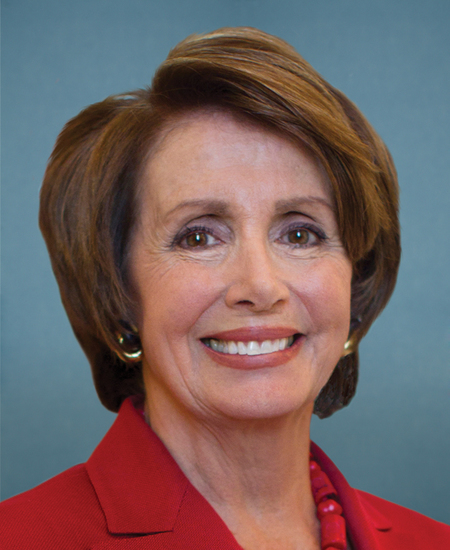
Nancy Pelosi
Nancy Pelosi House · District 11
D
Strong +
86% 22
Scott Perry
Scott Perry House · District 10
R
Strong −
14% 21
AA
Alan Armstrong Senate
R
Strong −
17% 29
Rand Paul
Rand Paul Senate
R
Strong −
17% 46
Josh Hawley
Josh Hawley Senate
R
Strong −
18% 45
Andy Harris
Andy Harris House · District 1
R
Strong −
18% 22
Showing 1,081–1,090 of 1,447 bills

All technology bills

in committee · United States · Senate Jan 23, 2025

S 232: Preventing Algorithmic Collusion Act of 2025

This bill prohibits businesses from using pricing algorithms that rely on nonpublic competitor data (like unpublicized prices or terms). It requires companies to disclose when algorithms set prices for customers or workers, and mandates audits of such algorithms upon request by the FTC or Justice Department. Violations could trigger daily fines of up to $10,000. The bill also presumes collusion if algorithms are shared between competitors, potentially leading to joint liability.
in committee · United States · House Jan 13, 2026

HR 6520: SNAP Data Transparency and Oversight Act of 2025

This bill requires state agencies administering the SNAP (food stamp) program to provide recipient-level data to the USDA Secretary upon request. It directly affects state SNAP agencies, which must submit this data within 30 days (or sooner for urgent cases) in secure electronic formats. Key provisions include mandatory data sharing for program oversight and integrity, strict privacy safeguards under the Privacy Act, and potential withholding of federal funds for non-compliance. The bill also clarifies that this does not limit the USDA's existing authority to access state data for program administration.
Tags Government Transparency
in committee · United States · House Dec 11, 2025

HR 6273: SPY Kids Act

This bill bans online platforms from conducting market research on children under 13 and requires parental permission for such research on teens aged 13-17. It applies to social media and apps that let users create profiles, share content, and use features like auto-play or notifications to keep users engaged. Platforms must stop collecting data about minors' behavior without consent, with enforcement led by the Federal Trade Commission. States can also sue platforms that violate these rules.
in committee · United States · House Jan 15, 2025

HR 417: End U.N. Censorship Act

HR 417, the "End U.N. Censorship Act," prohibits federal funding for U.S. government departments or agencies to support the United Nations' iVerify tool or any effort labeling speech as misinformation. It blocks funds from being used to develop, implement, or contribute to the U.N. or other international organizations for initiatives that seek to categorize speech as "mal-, mis-, or disinformation." The bill mandates that any funds withheld under this provision be permanently rescinded and deposited into the U.S. Treasury, not repaid to the U.N. It directly affects federal agencies like the Department of State that manage international funding. The policy change is strictly a funding restriction, not a direct ban on U.N. activities.
in committee · United States · Senate Mar 19, 2026

S 2855: Immersive Technology for the American Workforce Act of 2025

S 2855, the *Immersive Technology for the American Workforce Act of 2025*, provides $50 million annually (2026-2035) to fund grants for workforce training programs using virtual reality (VR), augmented reality (AR), and similar immersive technologies. Eligible entities - including community colleges, career schools, and industry partnerships - can apply for 5-year grants to create career pathways that train workers for in-demand jobs, with priority given to programs serving veterans, rural communities, people with employment barriers (meeting ADA standards), and industries facing workforce shifts. The bill requires grantees to report on program outcomes, including participant success rates and employer needs, and mandates the Department of Labor to publish best practices for using immersive tech in training. It directly affects workers seeking new skills, training providers, and employers needing qualified staff in growing sectors.
in committee · United States · House Jun 24, 2026

HR 2152: AI PLAN Act

HR 2152, the AI PLAN Act, requires the Treasury, Homeland Security, and Commerce departments to create annual reports addressing AI risks in financial crimes. These reports must detail current defenses against AI-driven fraud, misinformation, deepfakes, voice cloning, and foreign election interference, plus list available and needed resources (like technology and funding) to protect U.S. financial systems. The bill directs agencies to submit legislative recommendations within 90 days of each report to help combat these threats. It primarily affects federal agencies and indirectly impacts businesses and individuals targeted by AI-powered financial crimes.
in committee · United States · Senate Jun 4, 2025

S 1943: Protecting Seniors' Data Act of 2025

This bill requires the Comptroller General to conduct a security audit of Social Security Administration systems accessed by the U.S. DOGE Service or affiliated entities, focusing on vulnerabilities and potential violations of privacy laws like the Privacy Act of 1974. The audit must identify security flaws in software used by these entities and assess compliance with federal data privacy rules. The Comptroller General must submit a report to Congress and the Social Security Commissioner within one year, detailing findings and recommendations. The Social Security Commissioner then has 90 days to fix identified issues and report back to Congress on progress. The bill directly affects Social Security Administration systems handling sensitive data, primarily impacting seniors whose information is processed through these systems.
Sub-Topics Consumer Data Protection Data Privacy Tags Seniors
in committee · United States · House May 6, 2025

HR 3209: App Store Freedom Act

HR 3209, the App Store Freedom Act, would require major app store owners (like Apple and Google) with over 100 million US users to allow users to choose third-party app stores, install apps from outside their official stores, and hide pre-installed apps. The bill prohibits these companies from forcing developers to use their payment systems, restricting pricing options, or using nonpublic developer information to compete with their apps. The Federal Trade Commission would enforce these rules with civil penalties up to $1 million per violation, while states could also bring enforcement actions in certain cases. This legislation aims to increase competition in app distribution and development by preventing anti-competitive practices by dominant app store platforms.
in committee · United States · Senate Sep 3, 2025

S 2695: Synthetic Biology Advancement Act of 2025

The Synthetic Biology Advancement Act of 2025 establishes a National Synthetic Biology Center within the U.S. Department of Agriculture to award competitive grants to eligible land-grant universities (1862, 1890, and 1994 institutions). The center funds research focused on synthetic biology applications in agriculture, including gene editing, microbiomes, AI-driven modeling, and sustainable food production systems. Grants require partnerships with entities like National Laboratories or nonprofits and must address specific priorities like climate-resilient crops or new protein sources. The bill authorizes $5 million annually for grants and $1 million annually for center operations from 2026-2030, with mandatory progress reports to Congress.
in committee · United States · House Mar 10, 2025

HR 1975: BEAD FEE Act of 2025

HR 1975, the BEAD FEE Act of 2025, sets new rules for fees charged by local governments or entities receiving federal broadband grant funds (BEAD Program). It prohibits these entities from charging fees for broadband infrastructure placement, construction, or modification unless fees are competitively neutral, publicly disclosed, based solely on actual costs (like review processing or repairs), and clearly categorized as recurring or nonrecurring. The bill directly affects local governments and political subdivisions managing rights-of-way when they receive BEAD grant funds. It aims to prevent arbitrary fees and ensure transparency in cost calculations for broadband deployment projects.
Showing 1,081 to 1,090 of 1,447 bills