Issue · Technology

Technology

Every technology bill, vote, and legislator stance in United States, automatically classified by Maddy, our AI policy reader.

Total bills
1,447
119th Congress
Top supporter
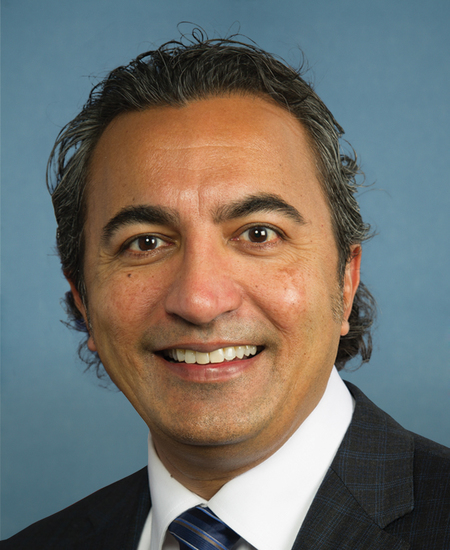
Ami Bera
86% support rate
Top opponent
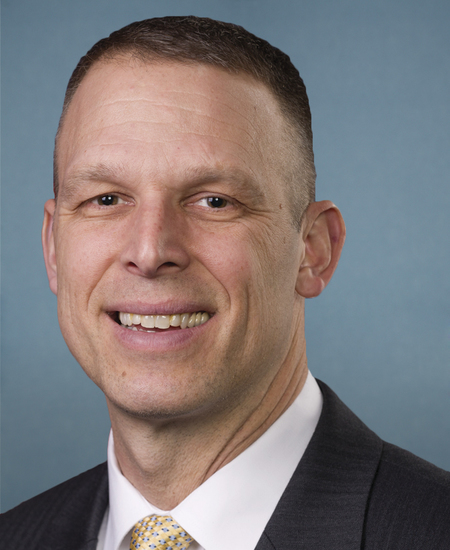
Scott Perry
14% support rate
Ranked legislators
10
5 support · 5 oppose
Key legislators

Who's moving technology in United States

Legislators moving technology in United States
Legislator Party Stance Support rate Decisive votes
Ami Bera
Ami Bera House · District 6
D
Strong +
86% 22
Chrissy Houlahan
Chrissy Houlahan House · District 6
D
Strong +
86% 22
Kim Schrier
Kim Schrier House · District 8
D
Strong +
86% 22
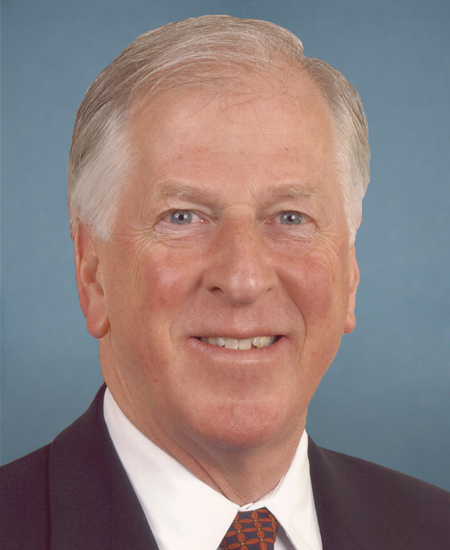
Mike Thompson
Mike Thompson House · District 4
D
Strong +
86% 22
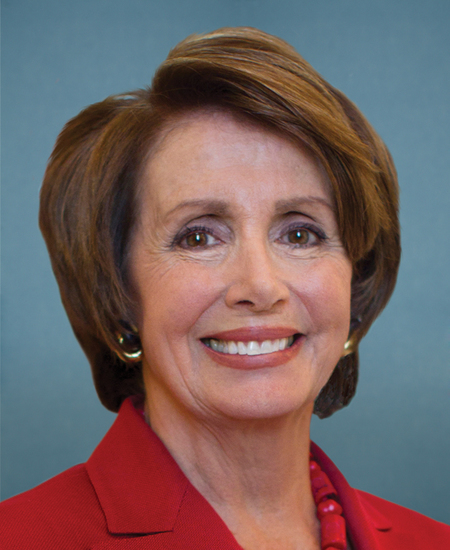
Nancy Pelosi
Nancy Pelosi House · District 11
D
Strong +
86% 22
Scott Perry
Scott Perry House · District 10
R
Strong −
14% 21
AA
Alan Armstrong Senate
R
Strong −
17% 29
Rand Paul
Rand Paul Senate
R
Strong −
17% 46
Josh Hawley
Josh Hawley Senate
R
Strong −
18% 45
Andy Harris
Andy Harris House · District 1
R
Strong −
18% 22
Showing 1,051–1,060 of 1,447 bills

All technology bills

in committee · United States · House Jan 13, 2025

HR 339: Broadband Resiliency and Flexible Investment Act

HR 339, the Broadband Resiliency and Flexible Investment Act, requires state and local governments to approve modifications to existing wireless towers and telecommunications facilities (like base stations) that don’t change their physical size within 60 days - or automatically approve the request. The bill limits governments to requiring only publicly available, relevant documentation for such requests and mandates written denials with specific legal citations if a request is rejected. It defines eligible requests as those improving facility resiliency (e.g., backup power, hardening for public safety) or enabling equipment changes without altering structure size. This law primarily affects telecommunications companies seeking infrastructure upgrades and local governments managing facility approvals, with the FCC required to issue implementing rules within 180 days.
in committee · United States · Senate May 20, 2025

S 1819: DOGE BROS Act

This bill increases fines for unauthorized access to or disclosure of sensitive government data. It raises the maximum civil penalty for violating the Privacy Act from $5,000 to $30,000 per violation (Section 2), and increases criminal fines for unauthorized computer access to up to $750,000 for individuals (Section 3). Specific provisions also raise fines for improper disclosure of Social Security data ($10,000 → $25,000), tax information ($5,000 → $25,000), and census data ($5,000 → $25,000) (Sections 4-6). The bill directly affects government employees, contractors, and others handling protected data by making violations more costly. It focuses solely on penalty adjustments without creating new data collection or oversight requirements. (Note: "DOGE BROS" is a non-official, informal reference in the bill's title.)
Sub-Topics Data Privacy
in committee · United States · Senate Feb 10, 2026

S 2722: Taiwan Energy Security and Anti-Embargo Act of 2026

This bill directs U.S. agencies to prioritize facilitating U.S. liquefied natural gas (LNG) exports to Taiwan and strengthen Taiwan's energy infrastructure resilience. It requires the State, Commerce, and Energy Departments to identify barriers to LNG exports, support Taiwan's grid cybersecurity, physical security, and emergency planning, and establish a U.S.-Taiwan Energy Security Center. The bill mandates annual reports to Congress on implementation progress, barriers to exports, and the effectiveness of resilience programs. It directly affects U.S. LNG exporters, Taiwan's energy infrastructure operators, and U.S. federal agencies coordinating with Taiwan. The legislation does not authorize new funding but directs existing agencies to prioritize these activities under the Taiwan Enhanced Resilience Act.
Sub-Topics Cybersecurity
in committee · United States · Senate May 13, 2025

S 1729: Streamlining Conservation Practice Standards Act of 2025

This bill streamlines how conservation practice standards are developed and updated for U.S. agricultural programs. It requires the Secretary of Agriculture to establish a public, rolling review process for conservation standards every five years (replacing the previous annual requirement), prioritizing innovative technologies like precision agriculture and nutrient-efficient farming methods. Farmers, state agricultural agencies, and the public will gain clearer pathways to submit new conservation practices for consideration and provide input during reviews. The bill also mandates publishing all proposed changes, public comments, and final decisions online to improve transparency.
Sub-Topics Conservation Tags Agriculture
in committee · United States · House Sep 11, 2025

HR 5318: RAPID Act

HR 5318, the RAPID Act, streamlines permitting for small wireless infrastructure (like 5G small cell antennas under 3 cubic feet) by exempting these deployments from standard environmental (NEPA) and historic preservation reviews. It creates a presumption that Indian Tribes have disclaimed interest in such projects if they don’t respond to FCC forms within 45 days, though tribes can challenge this presumption with evidence. The bill directly affects wireless providers deploying small cell networks and tribal governments regarding cultural property reviews. Key changes include reducing federal review timelines for minor infrastructure while establishing clear, time-bound processes for tribal consultation.
Sub-Topics Broadband Access Telecommunications Tags Tribal Nations
in committee · United States · Senate Jul 29, 2025

S 2342: Intelligence Authorization Act for Fiscal Year 2026

# Summary of Intelligence Community Legislative Proposal This comprehensive legislative document proposes significant reforms to the U.S. intelligence community, covering multiple critical areas: 1. **Intelligence Community Reforms** (Sections 401-412): Includes provisions for enhancing counternarcotics collaboration with Mexico, improving intelligence support to counter foreign influence in Sudan, and establishing a "Technology Bridge Fund" to assist in transitioning R&D products to prototype/production phase. 2. **Classification Reform & Security Clearances** (Sections 701-705): - Requires notification to Congress when declassifying information related to intelligence sources/methods - Eliminates cap on compensatory damages for retaliatory revocation of security clearances - Establishes process parity for adverse security clearance determinations - Proposes extending inactive security clearance eligibility for up to 5 years 3. **Whistleblower Protections** (Sections 801-805): - Clarifies definition of "employee" to include former employees/contractors - Prohibits disclosure of whistleblower identity as act of reprisal - Establishes private right of action for unlawful disclosure of whistleblower identity - Improves procedures for urgent concerns submitted to Inspectors General 4. **Anomalous Health Incidents** (Sections 901-902): - Requires development of standard guidelines for reporting and documenting health incidents - Mandates review and declassification of intelligence related to such incidents 5. **Other Key Provisions** (Sections 1001-1008): - Requires declassification of intelligence related to Wuhan Institute of Virology research and pandemic origins - Establishes counterintelligence briefings for Armed Forces members - Denies visas to foreign nationals known to be intelligence officers - Limits diplomatic privileges for personnel from certain nations (China, Russia, Iran, North Korea, Cuba) - Extends statute of limitations for espionage offenses The document represents a broad-sweeping reform effort aimed at modernizing intelligence community operations while balancing transparency, security, and accountability.
in committee · United States · Senate Jul 17, 2025

S 2344: Department of Veterans Affairs Claim Sharks Effective Warnings Act of 2025

This bill requires the Department of Veterans Affairs (VA) to display clear warnings on all public-facing VA websites and online tools about predatory practices. Specifically, it mandates that VA websites warn veterans not to share their account login credentials or bank account information (like usernames/passwords) with anyone. The law amends existing VA procedures to add this security warning as a standard message during website logins. The Chief Veterans Experience Officer will implement these changes, effective 180 days after the bill's enactment. The policy directly affects veterans using VA online services by strengthening protections against fraudulent agents targeting their personal information.
passed · United States · Senate Oct 10, 2025

S 2144: A bill to improve the safety and security of Members of Congress, immediate family members of Members of Congress, and congressional staff.

This bill protects personal information for Members of Congress, their immediate family members living in their households, and congressional staff identified as security threats. It requires government agencies and data brokers to remove specific sensitive details - including home addresses, phone numbers, school locations, and precise location data - from public records upon request. Agencies must act within 72 hours to remove such information, while data brokers are prohibited from selling or sharing covered data without consent. Exceptions include news reporting on public concerns and information voluntarily shared by the individual.
in committee · United States · Senate Apr 14, 2026

S 2378: SAFEGUARDS Act of 2025

The SAFEGUARDS Act of 2025 ensures that revenue from the 9/11 Security Fee (paid by airline passengers) is used exclusively for aviation security, ending its diversion to other government purposes by 2027. It creates two dedicated funds: the Aviation Security Capital Fund (receiving $250 million annually through 2025, then $500 million annually starting in 2026) for general security improvements, and the Aviation Security Checkpoint Technology Fund (receiving $250 million annually starting in 2026) specifically for security screening technology like baggage scanners and exit lanes. The bill requires the Transportation Security Administration (TSA) to collect sufficient fees to fund these amounts and allows retroactive grants for security technology projects implemented since 2023. This directly affects TSA operations, airports, and passenger fees, with no new taxes or fees imposed.
Sub-Topics State Budget
passed · United States · Senate Mar 3, 2026

S 2245: A bill to amend the Digital Coast Act to improve the acquisition, integration, and accessibility of data of the Digital Coast program and to extend the program.

This bill (S 2245) amends the Digital Coast Act to improve how coastal data is handled. It requires the program to make data "fully and freely available" (not just "readily accessible") and expands the data collected to include underground infrastructure like utility lines. The bill also extends the program’s funding and operations deadline from 2025 to 2030. These changes directly affect coastal communities, local governments, and agencies that rely on the Digital Coast program for accurate, accessible coastal data to support planning and resilience efforts.
Showing 1,051 to 1,060 of 1,447 bills