Issue · Healthcare

Healthcare (Women's Health)

Every healthcare bill, vote, and legislator stance in United States, automatically classified by Maddy, our AI policy reader.

Total bills
302
119th Congress
Top supporter
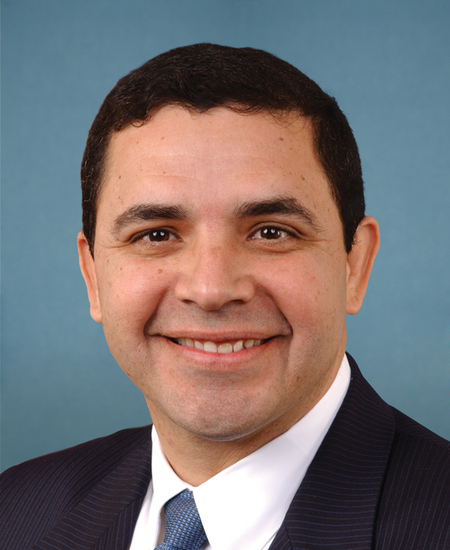
Henry Cuellar
100% support rate
Top opponent
John Garamendi
33% support rate
Ranked legislators
6
5 support · 1 oppose
Key legislators

Who's moving women's health in United States

Legislators moving women's health in United States
Legislator Party Stance Support rate Decisive votes
Henry Cuellar
Henry Cuellar House · District 28
D
Strong +
100% 4
Marcy Kaptur
Marcy Kaptur House · District 9
D
Support
67% 3
Mike Haridopolos
Mike Haridopolos House · District 8
R
Support
67% 3
Aaron Bean
Aaron Bean House · District 4
R
Mixed
50% 4
Abraham J. Hamadeh
Abraham J. Hamadeh House · District 8
R
Mixed
50% 4
John Garamendi
John Garamendi House · District 8
D
Oppose
33% 3
Showing 261–270 of 302 bills

All healthcare bills

in committee · United States · House Dec 19, 2025

HR 4611: EACH Act of 2025

HR 4611 (EACH Act of 2025) requires all federally funded health programs - including Medicaid, Medicare, military health plans, and the Indian Health Service - to cover abortion services without restrictions, repealing the Hyde Amendment's long-standing ban on federal funding for most abortions. This directly affects millions of people enrolled in these programs, particularly low-income women, women of color (including 25% of Black women and 22% of Hispanic women on Medicaid), and young people. The bill mandates coverage in all federally administered health plans and prohibits state or private insurers from restricting abortion coverage in health insurance. It aims to eliminate current federal and state barriers that deny abortion access to people who rely on government health programs.
in committee · United States · House Jul 15, 2025

HR 4392: Uterine Fibroid Intervention and Gynecological Health Treatment Act of 2025

This bill directs the Health and Human Services Secretary to fund research on early detection and intervention for uterine fibroids, aiming to develop evidence-based approaches for healthcare settings. It authorizes grants to states to support screening (including advanced imaging), patient navigation services, and public education campaigns focused on early detection, with priority given to areas with socially vulnerable populations at higher risk. The bill also funds research into disparities in pain management during fibroid surgery and conditions like Asherman’s Syndrome. These provisions directly affect women with uterine fibroids, particularly in underserved communities, by expanding access to early detection services and targeted research.
Sub-Topics Women's Health
in committee · United States · House Jun 17, 2025

HRES 522: Recognizing that Adriana Smith and her family's prolonged ordeal without their consent is the direct result of the Black maternal health crisis, the danger of laws that give rights to fetuses and take them away from pregnant people, and anti-abortion laws that continue to harm people who can become pregnant.

HRES 522 is a congressional resolution recognizing Adriana Smith, a Black nurse who became brain dead at 9 weeks pregnant, as a case directly resulting from systemic issues in maternal healthcare and restrictive abortion laws. It specifically condemns laws that grant legal rights to fetuses while stripping pregnant people of medical autonomy, and highlights how Georgia’s anti-abortion laws (like the LIFE Act) create dangerous uncertainty for medical decisions. The resolution urges states to repeal abortion bans, protect advance directives for pregnant patients, and clarify that medical care must prioritize the health of the pregnant person. It does not create new law but calls for policy changes to prevent similar cases where families are denied consent over life support decisions. The resolution focuses on the intersection of racial disparities in maternal care, fetal rights legislation, and the chilling effect of vague anti-abortion laws on healthcare access.
in committee · United States · Senate Jul 24, 2025

S 2433: Neonatal Care Transparency Act of 2025

This bill requires hospitals and obstetric providers to disclose policies on providing life-saving care to premature infants, directly affecting parents expecting premature births and healthcare facilities. Hospitals must publicly state if they have a minimum gestational age for treatment, whether care decisions are case-by-case, and transfer plans for infants needing higher-level care. Obstetric providers must share these policies with patients during the first prenatal visit. Non-compliant hospitals and providers risk losing federal Medicaid and CHIP funding starting January 2026. The law aims to ensure transparency about neonatal care options before delivery.
in committee · United States · House Dec 19, 2025

HR 4648: Access to Fertility Treatment and Care Act

This bill would require health insurance plans that cover obstetrical services to also cover a broad range of fertility treatments, including in vitro fertilization, artificial insemination, embryo preservation, and fertility medications. It mandates coverage regardless of whether a person has been diagnosed with infertility, with cost-sharing (deductibles, coinsurance) limited to the same level as other medical services. The law would apply to employer-sponsored health plans, individual insurance, Medicare, Medicaid, TRICARE, and VA benefits, with implementation deadlines ranging from January 1, 2026 for Medicare to January 1, 2027 for notice requirements. The bill also prohibits plans from discouraging fertility treatment or limiting providers who offer it, while ensuring coverage is provided without requiring individuals to undergo treatment.
in committee · United States · House Mar 21, 2025

HRES 238: Expressing the sense of the House of Representatives that every person has the basic right to emergency health care, including abortion care.

HRES 238 is a non-binding House resolution expressing the House's position that every person has the basic right to emergency health care, including abortion care during medical emergencies. It does not create new laws or alter existing regulations but formally states the House's view that abortion restrictions in emergencies endanger patients' health and lives. The resolution specifically highlights how current abortion bans put pregnant people at risk during life-threatening conditions like hemorrhage or infection, disproportionately impacting Black, Indigenous, people of color, immigrants, and low-income individuals. It serves as a symbolic statement opposing policies that restrict emergency reproductive care access.
in committee · United States · Senate Jan 15, 2026

S 3650: Child Interstate Abortion Notification Act

S 3650, the Child Interstate Abortion Notification Act, requires physicians performing abortions on minors traveling across state lines to provide 24 hours of "actual notice" (in person or in writing) to a parent before the procedure, or "constructive notice" (via certified mail) if actual notice isn't possible. The bill directly affects minors under 18 (not emancipated), their parents, and physicians in states where the minor resides but the abortion is performed. Key exceptions include life-threatening medical emergencies, court waivers for parental notification, documented child abuse, or when a parent accompanies the minor. Violations could lead to fines or imprisonment for those transporting minors to bypass parental involvement laws or physicians failing to comply with notification rules.
Sub-Topics Women's Health
in committee · United States · House Nov 21, 2025

HRES 909: Recognizing that immigrant justice and reproductive justice are inseparable and must be pursued together.

HRES 909 is a House resolution affirming that immigrant justice and reproductive justice are interconnected and must be addressed together. It calls on the Department of Homeland Security to reinstate protections for pregnant individuals in detention, eliminate the 5-year bar restricting immigrants’ access to federal health programs like Medicaid, and implement transparent oversight of reproductive health care in detention facilities. The resolution also urges Congress to remove barriers to health care access for immigrants and requires federal agencies to report on policies affecting reproductive health care for detained individuals. This resolution directly affects policies toward immigrants in detention, particularly regarding access to abortion, prenatal care, and mental health services, but does not create new laws.
in committee · United States · Senate Apr 9, 2025

S 1394: Expanding Access to Family Planning Act

S 1394, the Expanding Access to Family Planning Act, provides federal funding to support clinics offering family planning services under Title X of the Public Health Service Act. It allocates $512 million annually (2026-2035) for grants to clinics and $50 million for clinic infrastructure like construction and equipment. The bill requires clinics receiving this funding to provide nondirective pregnancy counseling, ensuring patients receive neutral information about all options - including prenatal care, adoption, and pregnancy termination - with referrals upon request. This directly affects Title X clinics and their patients by increasing financial support and mandating specific counseling standards.
in committee · United States · House Jun 9, 2026

HRES 830: Providing for consideration of the bill (H.R. 999) to protect an individual's ability to access contraceptives and to engage in contraception and to protect a health care providers ability to provide contraceptives, contraception, and information related to contraception.

HRES 830 is a procedural resolution that schedules consideration of H.R. 999, the bill aiming to protect access to contraceptives and related healthcare services. It removes obstacles to debating H.R. 999 by waiving objections and setting specific rules for debate time (one hour, equally divided) and amendments. The resolution does not change contraceptive access laws itself but enables the House to vote on H.R. 999 by streamlining the legislative process. It directly affects the House's workflow and the timing of the H.R. 999 vote.
Sub-Topics Women's Health
Showing 261 to 270 of 302 bills
Previous 1 … 26 27 28 … 31 Next