Issue · Healthcare

Healthcare (Insurance)

Every healthcare bill, vote, and legislator stance in United States, automatically classified by Maddy, our AI policy reader.

Total bills
250
119th Congress
Top supporter
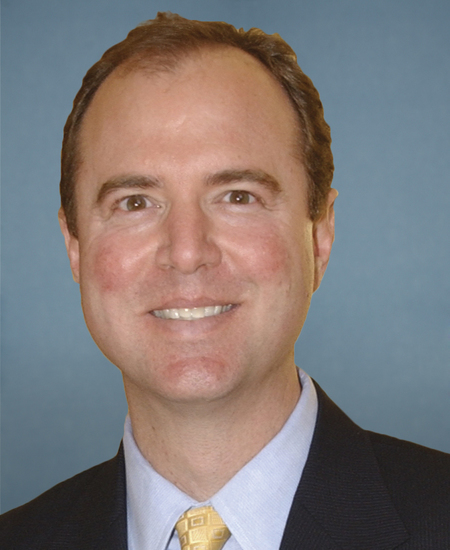
Adam B. Schiff
90% support rate
Top opponent
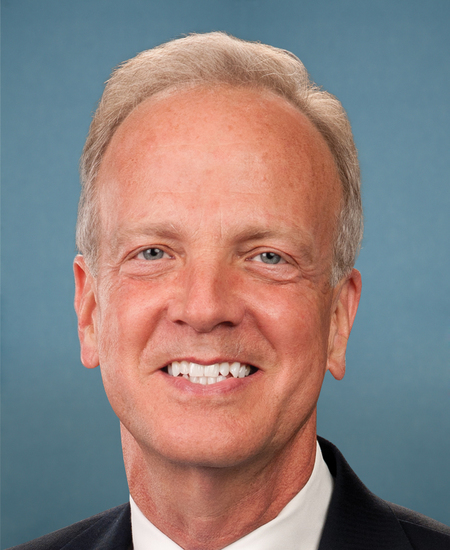
Jerry Moran
0% support rate
Ranked legislators
10
5 support · 5 oppose
Key legislators

Who's moving insurance in United States

Legislators moving insurance in United States
Legislator Party Stance Support rate Decisive votes
Adam B. Schiff
Adam B. Schiff Senate
D
Strong +
90% 10
Alex Padilla
Alex Padilla Senate
D
Strong +
90% 10
Amy Klobuchar
Amy Klobuchar Senate
D
Strong +
90% 10
Andy Kim
Andy Kim Senate
D
Strong +
90% 10
Angela D. Alsobrooks
Angela D. Alsobrooks Senate
D
Strong +
90% 10
Jerry Moran
Jerry Moran Senate
R
Strong −
0% 8
Ashley Moody
Ashley Moody Senate
R
Strong −
10% 10
Bernie Moreno
Bernie Moreno Senate
R
Strong −
10% 10
Bill Hagerty
Bill Hagerty Senate
R
Strong −
10% 10
Chuck Grassley
Chuck Grassley Senate
R
Strong −
10% 10
Showing 151–160 of 250 bills

All healthcare bills

in committee · United States · Senate Apr 10, 2025

S 1410: Find It Early Act

The Find It Early Act requires health insurance plans and government health programs to cover breast cancer screenings with no cost-sharing for certain high-risk individuals. It affects people at increased breast cancer risk (based on medical guidelines), with dense breast tissue, or determined by healthcare providers to need screening due to factors like age, race, ethnicity, or family history. The bill mandates coverage for various screening methods including mammograms, ultrasounds, MRI, and molecular imaging without frequency limitations. This applies to group health plans, Medicare, Medicaid, TRICARE, and VA health care, with most provisions taking effect January 1, 2026.
in committee · United States · House Feb 26, 2025

HR 1620: Finn Sawyer Access to Cancer Testing Act

This bill expands Medicare, Medicaid, and CHIP coverage for specific cancer diagnostic tests, directly affecting cancer patients enrolled in these programs. It requires Medicare to cover genetic tests like DNA sequencing (80% of cost) and limits testing frequency to once at diagnosis, once for recurrence, and as needed for treatment planning. Medicaid and CHIP must include these tests as mandatory coverage starting January 1, 2027, with states given flexibility to comply via state legislation. The bill also mandates a new HHS education program to inform doctors and the public about genomic testing for cancer care.
in committee · United States · House Jul 17, 2025

HR 4525: Right to FDA-Approved Medicines Act

This bill prohibits federal and state governments from restricting access to FDA-approved medicines. It guarantees individuals the right to obtain these medicines without coercion and allows healthcare providers (like doctors and pharmacists) to prescribe or refer for them. The law blocks governments from implementing rules that single out or hinder the sale, provision, or use of FDA-approved drugs, such as bans on specific medicines or barriers to patient access. It does not affect the FDA's drug approval process or existing health insurance coverage requirements.
Sub-Topics Insurance
died · United States · Senate Oct 9, 2025

S 2882: Continuing Appropriations and Extensions and Other Matters Act, 2026

This bill provides continuing appropriations for federal government operations through October 31, 2025, ensuring that agencies can maintain essential services without interruption. It authorizes funding for departments including Defense, Health and Human Services, Veterans Affairs, and Transportation, while extending specific programs like community health centers, Medicare services, and veterans' benefits. Key provisions include maintaining funding levels for existing programs, extending deadlines for various health and human services initiatives through October 2025, and providing specific amounts for programs like the WIC food assistance program. The bill also includes numerous extensions for programs that would otherwise expire, such as the National Health Service Corps and certain Medicare payment adjustments. This continuing resolution prevents government shutdowns by providing temporary funding until a full fiscal year 2026 appropriations bill can be enacted.
in committee · United States · Senate Jun 4, 2025

S 1941: Cure Hepatitis C Act of 2025

The Cure Hepatitis C Act of 2025 establishes a national program to eliminate hepatitis C virus in the United States by providing free treatment to people with hepatitis C who are in correctional facilities, enrolled in Medicaid or CHIP programs, receiving care through Indian Health Services, or without health insurance. The bill creates a subscription program where the Secretary of Health and Human Services will purchase and distribute hepatitis C treatments directly to covered populations without cost-sharing, while also establishing a national strategy, implementation plan, and public dashboard to monitor progress. It includes $5.5 billion for treatment access and $4.283 billion for public health activities like screening, diagnosis, and community outreach to improve hepatitis C treatment outcomes. The program requires participation from the Bureau of Prisons and Indian Health Service, and aims to coordinate care across health systems to eliminate hepatitis C virus.
in committee · United States · Senate Jul 24, 2025

S 2466: Senior Savings Protection Act

This bill extends and increases federal funding for programs supporting seniors, specifically targeting low-income older adults. It allocates $15 million annually (fiscal years 2026-2030) for State Health Insurance Assistance Programs and Area Agencies on Aging, $5 million for Aging and Disability Resource Centers, and $15 million for coordinating benefits outreach. These funds directly support existing services that help seniors navigate health insurance, access benefits, and receive assistance with program enrollment. The bill makes no changes to eligibility or program structure, solely adding specified funding levels to current federal programs.
Sub-Topics Insurance Tags Seniors
in committee · United States · House Jun 11, 2025

HR 3907: ENROLL Act of 2025

The ENROLL Act of 2025 modifies the Affordable Care Act's navigator program, which helps people enroll in health insurance. It requires states and federal exchanges to award grants based on an entity’s capacity to provide services, not whether they cover non-qualified health plans, and ensures at least one annual grant goes to community-focused nonprofits. The bill expands navigators’ duties to include explaining Medicaid and children’s health insurance programs (CHIP) in clear language, mandates in-person assistance options, and allocates $100 million annually from insurer user fees for federal exchanges starting in 2026. These changes directly affect navigators, health insurance exchanges, and consumers seeking coverage under the Affordable Care Act.
in committee · United States · Senate May 21, 2025

S 1847: Association Health Plans Act

S 1847, the Association Health Plans Act, redefines how certain employer groups can form health insurance plans. It allows associations of employers (even across industries) or groups of self-employed individuals to create group health plans, provided they meet specific requirements: at least 51 total employees after aggregation, 2 years of existence, no health-based discrimination, and 75% employer control of the governing board. Self-employed individuals meeting work-hour and business criteria (e.g., 10+ hours/week) can join as both employers and plan participants. The bill requires plans to use community-based pricing (with limited employer-specific adjustments) and prohibits denying coverage or charging more due to health status or pre-existing conditions. This primarily affects small businesses, industry associations, and self-employed workers seeking affordable group health coverage.
Sub-Topics Insurance
in committee · United States · Senate Jul 23, 2025

S 2420: No Surprises Act Enforcement Act

This bill strengthens enforcement of the No Surprises Act by increasing penalties for health insurance plans and providers that violate balance billing rules, raising fines from $100 to $10,000 per violation. It also adds new penalties for late payments after Independent Dispute Resolution (IDR) decisions, requiring plans to pay three times the difference plus interest for failing to make timely payments. The bill requires regular reporting to Congress about audits, enforcement actions, and penalties related to surprise billing violations. These changes directly affect health insurance companies, group health plans, and medical providers who don't participate in insurance networks.
Sub-Topics Insurance
in committee · United States · Senate Dec 9, 2025

S 3400: Ally’s Act

S 3400, the Ally’s Act, requires most private health insurance plans and group health plans to cover hearing implants and related services for eligible individuals. It mandates coverage for cochlear implants, bone conduction devices, maintenance, repairs, upgrades every five years, hearing assessments, pre- and post-surgery care, and aural rehabilitation. Insurers cannot impose stricter cost-sharing or treatment limits for these services than for other medical care, and cannot deny coverage based on medical necessity determinations by a physician or audiologist. The law applies to plans covering individuals with hearing loss (including unilateral or bilateral) who meet medical criteria, effective for plan years starting January 1, 2026.
Sub-Topics Insurance
Showing 151 to 160 of 250 bills
Previous 1 … 15 16 17 … 25 Next