Issue · Environment

Environment

Every environment bill, vote, and legislator stance in United States, automatically classified by Maddy, our AI policy reader.

Total bills
2,003
119th Congress
Top supporter
Aisha Wahab
100% support rate
Top opponent
Marsha Blackburn
11% support rate
Ranked legislators
10
5 support · 5 oppose
Key legislators

Who's moving environment in United States

Legislators moving environment in United States
Legislator Party Stance Support rate Decisive votes
Aisha Wahab
Aisha Wahab House · District 14
D
Strong +
100% 7
Everton Blair Jr.
Everton Blair Jr. House · District 13
D
Strong +
89% 9
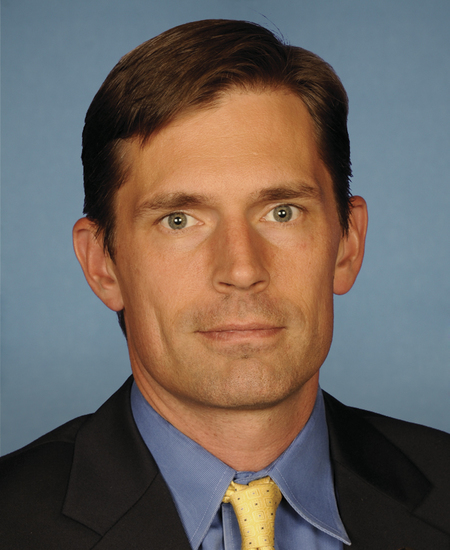
Martin Heinrich
Martin Heinrich Senate
D
Strong +
84% 37
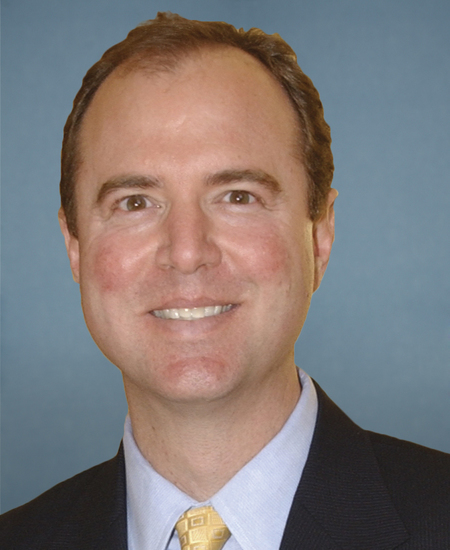
Adam B. Schiff
Adam B. Schiff Senate
D
Support
79% 53
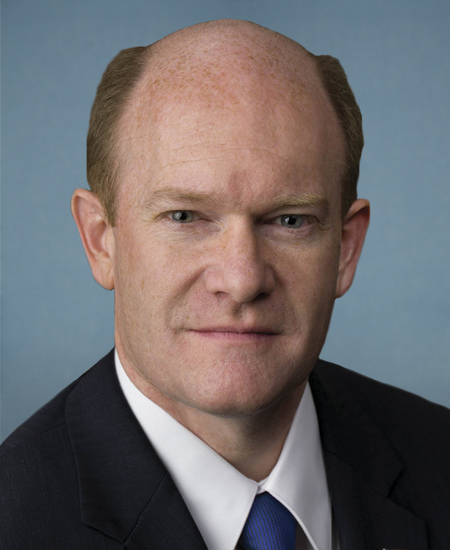
Christopher A. Coons
Christopher A. Coons Senate
D
Support
79% 52
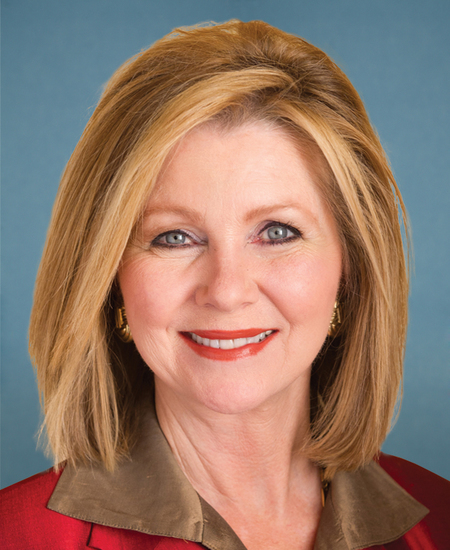
Marsha Blackburn
Marsha Blackburn Senate
R
Strong −
11% 36
Ted Budd
Ted Budd Senate
R
Strong −
20% 40
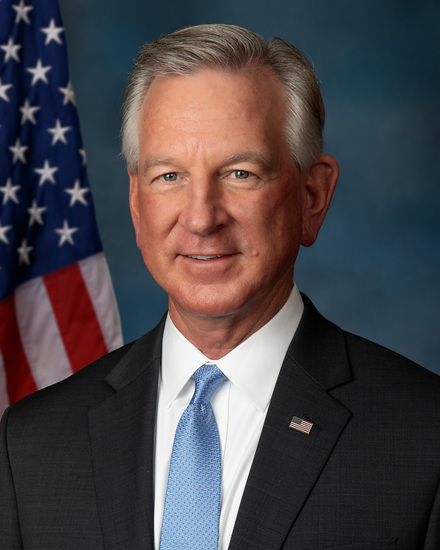
Tommy Tuberville
Tommy Tuberville Senate
R
Oppose
21% 53
Bill Cassidy
Bill Cassidy Senate
R
Oppose
22% 54
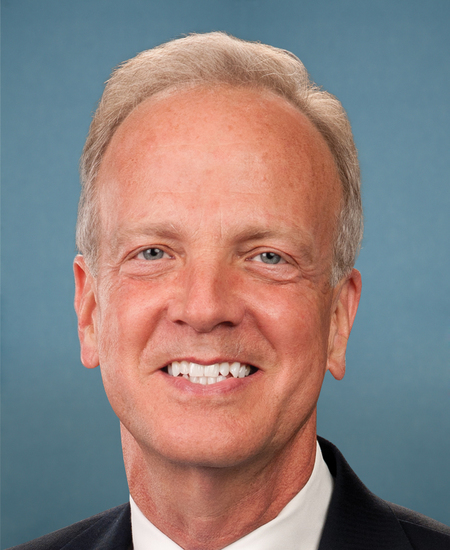
Jerry Moran
Jerry Moran Senate
R
Oppose
23% 53
Showing 861–870 of 2,003 bills

All environment bills

in committee · United States · House Sep 16, 2025

HR 5392: Northern Arizona Protection Act

HR 5392, the Northern Arizona Protection Act, nullifies President Biden's August 2023 proclamation creating the Baaj Nwaavjo I'tah Kukveni-Ancestral Footprints of the Grand Canyon National Monument in Arizona. It prohibits the future designation or extension of national monuments within the specific area shown on the August 2023 map without explicit congressional approval. This bill directly affects federal land management in that region by blocking monument designations under the Antiquities Act without Congress authorizing them.
Sub-Topics Public Lands
in committee · United States · House Jul 18, 2025

HR 4482: Stop NOAA Closures Act

HR 4482, the Stop NOAA Closures Act, imposes a temporary moratorium on closing, suspending, or limiting access to National Oceanic and Atmospheric Administration (NOAA) facilities, effective until a report is submitted to Congress by January 21, 2029. The bill requires NOAA and the General Services Administration to submit detailed reports to specific congressional committees before any future facility closure, suspension, lease termination, or consolidation - outlining cost-benefit analyses, service impacts, and justification. Exceptions apply only for emergencies posing immediate threats to personnel safety. This bill directly affects NOAA's facility management decisions and mandates congressional oversight for future closures.
passed · United States · House Sep 17, 2026

HR 3857: Snow Water Supply Forecasting Program Reauthorization Act of 2026

This bill reauthorizes the federal Snow Water Supply Forecasting Program through 2031, updating its focus to integrate advanced technologies for more accurate snowpack measurement and water supply forecasting. It specifically requires the use of commercially available technologies like airborne laser altimetry, imaging spectroscopy, and physics-based modeling to provide real-time, spatially complete data. The program must now emphasize activities that improve forecasting responsiveness to changing conditions, integrate data with water management decisions (including interstate disputes), and build partner capacity in key river basins. The changes directly affect federal water management agencies and Western states relying on snowmelt for water supply planning.
Sub-Topics Water Quality
in committee · United States · Senate Apr 2, 2025

S 1254: A bill to amend the Aquifer Recharge Flexibility Act to clarify a provision relating to conveyances for aquifer recharge purposes.

This bill clarifies rules for using existing water infrastructure to recharge aquifers. It allows states, tribes, public entities, or non-profits to use pre-existing rights-of-way, easements, or permits (like canals built before 1976) for aquifer recharge without new federal permits, provided they give 30 days' notice to the Bureau of Land Management. Non-profits using these existing resources are exempt from paying extra rent to the federal government, but for-profit entities or uses are not. The bill also waives certain environmental regulations (like the Clean Water Act) for these specific recharge activities and permits modifying existing infrastructure.
in committee · United States · Senate Feb 4, 2026

S 446: A bill to prohibit Big Cypress National Preserve from being designated as wilderness or as a component of the National Wilderness Preservation System, and for other purposes.

This bill prohibits Big Cypress National Preserve from ever being designated as wilderness or added to the National Wilderness Preservation System. It directly affects the preserve by preventing any future federal action that would change its status to wilderness. The key provision is a clear legal ban on such designations, ensuring the preserve remains outside the wilderness system. The bill does not create new management rules but blocks a specific potential change to its legal classification.
in committee · United States · House Jul 23, 2025

HR 4708: Spotted Lanternfly Research and Development Act

This bill adds "spotted lanternfly control" as a priority research area under federal agricultural funding, authorizing grants to develop and share tools for combating the invasive spotted lanternfly pest (Lycorma delicatula). It directly affects farmers, agricultural communities, and state departments of agriculture in states like Pennsylvania where the pest causes significant crop damage. The key provision amends existing law to allow research grants focused on creating effective treatments and management strategies for the pest. The bill also extends the funding period for all high-priority research initiatives through 2030.
Tags Agriculture
in committee · United States · Senate Jan 29, 2025

S 324: Smarter Weather Forecasting for Water Management, Farming, and Ranching Act of 2025

This bill, S 324, amends the Food Security Act to fund two pilot projects improving longer-range weather forecasts for water management and agriculture. It directly affects water managers in the western U.S. and farmers/ranchers nationwide by targeting specific scientific challenges like predicting mountain precipitation, atmospheric rivers, soil moisture, and seasonal weather patterns. Key mechanisms include authorizing $45 million annually (2025-2029) for NOAA to establish these pilots, requiring collaboration with universities and NOAA centers, and setting measurable goals for forecast accuracy. The projects must address defined scientific gaps, such as improving model resolution for mountain terrain or agricultural drought forecasting, with authority ending after five years.
Tags Agriculture
in committee · United States · House Jun 4, 2025

HR 3703: Excess Urban Heat Mitigation Act of 2025

The Excess Urban Heat Mitigation Act of 2025 creates a federal grant program to fund heat-reduction projects in communities most affected by urban heat islands, primarily low-income neighborhoods (defined as census tracts with ≥20% poverty rate) and areas with higher heat exposure for communities of color. It authorizes $30 million annually for grants to states, cities, tribes, or nonprofits for projects like planting native trees, installing cool roofs/pavements, building shaded transit stops, and creating community cooling centers. Grants require community engagement plans to ensure equitable participation and prioritize projects in underserved areas (75% of funds must target "covered census tracts"). The program mandates annual reporting to Congress and includes oversight to evaluate project success in reducing heat impacts.
in committee · United States · House Apr 18, 2025

HR 2185: Mink VIRUS Act

HR 2185, the Mink VIRUS Act, prohibits fur farming of mink in the U.S. beginning one year after enactment (Section 2(a)). It requires painless mink termination methods meeting federal euthanasia standards and AVMA guidelines (Section 2(b)), with civil penalties of up to $10,000 per violation. The bill establishes a USDA payment program (Section 3) to compensate fur farm owners for compliance costs and the market value of their mink operations (valued as of the day before enactment), subject to restrictions on fund use and permanent land easements banning future fur farming. The law directly affects mink fur farm owners and operators, ending commercial mink farming while providing financial transition support.
in committee · United States · House Oct 28, 2025

HR 689: FREE Act

The FREE Act (HR 689) requires federal agencies to replace slow, discretionary permitting processes with a streamlined "permitting by rule" system for certain permits. Under this system, applicants would certify compliance with written standards (instead of lengthy agency reviews) and receive a permit automatically after 180 days if the agency doesn’t act. Agencies must first report on their current permitting processes and identify which permits can transition to this model, with deadlines for submissions and implementation. This directly affects federal agencies issuing permits (e.g., environmental or construction permits) and applicants seeking them, aiming to reduce delays and costs while allowing agencies to audit and enforce compliance after permits are granted.
Showing 861 to 870 of 2,003 bills
Previous 1 … 86 87 88 … 201 Next