Issue · Environment

Environment

Every environment bill, vote, and legislator stance in United States, automatically classified by Maddy, our AI policy reader.

Total bills
1,989
119th Congress
Top supporter
Aisha Wahab
100% support rate
Top opponent
Marsha Blackburn
11% support rate
Ranked legislators
10
5 support · 5 oppose
Key legislators

Who's moving environment in United States

Legislators moving environment in United States
Legislator Party Stance Support rate Decisive votes
Aisha Wahab
Aisha Wahab House · District 14
D
Strong +
100% 7
Everton Blair Jr.
Everton Blair Jr. House · District 13
D
Strong +
89% 9
Martin Heinrich
Martin Heinrich Senate
D
Strong +
84% 37
Adam B. Schiff
Adam B. Schiff Senate
D
Support
79% 53
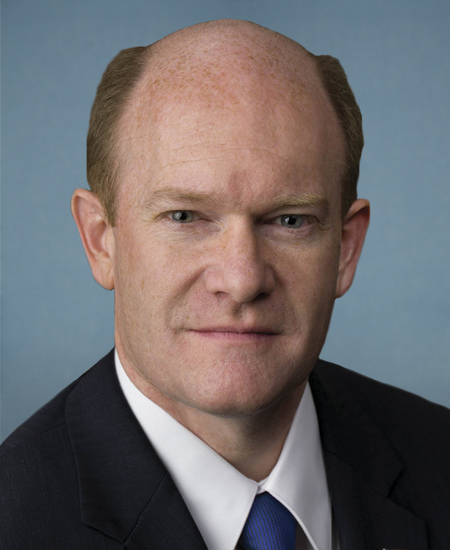
Christopher A. Coons
Christopher A. Coons Senate
D
Support
79% 52
Marsha Blackburn
Marsha Blackburn Senate
R
Strong −
11% 36
Ted Budd
Ted Budd Senate
R
Strong −
20% 40
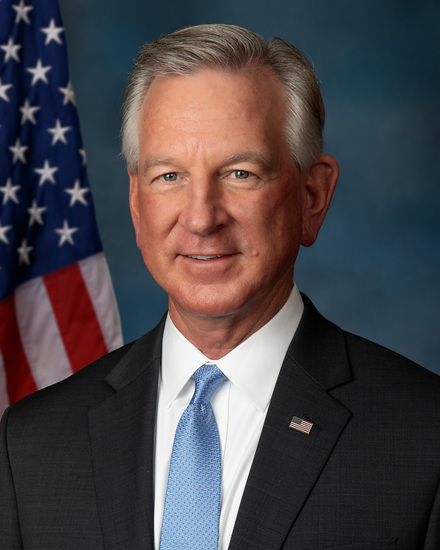
Tommy Tuberville
Tommy Tuberville Senate
R
Oppose
21% 53
Bill Cassidy
Bill Cassidy Senate
R
Oppose
22% 54
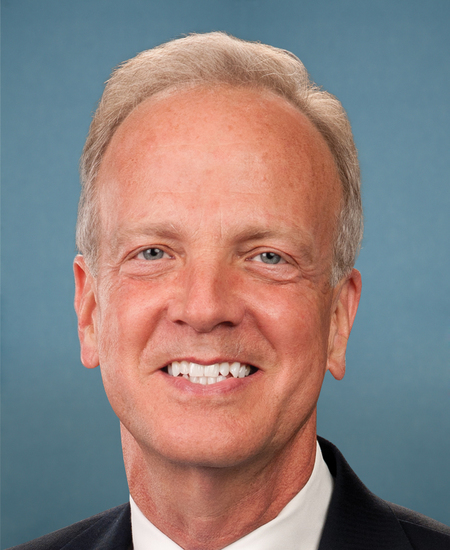
Jerry Moran
Jerry Moran Senate
R
Oppose
23% 53
Showing 771–780 of 1,989 bills

All environment bills

passed · United States · House Jul 15, 2026

HR 4090: Critical Mineral Dominance Act

HR 4090, the Critical Mineral Dominance Act, aims to boost U.S. production of hardrock minerals (like rare earths, base metals, and gemstones) to strengthen domestic supply chains and national security. It requires the Secretary of the Interior to submit a 90-day report analyzing the economic impact of mineral import reliance, prioritize expedited permitting for mining projects on federal land, and review regulations to remove barriers to mineral development. The bill also mandates annual reports identifying federal lands with mineral potential and accelerates geologic mapping to locate new deposits. These provisions directly affect mining companies, federal land managers, and supply chain security efforts, focusing on concrete policy actions rather than outcomes.
Sub-Topics Forestry Public Lands
in committee · United States · House Sep 10, 2025

HR 5273: Broadband Competition and Efficient Deployment Act

This bill exempts certain broadband infrastructure projects from federal environmental (NEPA) and historic preservation (NHPA) review requirements. It specifically applies to projects involving the placement, construction, or modification of telecommunications facilities on "eligible support infrastructure" (like existing utility poles or buildings) that require Federal Communications Commission (FCC) approval. The law removes these projects from being considered "major federal actions" under NEPA and "undertakings" under NHPA, streamlining the permitting process for broadband providers. This directly affects broadband companies, local governments, and tribes that handle infrastructure permits, by reducing federal review steps for FCC-approved installations on existing communication-supporting structures.
Sub-Topics Conservation Broadband Access Telecommunications Tags Rural Communities
in committee · United States · House Feb 26, 2025

HJRES 62: Providing for congressional disapproval under chapter 8 of title 5, United States Code, of the rule submitted by the Bureau of Ocean Energy Management relating to "Protection of Marine Archaeological Resources".

H.J. Res. 62 is a congressional disapproval resolution targeting a rule issued by the Bureau of Ocean Energy Management (BOEM) concerning the protection of marine archaeological resources. If passed, it would nullify the rule (published in the Federal Register on September 3, 2024) and prevent it from taking effect, halting its implementation. This resolution directly affects the enforcement of BOEM’s protections for underwater archaeological sites, such as shipwrecks or ancient artifacts, by removing the regulatory framework governing activities in those areas. The mechanism relies on Chapter 8 of Title 5, U.S. Code, which allows Congress to block federal agency rules through formal disapproval.
in committee · United States · House Feb 11, 2025

HR 1200: Freight RAILCAR Act of 2025

This bill creates a 10% tax credit for businesses that modernize or replace freight railcars, directly affecting railcar owners and manufacturers. To qualify, railcars must meet an 8% improvement standard in capacity or fuel efficiency, be built or modernized after enactment, and replace two scrapped railcars. The credit is limited to 1,000 qualified railcars per business annually, with reporting requirements for the Treasury to track claimed credits, scrapped railcars, and new railcar production. The credit applies to railcars placed in service after December 2024, ending three years after enactment.
Sub-Topics Tax Credits Freight Rail
in committee · United States · House Sep 10, 2026

HR 3717: Golden Mussel Eradication and Control Act of 2025

This bill establishes a federal program to address the invasive golden mussel, which threatens water infrastructure and ecosystems. It directs the Task Force to develop a demonstration program focused on research, control methods, and early warning systems for infested areas like the Sacramento-San Joaquin Delta, with a $15 million annual funding authorization from 2026-2030. Key provisions include grants for developing technologies to remove mussels from water intakes, pipelines, and boat hulls, plus guidelines for watercraft inspections to prevent spread. The program requires collaboration with states, ports, and research institutions to share control strategies and coordinate efforts.
in committee · United States · Senate Oct 30, 2025

S 3090: No Nuclear Testing Act of 2025

S 3090, the No Nuclear Testing Act of 2025, prohibits using federal funds for any explosive nuclear weapons test that produces a yield (actual detonation). It blocks funding for fiscal year 2026 and any available pre-2026 funds, preventing agencies from conducting or preparing for such tests. The bill explicitly allows nuclear stockpile stewardship activities that comply with the existing zero-yield standard. This directly affects U.S. defense agencies and programs seeking to conduct nuclear explosive tests using federal appropriations.
in committee · United States · Senate Jan 23, 2025

S 220: Ending Presidential Overreach on Public Lands Act

The Ending Presidential Overreach on Public Lands Act would amend the Antiquities Act to require Congress, not the President, to expressly authorize the creation or expansion of national monuments. This change directly affects the President's current authority under the Antiquities Act to establish monuments via executive proclamation. The key provision explicitly states that national monuments can only be established or extended through specific congressional legislation, removing the President's unilateral power. As a result, future monument designations would require new laws passed by Congress, shifting decision-making authority from the executive branch to lawmakers.
Sub-Topics Public Lands
in committee · United States · House May 20, 2026

HR 7129: Water Power Research and Development Reauthorization Act

This bill reauthorizes federal funding for water power research and development (including hydropower and marine energy) through 2030, increasing annual funding to $300 million - $200 million for marine energy and $100 million for hydropower - up from prior levels. It adds new requirements such as advancing U.S. manufacturing of marine energy components through university-industry partnerships, improving hydropower licensing by compiling environmental data, and integrating cybersecurity into research. The bill also mandates workforce development programs to train future professionals and requires annual congressional briefings on program progress. These changes directly affect the Department of Energy, research institutions, and industries working on water power technologies.
in committee · United States · House Feb 11, 2026

HR 5497: Apostle Islands National Park and Preserve Act

This bill renames "Apostle Islands National Lakeshore" as "Apostle Islands National Park and Preserve," creating two distinct areas within the same unit. The Park (with stricter rules) prohibits hunting/trapping except under tribal agreements, while the Preserve maintains existing hunting, fishing, and trapping rules from before the bill. Boundaries are defined by a specific map, and the National Park Service must add interpretive signage about regional history and tribal connections at visitor centers. Tribal treaty rights to hunt, fish, and gather remain fully protected under this law.
Sub-Topics Parks & Recreation
in committee · United States · House Feb 4, 2026

HR 3699: Energy Choice Act

This bill prevents state or local governments from banning or restricting energy connections (like installation, modification, or access) based on the type or source of energy, such as electricity, natural gas, or renewable fuels. It directly affects consumers choosing energy providers and energy companies seeking to offer services. The key provision prohibits local laws, regulations, or policies that limit energy services sold in interstate commerce, covering all energy types listed in the bill’s definitions. It does not create new programs but limits regulatory authority at the state or local level. The law aims to ensure open access to diverse energy sources without source-based restrictions.
Sub-Topics Oil & Gas
Showing 771 to 780 of 1,989 bills
Previous 1 … 77 78 79 … 199 Next