Issue · Environment

Environment

Every environment bill, vote, and legislator stance in United States, automatically classified by Maddy, our AI policy reader.

Total bills
1,978
119th Congress
Top supporter
Aisha Wahab
100% support rate
Top opponent
Marsha Blackburn
11% support rate
Ranked legislators
10
5 support · 5 oppose
Key legislators

Who's moving environment in United States

Legislators moving environment in United States
Legislator Party Stance Support rate Decisive votes
Aisha Wahab
Aisha Wahab House · District 14
D
Strong +
100% 7
Everton Blair Jr.
Everton Blair Jr. House · District 13
D
Strong +
89% 9
Martin Heinrich
Martin Heinrich Senate
D
Strong +
84% 37
Adam B. Schiff
Adam B. Schiff Senate
D
Support
79% 53
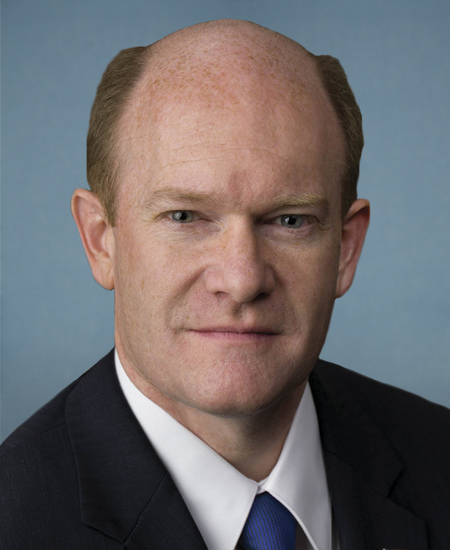
Christopher A. Coons
Christopher A. Coons Senate
D
Support
79% 52
Marsha Blackburn
Marsha Blackburn Senate
R
Strong −
11% 36
Ted Budd
Ted Budd Senate
R
Strong −
20% 40
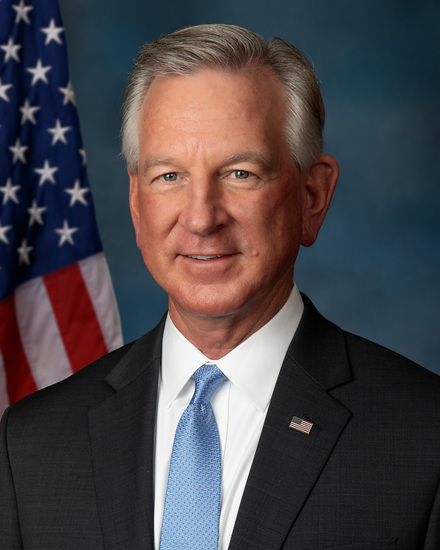
Tommy Tuberville
Tommy Tuberville Senate
R
Oppose
21% 53
Bill Cassidy
Bill Cassidy Senate
R
Oppose
22% 54
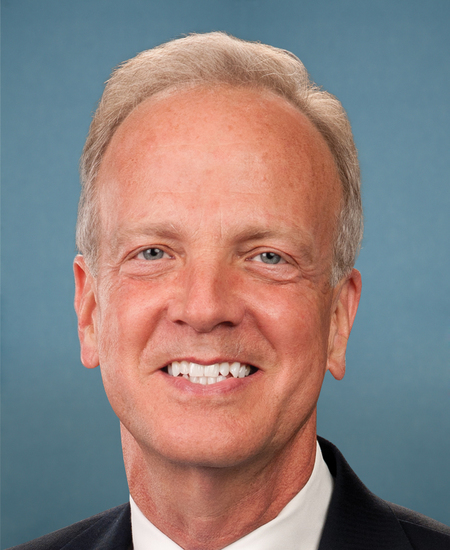
Jerry Moran
Jerry Moran Senate
R
Oppose
23% 53
Showing 481–490 of 1,978 bills

All environment bills

in committee · United States · Senate Mar 4, 2026

S 3986: Maryland Whole Watershed Program Federal Partnership Act of 2026

This bill authorizes the Chesapeake Bay Program Office to join as an advisory member of state watershed management teams, including Maryland's Whole Watershed Program and similar programs in other states. The legislation allows the office to coordinate with state and local governments and federal agencies while providing technical assistance and financial resources for projects within the Chesapeake Bay watershed. By formalizing this advisory role, the bill enables the federal office to participate more directly in state-level watershed planning and implementation efforts.
Sub-Topics Water Quality
passed · United States · House Sep 17, 2026

HR 7831: License to Drill Act

This bill, known as the License to Drill Act, extends the deadline for collecting fees on new oil and gas drilling permit applications from 2026 to 2037 under the Mineral Leasing Act. It requires the Secretary of the Interior to continue collecting these fees for each new permit application throughout the extended period. The bill also directs that all fees collected between fiscal years 2027 and 2037 be transferred to the BLM Permit Processing Improvement Fund instead of being distributed as previously required. These changes affect the Bureau of Land Management's administrative process for managing oil and gas leasing on federal lands.
Sub-Topics Oil & Gas Public Lands
in committee · United States · Senate Apr 15, 2026

S 3947: REWIRE Act

This bill, known as the REWIRE Act, would streamline the process for upgrading power lines by exempting certain transmission upgrades from detailed environmental reviews when they occur within existing rights-of-way. It specifically allows utilities to replace or upgrade conductors and install new grid technologies without preparing environmental impact statements, provided the work stays within previously disturbed land or current corridors. The legislation also directs the Federal Energy Regulatory Commission to create rules that improve financial returns for companies investing in advanced transmission materials like carbon fiber cables. Additionally, the bill establishes a federal modeling program to better predict grid performance and creates a technical assistance clearinghouse to help utilities implement these new technologies.
in committee · United States · Senate Mar 5, 2026

S 4021: Promoting Reduction of Emissions through Landscaping Equipment Act

This bill creates a federal tax credit for businesses that purchase electric lawn, garden, and landscaping equipment that produces zero emissions. The credit allows eligible businesses to claim 40 percent of the equipment's cost as a tax reduction, with annual limits of $25,000 and a 10-year aggregate cap of $100,000. Covered equipment includes electric-powered mowers, trimmers, and other landscaping tools powered by electricity, batteries, or solar energy, as well as batteries and generators used to charge them. The credit applies to equipment placed in service after December 31, 2024, and expires five years after the bill is enacted.
in committee · United States · Senate Feb 26, 2026

S 3926: E-Access Act

The Access to Consumer Energy Information Act requires electric and gas utilities to provide customers with easy access to their energy usage data and billing information in a standardized, machine-readable format. The bill directs the Department of Energy and Federal Energy Regulatory Commission to create guidelines ensuring consumers can securely share this data with third-party apps and services to help manage energy consumption and costs. Utilities must allow customers to install software on their energy meters and cannot discriminate against third-party developers seeking access to this data. The legislation also authorizes funding to help states implement these data-sharing programs and requires a report on using meter data for wholesale electricity market settlements.
signed · United States · Senate Dec 26, 2025

S 2878: Great Lakes Fishery Research Reauthorization Act

Great Lakes Fishery Research Reauthorization Act This act reauthorizes through FY2030 research and monitoring conducted by the U.S. Geological Survey in support of binational fisheries within the Great Lakes Basin. This research is completed through the Great Lakes Science Center and may involve invasive species science, studies on fishery resources, and the use of biological assessment tools and other capabilities to support fishery management decisions.
in committee · United States · House Dec 17, 2025

HR 6787: Clean Competition Act

The Clean Competition Act (HR 6787) creates a carbon border adjustment mechanism that imposes fees on imported goods and domestic production based on their carbon intensity relative to U.S. industry averages. The bill requires covered entities to report greenhouse gas emissions and production data annually, calculates charges based on how much a facility's emissions exceed a baseline percentage that decreases over time, and provides rebates for exported goods. It includes provisions for carbon removal credits, establishes funding programs to support domestic industrial decarbonization through grants and contracts, and creates a framework for international 'carbon club' agreements with trading partners that meet specific environmental and labor standards.
Sub-Topics Climate Change
in committee · United States · Senate Feb 26, 2026

S 3939: Chesapeake WATERS Act

This bill reauthorizes the Chesapeake Bay Office of the National Oceanic and Atmospheric Administration (NOAA) and establishes its role as the primary NOAA representative in the Chesapeake Bay watershed. The legislation creates a new Director position with expertise in Chesapeake Bay research and resource management, and expands the office's responsibilities to include coastal hazards, climate change, and education initiatives. Key provisions authorize programs for scientific peer review, coastal observing systems, education and training grants, and habitat restoration projects focused on oysters, blue crabs, and other living marine resources. The bill also requires biennial reports to Congress on the office's activities and progress in protecting and restoring the Chesapeake Bay ecosystem.
in committee · United States · House Mar 5, 2026

HR 7821: Promoting Reduction of Emissions through Landscaping Equipment Act

This bill creates a business tax credit for companies that purchase zero-emission electric lawn, garden, and landscaping equipment. The credit equals 40 percent of the equipment's cost, with annual limits of $25,000 and a ten-year aggregate cap of $100,000 per business. Eligible equipment includes electric-powered mowers, trimmers, and other landscaping tools powered by solar, batteries, fuel cells, or grid electricity, as well as batteries and generators used to power them. The credit applies to equipment placed in service after December 31, 2024, and expires five years after the bill is enacted.
in committee · United States · Senate Mar 12, 2026

S 4091: Habitat Connectivity on Working Lands Act of 2026

This bill, titled the Habitat Connectivity on Working Lands Act of 2026, amends the Food Security Act of 1985 to expand federal conservation funding and technical support for wildlife habitat connectivity and migration corridors on private working lands. It defines native big game species such as deer, elk, and pronghorn to ensure conservation efforts prioritize these animals and increases payment limits for land enrolled in the Conservation Reserve Program. The legislation also authorizes cost-share payments for habitat restoration projects on grasslands and mandates that conservation practice standards include nonstructural methods like virtual fencing to manage livestock distribution while protecting wildlife corridors. Additionally, it directs the Secretary of Agriculture to provide technical assistance for implementing these practices and establishes virtual fencing as a high-priority research area to study its effects on natural resources and wildlife habitats.
Showing 481 to 490 of 1,978 bills
Previous 1 48 49 50 198 Next