Issue · Energy

Energy (Transmission)

Every energy bill, vote, and legislator stance in United States, automatically classified by Maddy, our AI policy reader.

Total bills
36
119th Congress
Top supporter
Aaron Bean
100% support rate
Top opponent
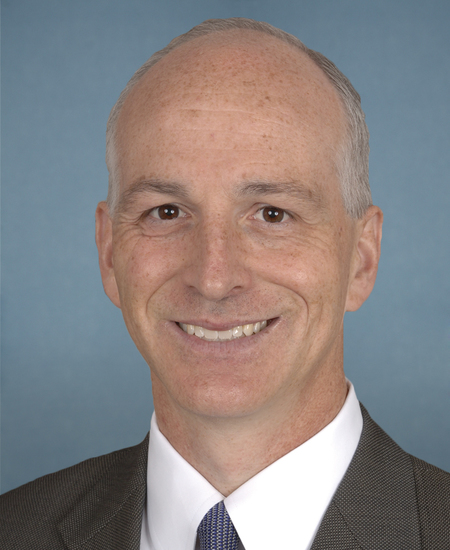
Adam Smith
0% support rate
Ranked legislators
10
5 support · 5 oppose
Key legislators

Who's moving transmission in United States

Legislators moving transmission in United States
Legislator Party Stance Support rate Votes
Aaron Bean
Aaron Bean House · District 4
R
Strong +
100% 3
Abraham J. Hamadeh
Abraham J. Hamadeh House · District 8
R
Strong +
100% 3
Addison P. McDowell
Addison P. McDowell House · District 6
R
Strong +
100% 3
Adrian Smith
Adrian Smith House · District 3
R
Strong +
100% 3
Andrew Ogles
Andrew Ogles House · District 5
R
Strong +
100% 3
Adam Smith
Adam Smith House · District 9
D
Strong −
0% 3
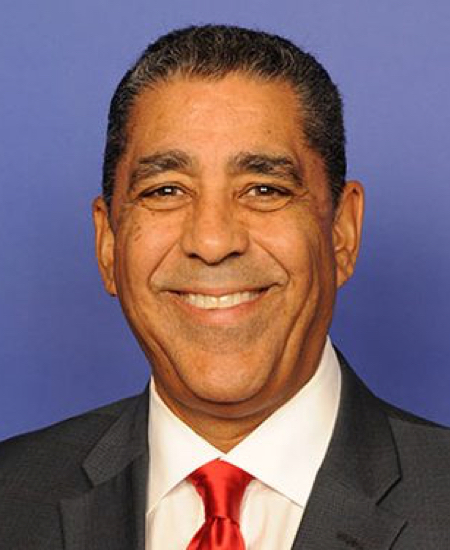
Adriano Espaillat
Adriano Espaillat House · District 13
D
Strong −
0% 3
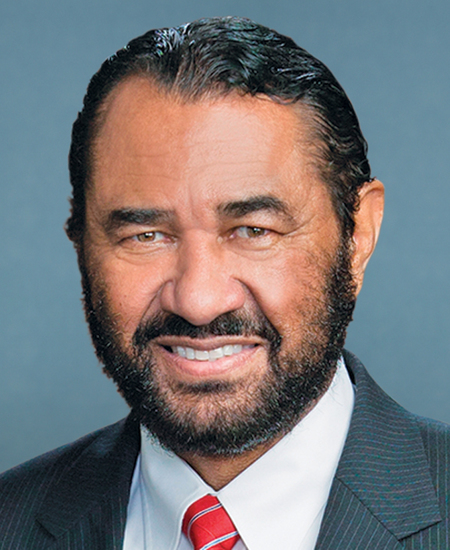
Al Green
Al Green House · District 9
D
Strong −
0% 3
Alexandria Ocasio-Cortez
Alexandria Ocasio-Cortez House · District 14
D
Strong −
0% 3
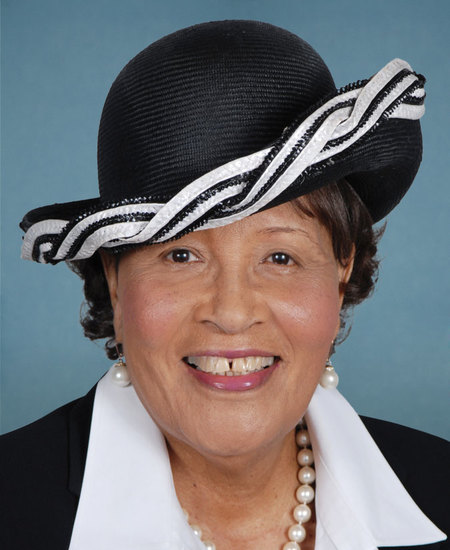
Alma S. Adams
Alma S. Adams House · District 12
D
Strong −
0% 3
Showing 1–10 of 36 bills

All energy bills

in committee · United States · House Sep 4, 2026

HR 10302: Certainty in Litigation for Electric Asset Reliability (CLEAR) Act of 2026

The Certainty in Litigation for Electric Asset Reliability (CLEAR) Act of 2026 amends the Federal Power Act to streamline the permitting process for new electric transmission facilities. It designates the Federal Energy Regulatory Commission as the lead agency for coordinating federal authorizations and requires agencies to consolidate their review records into a single joint decision document. Additionally, the bill standardizes legal challenges by allowing parties to seek rehearing or judicial review of these approvals only through the procedures established in Section 313 of the Federal Power Act.
in committee · United States · Senate Jul 30, 2026

S 5199: GRID Savings Act of 2026

The GRID Savings Act of 2026 directs the Federal Energy Regulatory Commission to create new rules for connecting large industrial electricity users to the national power grid. This legislation specifically targets new or expanded nonresidential loads with a peak demand of at least 150 megawatts, aiming to clarify how costs for grid upgrades are assigned. Under the proposed framework, the agency must establish procedures to ensure that facilities built solely for a specific large customer are paid for entirely by that customer, while shared grid improvements are allocated fairly among all users. The bill also allows these large customers to voluntarily pay for regional transmission projects in exchange for guaranteed access rights and includes an option for them to construct their own necessary grid connections. Additionally, the law excludes the Electric Reliability Council of Texas from these requirements and does not change how existing grid plans are managed.
in committee · United States · Senate Jul 22, 2026

S 5074: Enhancing Electric Grid Resilience Act

The Enhancing Electric Grid Resilience Act modifies the Federal Power Act to establish new rules for how costs are assigned to major new or upgraded interstate power transmission lines. This legislation directly affects electric utilities and the Federal Energy Regulatory Commission by requiring them to file tariffs that allocate expenses based on where the benefits of the project are felt, such as improved reliability and economic value. Specifically, the bill applies to new lines with at least 1,000 megawatts of capacity or upgrades adding 500 megawatts, ensuring that customers in the regions receiving these benefits share the costs proportionally. The law maintains the Commission's existing authority to handle cost allocations for transmission projects that do not meet these specific national significance criteria.
in committee · United States · House Jul 23, 2026

HR 9945: Lowering Energy Costs through Grid Modernization Act

The Lowering Energy Costs through Grid Modernization Act encourages utilities to upgrade power lines by replacing old conductors with more efficient ones that carry more electricity and generate less heat. To support these upgrades, the bill allows for faster federal environmental reviews and makes it easier to secure permits for projects that fit within existing land rights. Additionally, the legislation expands a federal tax credit to include these high-performance transmission upgrades, offering a higher credit rate for smaller projects or those meeting specific domestic content requirements.
in committee · United States · House Jul 22, 2026

HR 9843: Enhancing Electric Grid Resilience Act

The Enhancing Electric Grid Resilience Act modifies the Federal Power Act to establish a new rule for how costs are assigned for large-scale interstate or offshore transmission lines. Under this bill, the Federal Energy Regulatory Commission must require that the costs of these major projects be shared by customers based on the benefits they receive, such as improved reliability and resilience. The law specifically applies to new transmission lines with a capacity of at least 1,000 megawatts or upgrades that add 500 megawatts or more, ensuring that those who gain the most from the infrastructure contribute proportionally to its expense. This change aims to create a fairer cost-sharing framework for significant power grid projects while leaving the rules for smaller facilities unchanged.
in committee · United States · Senate Jul 16, 2026

S 5028: Ratepayer Protection Act

The Ratepayer Protection Act establishes a new federal standard to protect utility customers from high electricity bills caused by large industrial users. It defines "large-load customers" as non-residential entities with a peak power demand of 100 megawatts or more that primarily use electricity for data centers and computing. Under this bill, these customers must pay for the full cost of any power plant, transmission line, or distribution upgrade needed to serve them, including costs incurred if the customer leaves the utility early. Additionally, utilities are required to obtain financial guarantees from these large customers before making such infrastructure investments. State regulators must review and implement these rules within two years, unless a state has already enacted similar protections.
in committee · United States · Senate Jul 16, 2026

S 5008: Grid Connection and Congestion Management Act

The Grid Connection and Congestion Management Act requires Regional Transmission Organizations and Independent System Operators to offer a new type of interconnection service called basic access service for energy-only delivery. This service allows power generators to connect to the grid based on a streamlined evaluation that only checks if the facility can be safely connected, rather than guaranteeing that the power can be delivered to the market without interruptions. Generators accepting this service may face congestion-related curtailment, meaning their output could be reduced during times of high demand, but they are not required to pay for expensive transmission upgrades needed to eliminate those congestion issues. The law mandates that these grid operators update their rules within 180 days and establishes a process for generators to transition to other interconnection services later if they choose.
Sub-Topics Transmission
in committee · United States · Senate Jun 17, 2026

S 4806: POWER Up Act

The POWER Up Act expands the authority of the Federal Energy Regulatory Commission to oversee the connection of large electricity users to the national power grid. This change specifically affects facilities with a projected peak demand of 100 megawatts or more, requiring them to follow federal rules similar to those for power generators. The bill mandates that the Commission create standardized procedures for these connections within 18 months and includes provisions to ensure reliable power delivery. While the federal government gains oversight of these interconnections, the law explicitly preserves state and local control over building permits, retail rates, and local distribution systems.
in committee · United States · House Jul 21, 2026

HR 9339: Affordable Innovation for the Grid Act

The Affordable Innovation for the Grid Act directs the Department of Energy to study how artificial intelligence and high-performance computing can improve the reliability and efficiency of the national power grid. This assessment will specifically examine how these technologies can speed up the process of connecting new power sources to the grid and identify any technical or cybersecurity barriers to their use. Within one year of passing, the Department of Energy must submit a report to Congress outlining its findings and offering recommendations to overcome identified limitations and encourage wider adoption of these tools. The bill primarily affects federal agencies responsible for energy oversight and the electric power industry, aiming to gather data rather than immediately changing laws.
in committee · United States · House Jul 21, 2026

HR 9335: Advanced Transmission Technology to Reduce Rates Act

The Advanced Transmission Technology to Reduce Rates Act directs the Department of Energy to create a public clearinghouse that lists projects, funding options, and analyses regarding advanced transmission technologies. This resource is designed to assist electric utilities, transmission organizations, and state regulators in planning deployments and understanding the potential impacts on grid efficiency and costs. Additionally, the bill allows certain funding actions for these technologies to be exempt from standard environmental review requirements and requires the Department to establish best practices for reducing wildfire risks from power lines. Crucially, the legislation explicitly states that these measures are informational and do not grant the government authority to force utilities to adopt specific technologies or follow the new wildfire safety guidelines.
Showing 1 to 10 of 36 bills
1 2 3 4 Next