

Issue · Environment
Environment
Every environment bill, vote, and legislator stance in United States, automatically classified by Maddy, our AI policy reader.
Total bills
1,975
119th Congress
Top supporter
Martin Heinrich
84% support rate
Top opponent
Marsha Blackburn
11% support rate
Ranked legislators
10
5 support · 5 oppose
Key legislators
Who's moving environment in United States
| Legislator | Party | Stance | Support rate | Votes |
|---|---|---|---|---|

Martin Heinrich
Senate
|
D |
Strong +
|
84% | 215 |

Adam B. Schiff
Senate
|
D |
Support
|
79% | 231 |

Christopher A. Coons
Senate
|
D |
Support
|
79% | 229 |

Jeanne Shaheen
Senate
|
D |
Support
|
78% | 232 |

Alex Padilla
Senate
|
D |
Support
|
78% | 232 |

Marsha Blackburn
Senate
|
R |
Strong −
|
11% | 211 |

Ted Budd
Senate
|
R |
Strong −
|
20% | 220 |
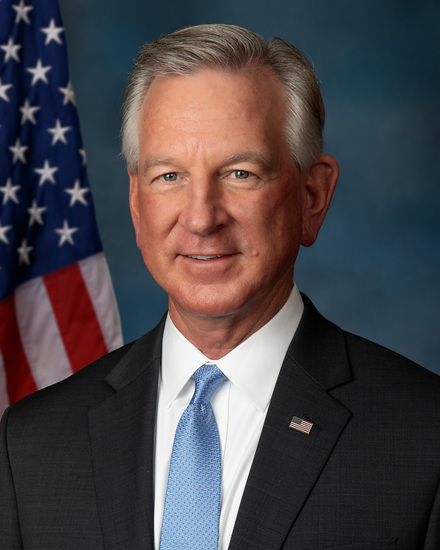
Tommy Tuberville
Senate
|
R |
Oppose
|
21% | 229 |

Bill Cassidy
Senate
|
R |
Oppose
|
22% | 221 |

Jerry Moran
Senate
|
R |
Oppose
|
23% | 228 |
Showing 1,811–1,820 of 1,975
bills
All environment bills
S 2179: Canyon’s Law
SJRES 47: A joint resolution providing for congressional disapproval under chapter 8 of title 5, United States Code, of the rule submitted by the Environmental Protection Agency relating to "California State Motor Vehicle and Engine and Nonroad Engine Pollution Control Standards; The 'Omnibus' Low NOx Regulation; Waiver of Preemption; Notice of Decision".
Topics
✗ EnergyOpposes EnergyBlocks EPA rule approving California's stricter vehicle emissions standards, weakening clean energy regulations and maintaining fossil fuel reliance.
✗ EnvironmentOpposes EnvironmentBill seeks to block EPA approval of California's stricter vehicle pollution standards (Omnibus Low NOx Regulation), preventing implementation of enhanced emissions controls that would strengthen environmental protections.
✗ TransportationOpposes TransportationBlocks EPA rule approving California's stricter vehicle pollution standards, weakening environmental regulations for transportation vehicles.
HR 65: Armed Forces Endangered Species Exemption Act
HR 2997: Green Climate Fund Authorization Act of 2025
Topics
✓ Budget & TaxesSupports Budget & TaxesBill authorizes $4 billion annually for Green Climate Fund, directly increasing federal government spending on climate initiatives.
✓ EnergySupports EnergyBill funds $4B for climate projects reducing emissions, prioritizing vulnerable groups. Directly advances renewable energy transition and reduces fossil fuel dependence through clean energy infrastructure investment.
✓ EnvironmentSupports EnvironmentAuthorizes $4B annually for GCF projects requiring GHG reduction or climate adaptation, prioritizing vulnerable communities and human rights per bill summary.
Sub-Topics
Climate Change
HRES 426: Providing for consideration of the joint resolution (S.J. Res. 13) providing for congressional disapproval under chapter 8 of title 5, United States Code, of the rule submitted by the Office of the Comptroller of the Currency of the Department of the Treasury relating to the review of applications under the Bank Merger Act; providing for consideration of the joint resolution (S.J. Res. 31) providing for congressional disapproval under chapter 8 of title 5, United States Code, of the rule submitted by the Environmental Protection Agency relating to "Review of Final Rule Reclassification of Major Sources as Area Sources Under Section 112 of the Clean Air Act"; and waiving a requirement of clause 6(a) of rule XIII with respect to consideration of certain resolutions reported from the Committee on Rules.
Sub-Topics
Air Quality
S 3506: Post-Wildfire Environmental Emergency Assistance Act
HR 6637: To advance bipartisan priorities.
Topics
✓ Budget & TaxesSupports Budget & TaxesImposes carbon tax to fund infrastructure/climate programs via RISE Trust Fund, aligning with fiscal responsibility and program funding priorities.
✓ EnergySupports EnergyCarbon tax on fossil fuels, funds climate infrastructure/retraining, establishes emissions goals to reduce fossil fuel dependence and advance clean energy solutions.
✓ EnvironmentSupports EnvironmentCarbon tax on emissions, RISE Trust Fund for climate projects, National Climate Commission - directly advances environmental protection and emissions reduction
✓ Labor & EmploymentSupports Labor & EmploymentBill explicitly allocates RISE Trust Fund for energy sector worker retraining, directly supporting labor transition and employment opportunities.
✓ TransportationSupports TransportationBill allocates carbon tax revenues to infrastructure projects via RISE Trust Fund, directly funding transportation infrastructure development as part of climate adaptation and infrastructure priorities.
S 2905: Pipeline Accountability Act of 2025
Topics
✓ EnvironmentSupports EnvironmentRequires rupture-mitigation valves and safety data disclosure to minimize pipeline spills, directly reducing environmental risks from ruptures and enhancing public transparency on pipeline safety.
✓ TransportationSupports TransportationBill enhances safety for pipeline infrastructure (a transportation infrastructure component) via rupture-mitigation valves and public safety data disclosure.
S 3839: Ratepayer Affordability and Transparency in Energy Act of 2026
Topics
✗ EnergyOpposes EnergyBlocks state renewable energy mandates, weakening clean energy standards through federal preemption.
✗ EnvironmentOpposes EnvironmentBlocks state renewable energy mandates, preventing states from enforcing clean energy targets and weakening environmental protections.