Issue · Environment

Environment

Every environment bill, vote, and legislator stance in United States, automatically classified by Maddy, our AI policy reader.

Total bills
1,975
119th Congress
Top supporter
Martin Heinrich
84% support rate
Top opponent
Marsha Blackburn
11% support rate
Ranked legislators
10
5 support · 5 oppose
Key legislators

Who's moving environment in United States

Legislators moving environment in United States
Legislator Party Stance Support rate Votes
Martin Heinrich
Martin Heinrich Senate
D
Strong +
84% 215
Adam B. Schiff
Adam B. Schiff Senate
D
Support
79% 231
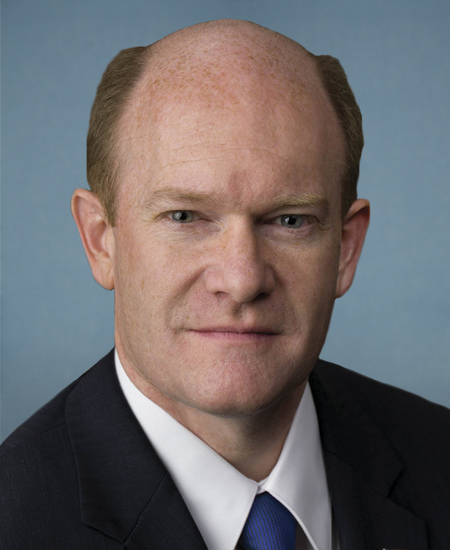
Christopher A. Coons
Christopher A. Coons Senate
D
Support
79% 229
Jeanne Shaheen
Jeanne Shaheen Senate
D
Support
78% 232
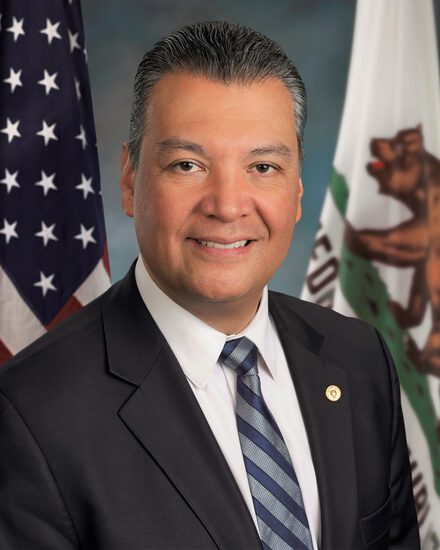
Alex Padilla
Alex Padilla Senate
D
Support
78% 232
Marsha Blackburn
Marsha Blackburn Senate
R
Strong −
11% 211
Ted Budd
Ted Budd Senate
R
Strong −
20% 220
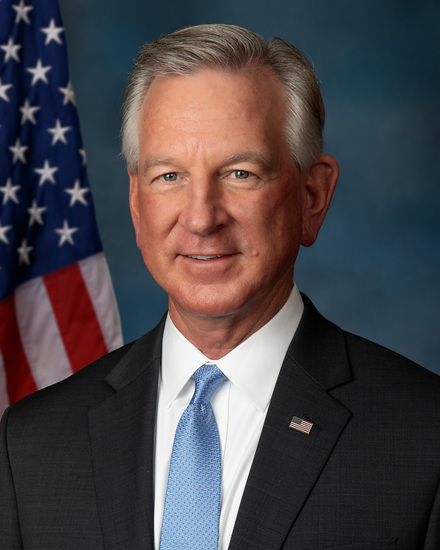
Tommy Tuberville
Tommy Tuberville Senate
R
Oppose
21% 229
Bill Cassidy
Bill Cassidy Senate
R
Oppose
22% 221
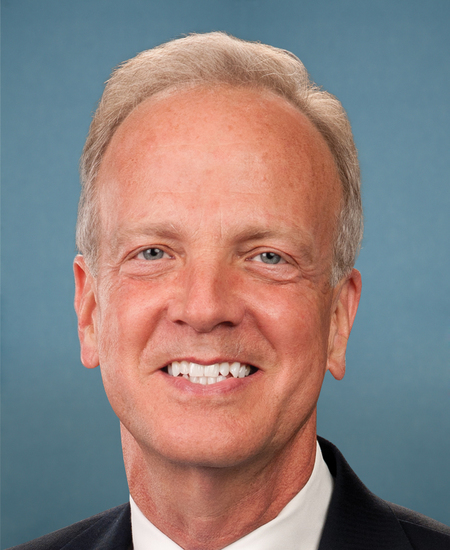
Jerry Moran
Jerry Moran Senate
R
Oppose
23% 228
Showing 1,771–1,780 of 1,975 bills

All environment bills

in committee · United States · Senate Mar 31, 2025

S 1209: American Prairie Conservation Act

S 1209, the American Prairie Conservation Act, requires farmers who convert native prairie land (native sod) to cropland to certify this acreage to the USDA before receiving federal crop insurance or disaster assistance benefits. Specifically, producers must submit certified acreage reports using Farm Service Agency forms and maps, and update corrections if changes occur. The USDA must also submit annual reports to Congress starting in 2026, detailing certified tilled native sod acreage by county and state through 2030. This bill directly affects farmers using federal crop insurance or disaster programs who have tilled native prairie land, adding a certification step to benefit eligibility.
Sub-Topics Conservation
in committee · United States · House Sep 20, 2025

HR 5513: To amend the Federal Water Pollution Control Act to make certain technology investments eligible for additional subsidization, and for other purposes.

HR 5513 amends the Federal Water Pollution Control Act to expand eligibility for federal subsidies to include specific technology investments by water infrastructure projects. It directly affects water treatment facilities and municipal water systems seeking funding for upgrades. The bill adds software for asset management, operational analysis, and digital construction systems to qualify for subsidies when used to achieve water-efficiency, energy-efficiency, stormwater runoff mitigation, or cost-effective sustainable projects. This change modifies existing subsidy rules to include these digital tools as eligible for funding under the Act.
in committee · United States · House Jul 24, 2025

HR 4754: Department of the Interior, Environment, and Related Agencies Appropriations Act, 2026

Department of the Interior, Environment, and Related Agencies Appropriations Act, 2026 This bill provides FY2026 appropriations for the Department of the Interior, the Environmental Protection Agency (EPA), and several related agencies. The bill provides appropriations to Interior for the Bureau of Land Management, the U.S. Fish and Wildlife Service, the National Park Service, the U.S. Geological Survey, the Bureau of Ocean Energy Management, the Bureau of Safety and Environmental Enforcement, the Office of Surface Mining Reclamation and Enforcement, the Bureau of Indian Affairs, the Bureau of Indian Education, the Bureau of Trust Funds Administration, Departmental Offices, and Department-Wide Programs. The bill also provides appropriations to the EPA and the Forest Service. Within the Department of Health and Human Services, the bill provides appropriations for the Indian Health Service, the National Institute of Environmental Health Sciences, and the Agency for Toxic Substances and Disease Registry. The bill provides appropriations to several related agencies, including the Council on Environmental Quality and Office of Environmental Quality, the Chemical Safety and Hazard Investigation Board, the Institute of American Indian and Alaska Native Culture and Arts Development, the Smithsonian Institution, the National Gallery of Art, the John F. Kennedy Center for the Performing Arts, the Woodrow Wilson International Center for Scholars, the National Endowment for the Arts, the National Endowment for the Humanities, the Commission of Fine Arts, the Advisory Council on Historic Preservation. the National Capital Planning Commission, the U.S. Holocaust Memorial Museum, and the U.S. Semiquincentennial Commission. Additionally, the bill sets forth requirements and restrictions for using funds provided by this and other appropriations acts.
Sub-Topics Parks & Recreation Public Lands Wildlife Tags Tribal Nations
in committee · United States · Senate Jun 18, 2025

S 2128: MONARCH Act of 2025

S 2128, the MONARCH Act of 2025, establishes a $12.5 million annual fund to support conservation efforts for the western monarch butterfly, which has declined by over 99% in 30 years and faces imminent extinction. The bill creates a grant program providing funding for projects led by local governments, tribal entities, or nonprofits - focusing on restoring milkweed, nectar plants, and habitat across California, Arizona, Nevada, Washington, Oregon, Idaho, and Utah. Grants require project proposals demonstrating clear potential to aid monarch recovery, with mandatory reporting to the public and state legislatures on progress. The law also mandates annual reports to Congress on project outcomes and the implementation of a conservation plan developed by wildlife agencies.
Sub-Topics Conservation Wildlife
in committee · United States · House Jul 15, 2025

HR 4399: Resilient Transit Act of 2025

The Resilient Transit Act of 2025 establishes a new federal grant program to fund public transportation resilience projects addressing climate change impacts like flooding, wildfires, and extreme weather. It directs $300 million for fiscal year 2026 to help state and local transit agencies in underserved communities - including low-income areas, communities of color, Tribal communities, and medically underserved regions - improve infrastructure. Eligible projects include installing flood barriers, backup power systems, vulnerability assessments, and climate adaptation planning. Recipients must report annually on how funds are used, with specific focus on projects benefiting communities identified through federal environmental justice mapping tools.
in committee · United States · House Jan 13, 2025

HR 360: Oyster Reef Recovery Act of 2025

HR 360, the Oyster Reef Recovery Act of 2025, establishes a federal program to conserve and restore oyster reefs through technical and financial assistance. The program provides competitive grants to eligible entities - including state/local governments, nonprofits, educational institutions, and the shellfish industry (defined as growers and harvesters) - to fund restoration projects, monitoring, and workforce training focused on coastal resilience. Grants require applicants to demonstrate projects won’t interfere with commercial fishing or other water uses. The bill authorizes $15 million annually from 2026-2030 for these efforts, while explicitly preserving state and tribal authority over oyster management.
in committee · United States · House Jan 3, 2025

HR 130: Trust the Science Act

HR 130, titled the "Trust the Science Act," directs the Secretary of the Interior to reissue a 2020 rule removing gray wolves from the federal endangered species list within 60 days of the bill's enactment. This action directly affects gray wolf populations and wildlife management policies across states where wolves are currently protected. The bill mandates that this reissuance cannot be challenged in court, preventing legal appeals against the decision. Note: The bill's title is misleading, as it does not address scientific policy but solely concerns reissuing a specific rule about wolf protections.
Sub-Topics Wildlife
in committee · United States · House Jan 3, 2025

HR 135: Manatee Protection Act of 2025

The Manatee Protection Act of 2025 would require the U.S. Fish and Wildlife Service to officially list the West Indian manatee as an endangered species under the Endangered Species Act. This designation would subject the manatee to all federal protections and regulations, including restrictions on activities harming the animals or their critical habitat. The bill directly affects the manatee population and activities in their environment, such as boating, coastal development, and waterway management, which would now require federal permits to avoid harming the species. It mandates a formal listing under existing law rather than creating new protections, ensuring the manatee is legally recognized as endangered for conservation enforcement.
in committee · United States · Senate Dec 11, 2025

S 3445: A bill to require the provision of alternative drinking water to households whose private drinking water is contaminated with perfluorooctanesulfonic acid and perfluorooctanoic acid substances from activities of the Department of Defense.

This bill requires the Department of Defense to provide alternative drinking water to households with private wells contaminated by PFOS/PFOA chemicals from military activities. It applies to households downgradient from a military base where contamination exceeded EPA safety levels, and where other nearby households in the same community already receive assistance. Alternative water options include bottled water, connection to public systems, or home filtration systems. Exceptions apply if the community already has municipal water or if EPA actions have already resolved the contamination. The law ensures DoD coordination with existing environmental cleanup authorities like CERCLA.
Sub-Topics Drinking Water
in committee · United States · Senate Dec 4, 2025

S 3353: Relief for Farmers Hit with PFAS Act

S 3353, the Relief for Farmers Hit with PFAS Act, establishes a federal grant program to assist commercial farms and agricultural land affected by PFAS (chemicals found in some industrial products) contamination. Eligible states, tribes, or territories can receive funds to cover costs like monitoring health impacts, compensating for contaminated land or crops, upgrading equipment, conducting research on remediation, and providing financial aid to affected farmers. The program authorizes $500 million over five years (2026-2030), with funds prioritized for direct assistance to producers facing financial losses due to PFAS contamination. It requires annual reporting on fund usage and establishes a task force to advise on PFAS-related agricultural programs.
Sub-Topics Drinking Water Tags Agriculture
Showing 1,771 to 1,780 of 1,975 bills