Issue · Environment

Environment

Every environment bill, vote, and legislator stance in United States, automatically classified by Maddy, our AI policy reader.

Total bills
1,989
119th Congress
Top supporter
Aisha Wahab
100% support rate
Top opponent
Marsha Blackburn
11% support rate
Ranked legislators
10
5 support · 5 oppose
Key legislators

Who's moving environment in United States

Legislators moving environment in United States
Legislator Party Stance Support rate Decisive votes
Aisha Wahab
Aisha Wahab House · District 14
D
Strong +
100% 7
Everton Blair Jr.
Everton Blair Jr. House · District 13
D
Strong +
89% 9
Martin Heinrich
Martin Heinrich Senate
D
Strong +
84% 37
Adam B. Schiff
Adam B. Schiff Senate
D
Support
79% 53
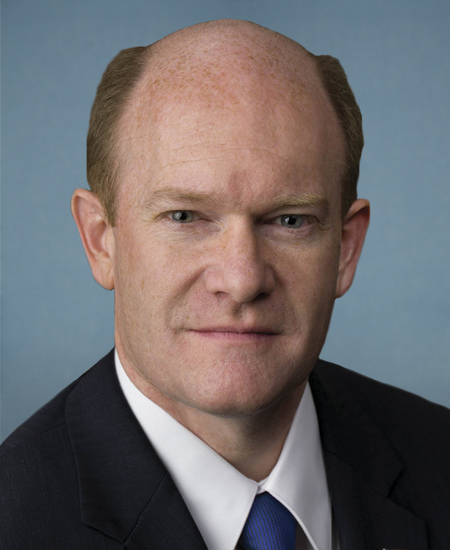
Christopher A. Coons
Christopher A. Coons Senate
D
Support
79% 52
Marsha Blackburn
Marsha Blackburn Senate
R
Strong −
11% 36
Ted Budd
Ted Budd Senate
R
Strong −
20% 40
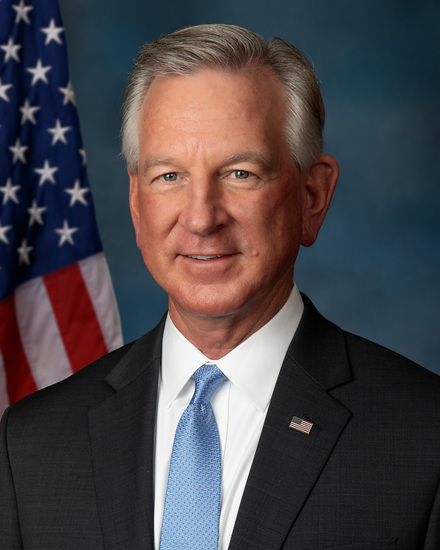
Tommy Tuberville
Tommy Tuberville Senate
R
Oppose
21% 53
Bill Cassidy
Bill Cassidy Senate
R
Oppose
22% 54
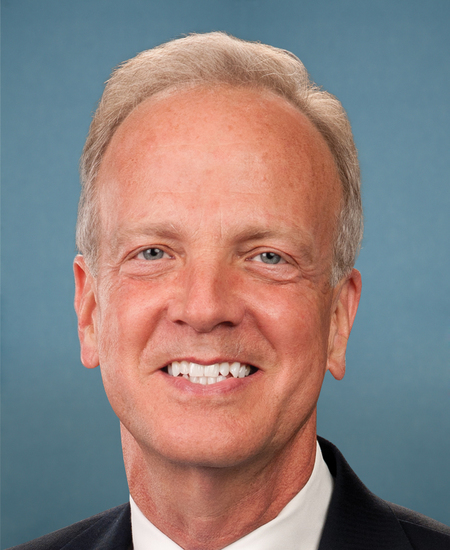
Jerry Moran
Jerry Moran Senate
R
Oppose
23% 53
Showing 1,441–1,450 of 1,989 bills

All environment bills

in committee · United States · Senate Dec 17, 2025

SRES 553: A resolution recognizing that climate change is real.

SRES 553 is a non-binding Senate resolution introduced on December 17, 2025, by Senators Whitehouse, Merkley, Schatz, Markey, Van Hollen, Duckworth, Padilla, Welch, and Blunt Rochester. It formally recognizes that climate change is real, citing decades of scientific evidence linking it to fossil fuel emissions. The resolution does not create new laws, impose requirements, or directly affect any specific groups - it serves solely as a declarative statement of scientific consensus. This is a procedural resolution with no legislative or policy impact.
Sub-Topics Climate Change
in committee · United States · Senate Oct 30, 2025

S 2550: Critical Minerals Partnership Act of 2025

The Critical Minerals Partnership Act of 2025 establishes a framework for the U.S. to collaborate with allies and partners in building secure, resilient supply chains for critical minerals - such as those used in clean energy and defense technologies. It authorizes the State Department to lead the Minerals Security Partnership, creating a database for project information, prioritizing projects that align with U.S. security interests, and setting environmental and social standards for mining and recycling. The bill directly affects the U.S. government (through State Department actions), allied nations participating in the partnership, and private sector companies involved in critical mineral supply chains. It includes $50 million in funding for fiscal year 2026 to support these international efforts, aiming to reduce reliance on adversarial nations like China and Russia while promoting responsible development and recycling.
passed · United States · Senate Nov 20, 2025

S 351: STEWARD Act of 2025

Strategies To Eliminate Waste and Accelerate Recycling Development Act of 2025 or the STEWARD Act of 2025 This bill establishes requirements to expand recycling and composting efforts, including by creating (1) a pilot grant program, and (2) data collection and reporting requirements. The bill directs the Environmental Protection Agency (EPA) to establish a pilot program that awards grants for improving recycling accessibility in communities, particularly in underserved communities. States, local governments, Indian tribes, and public-private partnerships may apply for those grants. The bill also directs the EPA to collect data related to composting and recycling infrastructure from states, local governments, and Indian tribes. Within three years and every four years thereafter, the EPA must prepare an inventory of certain recycling facilities in the United States. The EPA must also develop a metric for determining the proportion of recyclable materials in commercial and municipal waste streams that are being diverted from a circular market. The bill allows the EPA to develop (1) a standardized estimated rate of recyclable materials that have been brought to recycling or composting facilities, and (2) an estimated national recycling rate. The EPA may use the rates and information collected to provide states, local government, and Indian tribes data and technical assistance, such as assistance to reduce their overall waste and to increase their recycling and composting rates. The bill establishes a variety of reporting requirements for the EPA and directs the Government Accountability Office to publish a report on certain federal agency activities related to recycling.
in committee · United States · Senate Mar 11, 2025

S 950: Save Our Forests Act of 2025

This bill increases staffing for the Forest Service to maintain national forests' health and productivity, directly affecting Forest Service employees and the management of national forest lands. It requires the Secretary of Agriculture to reinstate workers terminated between January 20 and February 25, 2025. The bill also allows the continuation of existing projects funded by the Great American Outdoors Act, Infrastructure Investment and Jobs Act, and Inflation Reduction Act. These provisions aim to stabilize forest management operations and workforce continuity.
Sub-Topics Forestry
in committee · United States · House Dec 17, 2025

HR 6785: CLEAR Act of 2025

HR 6785, the CLEAR Act of 2025, provides $100 million annually (2025-2030) in federal grants to states, territories, and tribes to establish or support resilience offices. These offices must develop five-year plans addressing climate and disaster risks across environmental hazards, economy, infrastructure, health, and housing, while prioritizing disadvantaged communities. Grantees must implement programs like technical assistance for local governments and integrate resilience into existing grant programs, with 10% of funds reserved for Indian tribes. States must report annually on how funds were used and the effectiveness of their resilience efforts. The bill directly affects state/local governments and tribal entities by requiring new planning structures to prepare for climate impacts.
Sub-Topics Natural Disasters Tags Tribal Nations
in committee · United States · House Apr 1, 2025

HR 2545: Financing Our Energy Future Act

This bill amends the tax code to expand eligibility for publicly traded partnerships in the clean energy sector. It specifically defines qualifying activities, including generating power from solar/wind (using "qualified energy resources"), operating energy storage systems, processing renewable biomass, and producing low-emission fuels. These partnerships can now qualify for favorable tax treatment if they engage in these defined activities, directly affecting how such businesses structure investments. The changes apply to taxable years beginning after December 31, 2025.
in committee · United States · House Feb 11, 2025

HR 1206: WEST Act of 2025

HR 1206, the WEST Act of 2025, cancels a specific Bureau of Land Management (BLM) rule titled "Conservation and Landscape Health" (published in the Federal Register on April 3, 2023). The bill directly affects the BLM and anyone subject to the rule, which governed land management practices on public lands. Its key mechanism is a straightforward provision declaring the rule "shall have no force or effect," effectively removing it from federal regulations without creating new policies. This is a procedural action targeting a specific existing regulation, not a broader policy change.
in committee · United States · Senate Dec 16, 2025

S 3498: EQIP Improvement Act of 2025

This bill reforms the Environmental Quality Incentives Program (EQIP), which provides financial assistance to farmers and ranchers for conservation practices. It establishes new payment limits: 75% of costs for most practices, 40% for specific infrastructure like dams or irrigation systems, and 100% for income forgone. The bill also reduces the annual payment cap from $450,000 to $150,000 for certain practices and requires the Secretary to submit annual reports to Congress detailing program spending by practice type, state, and farm size. These changes directly affect agricultural producers participating in EQIP by altering their financial assistance eligibility and increasing transparency in funding distribution.
Sub-Topics Conservation Tags Agriculture
in committee · United States · Senate Mar 11, 2025

S 971: Chesapeake Bay Conservation Acceleration Act of 2025

The Chesapeake Bay Conservation Acceleration Act of 2025 establishes a new initiative to help agricultural producers in the Chesapeake Bay watershed (encompassing parts of six states and the District of Columbia) implement conservation practices that improve water quality and soil health. The bill provides funding for erosion control, nutrient reduction, and habitat restoration, including a new pilot program that allows landowners to install riparian buffers with no cost to them and with technical assistance provided by third-party providers. A new task force will develop better methods for measuring the environmental benefits of conservation activities in the watershed. The legislation also modifies existing conservation programs to prioritize Chesapeake Bay watershed conservation efforts and includes workforce development provisions for agricultural education.
in committee · United States · Senate Sep 17, 2026

S 1413: A bill to authorize additional funding for the San Joaquin River Restoration Settlement Act.

This bill (S 1413) increases federal funding for the San Joaquin River Restoration Settlement Act. It raises the authorized appropriation for implementing the settlement from $250 million to $750 million and increases funding for Friant Division water infrastructure improvements from $50 million to $75 million. The bill directly affects the San Joaquin River Restoration program and related water management projects in California. These changes authorize additional federal spending to support river restoration efforts and infrastructure upgrades under existing law.
Showing 1,441 to 1,450 of 1,989 bills